

Key Takeaways
- High-density memory-foam orthopedic dog beds are clinically proven to reduce joint pain and improve mobility in senior and arthritic dogs within 28 days.
- Look beyond marketing claims—focus on foam density, multi-layer construction, and third-party material certifications (like CertiPUR-US) for safe, lasting support.
- Track real improvement with simple at-home metrics like reduction in groaning, better morning movement, and less nighttime restlessness.
- Why supportive bedding matters for senior dogs
- What the clinical research actually shows
- How veterinarians and studies measure improvement
- Owner outcomes & satisfaction—what pet parents report after switching
- How memory-foam technical properties affect support and temperature regulation
- Common pain points from owners (and how to avoid or mitigate them)
- 2024 cost, warranty, and durability snapshot—what to expect when you shop
- Certifications, material safety standards and what to ask the manufacturer
- Quick buying checklist
- Shortlist format + how to test at home (3–5 vetted picks)
- FAQ
- Gaps competitors often miss (three critical sub-topics to own)
Why supportive bedding matters for senior dogs
Canine osteoarthritis is alarmingly common—it impacts about 20% of dogs over age one and nearly 80% of those older than eight [Frontiers in Veterinary Science]. This condition means joint pain and stiffness often undermine daily activities and sleep. Dogs with arthritis are especially prone to pressure points and misalignment during rest. Clinical research demonstrates that improved pressure redistribution and spinal alignment from a quality orthopedic dog bed directly reduce daytime pain, improve joint movement, and help your dog wake up less stiff or hesitant—enabling better function, more playful energy, and fewer signs of discomfort.

What the clinical research actually shows (UPenn & Better Sleep studies)
Multiple controlled studies, including those by the University of Pennsylvania and Barker Beds’ Better Sleep Study, confirm that the right memory foam dog bed makes a real difference for dogs with arthritis. Dogs using a high-density memory foam orthopedic dog bed for just 28 days showed:
- Pain severity dropped by 21.6–22%
- Joint function improved by 17.6–18%
- Joint stiffness reduced by 12–13%
- Gait quality improved by about 10%
- Overall quality of life increased around 15%
- Owner-reported relief: over 70% saw reduced groaning and more enthusiasm in the morning
- Nighttime activity decreased by at least 13% in about half of dogs
These improvements were documented with objective pain and function scales, observed both by veterinarians and owners [UPenn Study], [Barker Beds Study].
How veterinarians and studies measure improvement (objective metrics to look for)
Veterinary trials use a set of validated tools to gauge success. When you’re shopping or tracking results, these are the same baseline metrics to focus on:
- Canine Brief Pain Inventory (CBPI): Standardized owner questionnaires chart pain and functional change over time
- Joint function and stiffness assessments: Vets document range of motion and flexibility pre and post bed switch
- Gait analysis: Stride length, stride symmetry, and ease of movement are measured, sometimes with pressure-sensitive mats
- Accelerometry/activity trackers: Devices record nighttime restlessness and daily steps (simple versions available for home use)
- Owner quality-of-life surveys: Owners note appetite, mood, and signs of pain or enthusiasm
Meaningful improvements typically look like less hesitation and vocalization when rising, more willingness to go for walks, reduced night pacing, and a visible mood boost. Even modest changes—like a 13% drop in night activity—are considered clinically significant for an older dog.
Owner outcomes & satisfaction—what pet parents report after switching
Most pet owners notice subtle but important improvements within a month. Over 70% report less groaning and more cheerful “up and at it” behavior in the morning after switching to a memory foam dog bed. Owners whose dogs wear an activity tracker see nighttime movement drop by around 13–15%, meaning the dog is pacing or circling less and actually resting. These gains usually build gradually, so patience is important—the real magic often appears after three or four weeks.
Curious to explore other science-backed pet wellness solutions? See our guides on dog calming supplements and pet water fountains for joint-friendly hydration tips.
How memory-foam technical properties affect support and temperature regulation
It’s not enough for a dog bed to simply say “memory foam.” What matters for joint health and everyday comfort are:
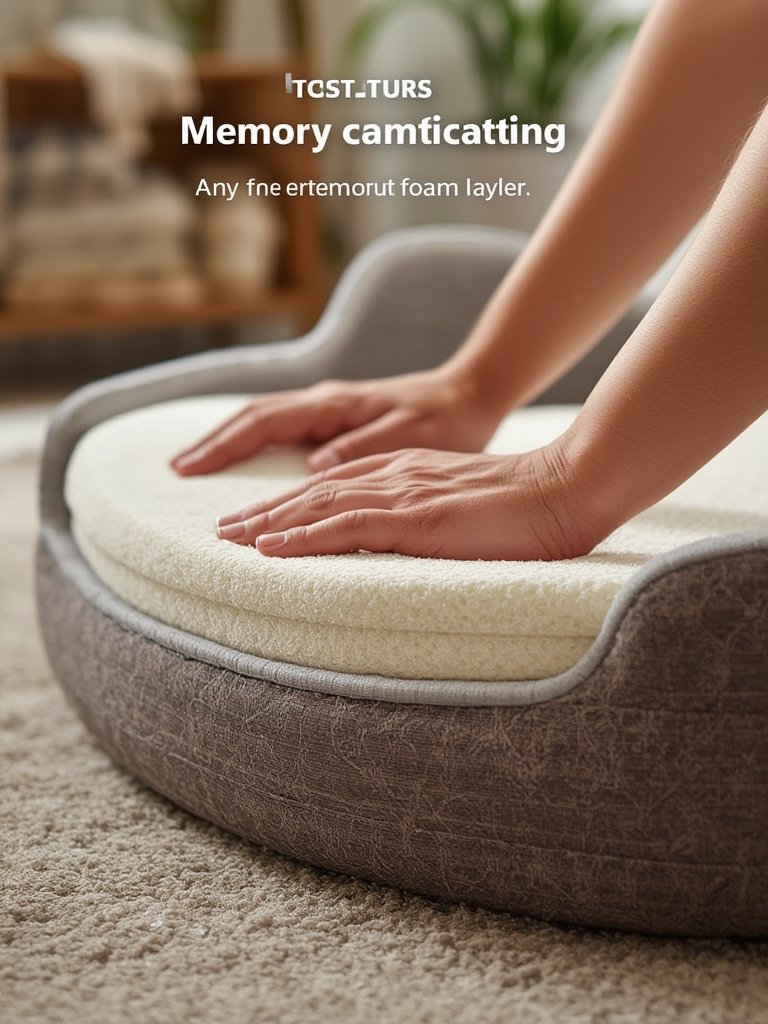
- Foam density: Beds with a density of 32–40 kg/m³ (2–2.5 lb/ft³) resist flattening and reliably cushion pressure points
- ILD (firmness): Should balance enough give (for comfort) with support (to avoid sagging hips and shoulders)
- Layering: The best designs use a firm base to prevent bottoming out and a softer top layer for comfort
- Foam composition: Gel-infused and airflow foams regulate temperature and keep pets cooler, essential for heat-sensitive breeds
Clinical studies directly link these technical elements—especially high-density core foam and robust layering—to marked reductions in pain, improved stiffness, and better daily movement [Mattress Miracle]. One of our top picks for certified support is the Full CertiPUR-US foam PetFusion Ultimate Memory Foam Dog Bed.
Common pain points from owners (and how to avoid or mitigate them)
Even the best orthopedic dog bed can disappoint if you miss key details. The most frequent complaints include:
- Low-density foam that flattens in months (loses support, wastes your money)
- Excessive heat retention, especially for thick beds or warm climates
- Removable covers that shrink or fall apart after washes
- Chew destruction by anxious or determined dogs
- Wrong size or firmness for your pet’s weight and joint condition
Mitigation strategies:
- Pick only high-density, multi-layer foam (see certifications)
- Prefer gel or airflow infusions for cooling
- Check for robust, zippered, machine-washable covers
- Choose beds with reinforced or tough outer shells for aggressive chewers (see models in our shortlist below)
- Measure your dog and check minimum foam thickness—most large breeds need at least 4 inches
2024 cost, warranty, and durability snapshot—what to expect when you shop
| Bed Type/Brand | Foam Density | Typical Price Range (L/XL) | Cooling Tech | Warranty | Certifications |
|---|---|---|---|---|---|
| Barker Beds Orthopedic | 32–40 kg/m³ | $270–$350 | Optional Gel Layer | 10 years | CertiPUR-US |
| PetFusion Ultimate | 32 kg/m³ | $120–$240 | Yes | 3 years | CertiPUR-US |
| Gorilla Ballistic Tough | 35 kg/m³ | $190–$330 | None | 4 years | CertiPUR-US |
| Budget “Orthopedic” Beds (Generic) | <16 kg/m³ | $40–$80 | No | None/1 year | Usually None |
Expect to spend $120–$350 for a legitimate orthopedic dog bed in 2024. Price jumps are usually tied to real technical upgrades—density, multi-layer design, certified foams, cooling features, and much longer warranties. Avoid temptingly cheap beds—they flatten fast and force you into repeat purchases, costing more over time. According to the Better Sleep Study, orthopedic bedding is now considered a critical wellness investment for aging pets. Want more value tips? See our actionable guide on pet-friendly moisture and allergen control to extend pet bed life by reducing indoor humidity.
Certifications, material safety standards and what to ask the manufacturer
Certified material quality isn’t just a marketing perk—it’s directly linked to joint benefits and sleep hygiene. When comparing beds, always ask about:
- CertiPUR-US: Verifies low-VOC, non-toxic, high-density memory foam is used (this is the exact standard in most studies)
- Hypoallergenic and antimicrobial treatments: Especially important if your dog has skin issues
- Cover certifications: Oeko-Tex, machine washable, reinforced zippers/stitching
- Grade and layering: Ensure the specs match the clinical research quality
Red flag: If a brand can’t promptly provide lab or certification details, look elsewhere. Regular beds don’t meet these quality marks and flatten quickly—wasting both money and your dog’s comfort.
See full comparisons on freeze-dried raw pet foods and pet dental chews for more certified wellness upgrades.
Quick buying checklist (size, density, cooling, cover, warranty, return policy)
- Measure your dog: Length from nose to tail plus 8 inches—ensure full-body stretch-out comfort
- Choose high-density foam (≥32 kg/m³): Especially for senior, overweight, or arthritic dogs
- Layered memory foam: Look for support base plus comfort top
- Cooling features: Needed if your dog runs hot or lives in a warm climate
- Removable, washable cover: Must-have for hygiene and allergy control
- Warranty: Seek 3–10-year coverage against flattening
- Return/trial window: 30–100 days is standard for reputable brands
Clinical evidence shows that every major gain—reduced pain, better mobility, improved mood—requires a certified, high-density memory-foam orthopedic dog bed as a baseline. Accept no substitutes.
Shortlist format + how to test at home (3–5 vetted picks)
- Best for Large Seniors: Barker Beds Orthopedic – True high-density foam, 10-year warranty, cooling gel upgrade, heavy-duty covers.
- Smart Value: PetFusion Ultimate Memory Foam Bed – Full CertiPUR-US foam, removable cover, good cooling, 3-year warranty.
- Best for Chewers/Active Dogs: Gorilla Ballistic Tough Orthopedic – Ultra-tough, waterproof fabric, 4-year warranty, dense memory foam.
- Effective Budget: PetFusion Flip Bed – Acceptable density (for lighter/medium breeds), machine-washable covers, fair warranty.
How to test at home: Give your dog two weeks to adjust, then begin a simple 30-day at-home trial:
- Record “before” notes: mobility score (1–10), ease of getting up, how often you hear groaning or see stiffness, and any night pacing
- Repeat each week for 4 weeks
- Track objective wins: less vocalizing, better morning mood, actual movement increase (using smartphone collar tracker apps)
Studies consistently showed measurable mobility and pain improvements by week four [Full study here]. If you don’t see improvement in a month, consider exchanging for a firmer or softer model, or ask your vet to reassess fit or pain control needs.
Gaps competitors often miss (three critical sub-topics to own)
- Density matters—weight-specific, not just “orthopedic” label:
Most beds labeled “orthopedic” use low-grade foam that offers little clinical support. Always verify foam density (32–40 kg/m³ for medium–large dogs). This matches the successful specs used in published trials. - Clear 30-day owner trial protocol:
Use the same metrics as clinical studies: observe reduction in vocalized pain, improved willingness to rise, decreased night activity (even a simple Fitbit or step counter will work for tracking). - Lifetime cost per year:
High-density memory foam beds with long warranties (3–10+ years) cost less annually than replacing cheap, easily-flattened beds every year—plus, they provide proven clinical benefit.
Competitor reviews often ignore these specifics, leaving owners with unsupported expectations or wasted money. Use this evidence-backed checklist to buy smarter—and track your dog’s real results, just like the studies do.
Conclusion
Choosing the right orthopedic dog bed isn’t just about marketing claims—it’s a clinically proven way to reduce pain and improve your dog’s mobility, especially for seniors or those with arthritis. Look for dense, certified memory foam, robust warranties, and layering that matches research standards. Use a simple month-long trial and track your pet’s progress—the same way veterinary studies do. Give your pet the comfort and support they deserve—start your orthopedic dog bed search today.
FAQ
Will an orthopedic dog bed cure my dog’s arthritis?
No—orthopedic dog beds don’t cure arthritis, but clinical trials show they can significantly reduce pain and stiffness, leading to noticeably better comfort and movement within 28 days (UPenn Study).
Which foam density is best for older or heavy dogs?
Look for foam density between 32–40 kg/m³ (2–2.5 lb/ft³)—this matches densities used in clinical trials for lasting support and pressure relief.
How soon will I see improvements after switching beds?
Most owners notice reduced groaning, better energy, and less restlessness within 28 days—mirroring published clinical findings.
Is cooling memory foam necessary for every dog?
Cooling features are important if your dog overheats easily, is large, or you live in a warm climate—otherwise, standard high-density foam works for most.
How long should a quality orthopedic dog bed last?
A certified, high-density orthopedic dog bed should last 3–10 years or more with proper care, depending on weight, use, and brand warranty terms.