

Murphy bed with desk combo is the smart, space-saving investment for anyone turning a spare room or small home office into a flexible work or guest space. In 2024–25, the tight real estate market and surge in remote work are driving serious demand—but picking the wrong unit, skipping ergonomic checks or missing key install decisions can turn your purchase into a frustration. Here’s how to make sure your Murphy bed with desk delivers function, comfort, and long-term ROI.
Key Takeaways
- Rapid urbanization and the work-from-home trend are fueling demand for Murphy bed with desk combos—especially in North America, now 38% of the global market.
- Common buyer mistakes include underestimating install demands, picking cramped desk surfaces, and ignoring power, lighting, or clearance needs at the planning stage.
- Before you buy, compare footprint, clearance, desk ergonomics, and weight limits closely—costs typically run $2,000–$6,000 with premium options and installation.
- Why buy a murphy bed with desk combo in 2024–25?
- The three most common homeowner pain points (and how to avoid them)
- Typical specs you must verify before you buy
- Installation requirements & on-site prep (what pros will ask for)
- Realistic budgeting: product price, shipping, installation, and customization costs
- Three essential wall bed home office ideas competitors overlook
- Best practices to maximize functionality, ergonomics and storage in a limited space
- Safety, warranties and long-term durability issues to check
- Quick buyer’s checklist & recommended timeline
- Short case studies / real-world examples
- FAQ
Why buy a murphy bed with desk combo in 2024–25?
The global market for Murphy bed with desk combo solutions hit approximately $1.9 billion in 2024, staying near $1.5–$1.6 billion into 2025 (Accio 2025 market report). Market analysts project a 6–7% annual growth rate for this sector through the early 2030s, with North America responsible for around 38% of total demand (MarketIntelo). Why the rush? Remote work has expanded the need for convertible spaces, and soaring urban housing prices make double-duty rooms not just trendy, but essential. A quality wall bed home office idea can provide real ROI—boosting your property value and your daily comfort if executed with smart planning.
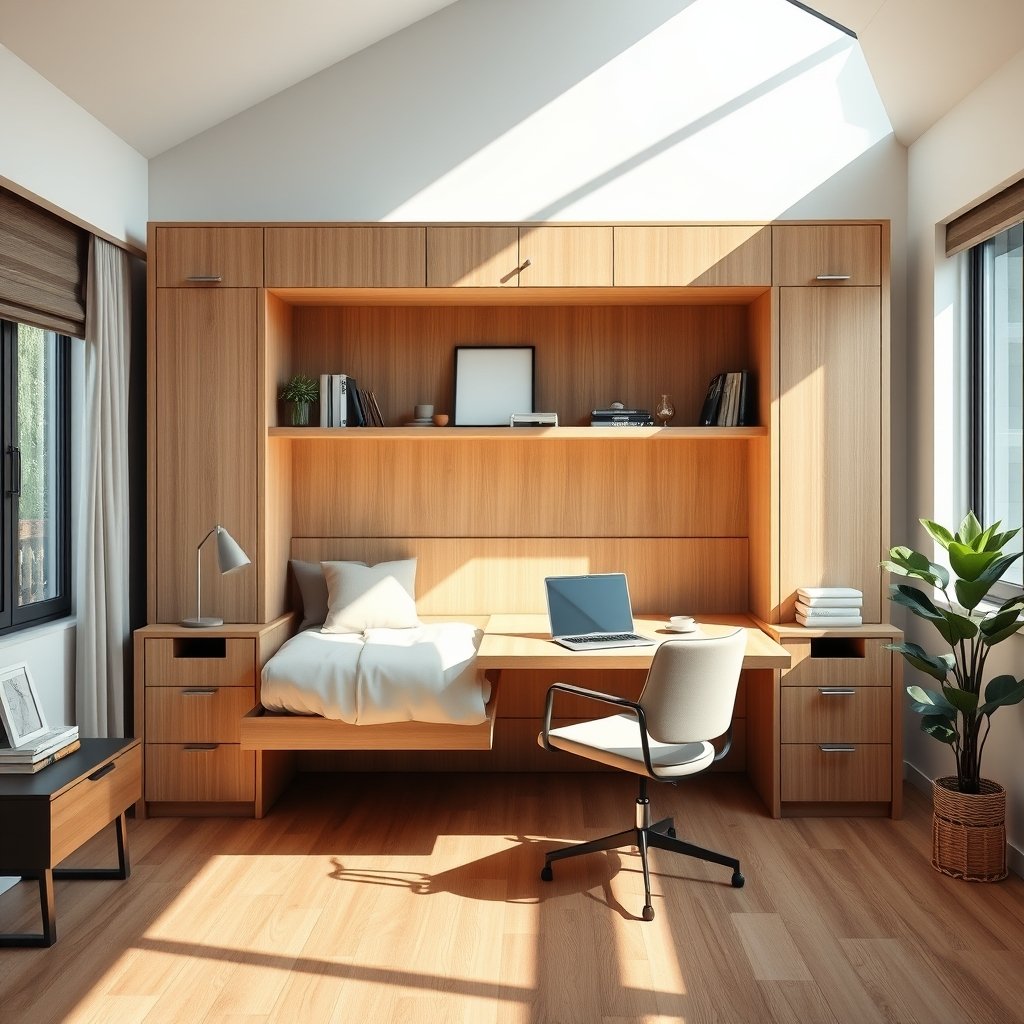
The three most common homeowner pain points (and how to avoid them)
Despite the market boom, reviews for Murphy bed with desk combo setups reveal repeat frustrations—almost always for avoidable reasons. Here are the top three issues and how to address them before purchase:
- Cramped desk surfaces: The work area is often smaller than a stand-alone desk (typically 54″×40″), leaving users with not enough space for monitors or paperwork (A House in the Hills).
- Complex/noisy installation and structural needs: These units usually demand precise Stud-anchored wall brackets, at least 8–9 ft ceiling clearance, and a two-person lift—sometimes requiring new wall anchors or contractor help (Inovabed specs).
- Restrictive weight/mattress limits: Standard weight limits (~1,200–1,400 lb total) cap your mattress options and how much you can store or place on the desk. Overloading results in safety issues and void warranties.
How to avoid these problems? Carefully measure your room, confirm wall structure and ceiling height, check maximum desk and mattress specs, and hire a pro installer or at least a strong assistant. Plan for power and lighting as part of the purchase, not as an afterthought.
Typical specs you must verify before you buy (dimensions, clearances, materials, weight limits)
Before clicking “Add to Cart” on a Murphy bed with desk combo, demand clear answers to these specs:
| Spec | Typical Range (Queen) | What to Confirm |
|---|---|---|
| Closed Cabinet Footprint | ~65″ wide × 85″ high × 20″–24″ deep | Will it fit on your intended wall? |
| Open Depth (Bed Down) | ~90″–92″ | Can you walk around bed/desk? |
| Desk Work Surface | ~54″ wide × 40″ deep | Sufficient for your equipment? |
| Floor-to-Under-Bed Clearance | ~14″–15″ | For storage or legroom? |
| Max Mattress Thickness | Up to 11″ | Your mattress fits? |
| Weight Limits | ~1,200–1,400 lb (center) | Don’t exceed posted limits |
| Materials | Engineered or plywood core | Quality affects durability |
| Mounting Hardware | Stud-anchored brackets or anti-tip strap | Your wall structure is compatible? |
Insist on a detailed spec sheet directly from the manufacturer—like those found on the Inovabed or Lori Beds product pages. Take the time to check all measurements with a tape measure in your actual room.
Installation requirements & on-site prep (what pros will ask for)
Expect the delivery of your Murphy bed with desk combo to arrive curbside, usually on a pallet with several large boxes (which may not fit up all stairways or elevators). Most wall beds require:
- Stud-anchored wall brackets or anti-tip strap—confirm wall type and reinforcements before delivery.
- Ceiling height at least 8–9 ft (double-check during early planning).
- Two-person (sometimes three-person) lifts, basic carpentry tools, and several hours for assembly (Chefyrate guide).
- If ordering custom features (cabinetry, shelving, lighting), expect added complexity and time—many installers charge extra for site modifications or rerouting wires.
Hidden costs: some brands charge steep fees for “white glove” install, old furniture disposal, or shipping to remote addresses. Know what each level of delivery includes and stage your space for efficient assembly to avoid extra charges or damaged walls.
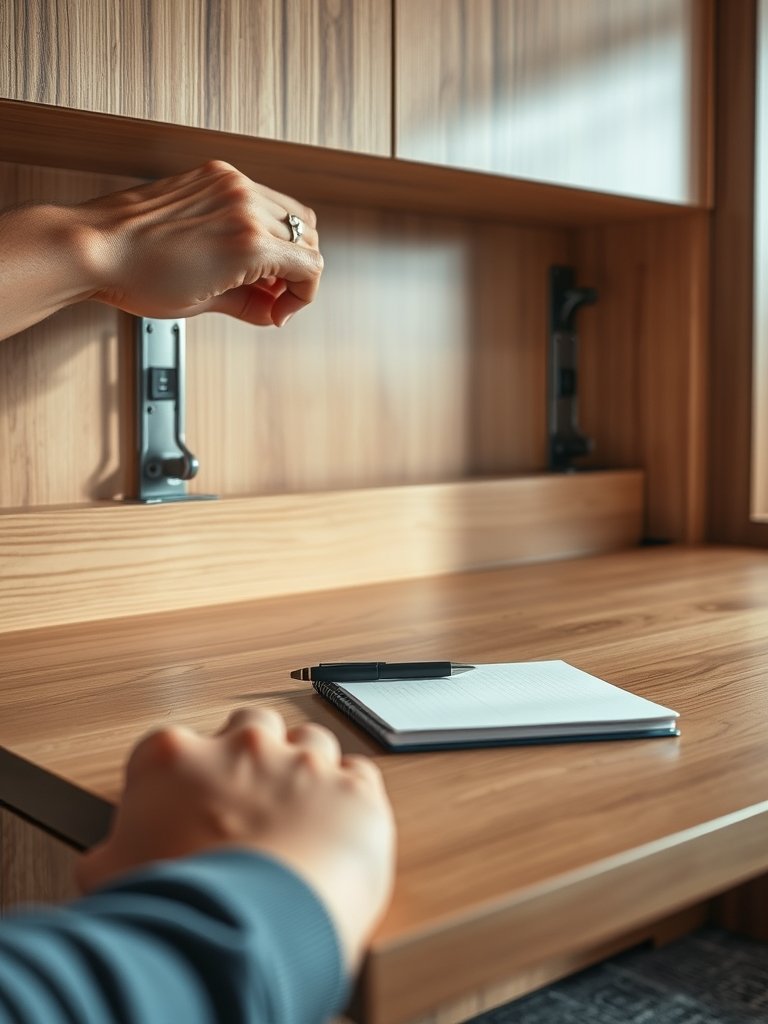
Realistic budgeting: product price, shipping, installation, and customization costs
A true mid-to-high end Murphy bed with desk combo (queen size, modern styling, robust hardware) typically runs $2,000–$4,000 (Chefyrate cost breakdown), with designer finishes, built-in cabinetry, or pro install pushing the total up to $5,000–$6,000. Expect these ballpark ranges:
- Base unit: $1,900–$2,800 (standard engineered wood, manual lift, basic desk surface)
- Shipping/freight: $250–$500 for curbside delivery; usually more for apartments/urban addresses
- Professional installation: $400–$800 (higher if complex site mods are required)
- Add-ons: Built-in shelves, custom finishes, integrated LED lighting, or USB/power upgrades add $400–$1,200 or more
- Total project: Most buyers land between $2,000 and $6,000 with all fees and extras
Want to lower out-of-pocket? Some buyers do delivery, light assembly, or mounting as DIY, saving $400–$1,000—but only if you have capable help and the right tools for wall mounting and lifting. Still, installation mistakes cost more in the long run than hiring a pro up front.
Three essential wall bed home office ideas competitors overlook
Even popular reviews and guides often forget these high-leverage wall bed home office ideas:
- Plan built-in power, cable management, and lighting from the start. Many combos have poor wire routing, and most buyers regret not adding outlets, USB chargers, or under-shelf lighting during the initial install. Ask for cutouts or run conduit before anchoring to the wall.
- Pre-map wall and ceiling structure—including wire, outlet, and stud placement. Gaps between wall studs, HVAC chases, or odd ceiling slopes create last-minute headaches. Use a stud finder and tape it all out on your wall before delivery to avoid expensive surprises and rerouting.
- Design the desk for real ergonomics and think through office storage before delivery. Will your monitor fit on an adjustable arm? Is the desk high enough for a keyboard tray? Plan a separate shelf, credenza, or rolling file for office gear so the desktop stays uncluttered when the bed is down.
Most brands won’t help you here—so jot down your own checklist. For inspiration, see our multifunctional furniture buying checklist or Lori Beds blog for layout ideas.
Best practices to maximize functionality, ergonomics and storage in a limited space
To get the most from your Murphy bed with desk combo in a real urban setting:
- Accept that combo desks average 54″×40″—use monitor arms, compact keyboards, and wireless accessories to keep surfaces clear. Opt for separate rolling office drawers or wall shelves for paperwork and supplies.
- Leave at least 30–32″ floor clearance in front of the closed bed for a chair to slide under the desk (and extra space to sit comfortably).
- Leverage the 14–15″ floor-to-under-bed clearance for rolling storage bins, low ottomans, or file organizers.
- Use low-profile LED task lighting under shelves, plus clamp-on or magnetic options for flexible home office lighting. Keep cords out of the folding path.
- If possible, fit a detachable or folding desktop to make transition from work to sleep seamless—no need to clear papers or move monitors daily.
- If your space remains noisy or echoes, follow expert tips from our home office soundproofing walls guide for acoustic comfort.
Practicality is key: design for both everyday desk work and easy guest room mode, never forcing users to pick one at the expense of the other.
Safety, warranties and long-term durability issues to check
Safety is non-negotiable with a Murphy bed. Always:
- Anchor into wall studs or use robust anti-tip strap—not just drywall anchors.
- Follow two-person lift instructions, especially on installation, to avoid mechanism damage or back injury.
- Check for quality hardware—gas springs or piston lifts should be UL rated and quiet, not squeaky or stiff.
- Set a reminder to inspect fasteners, torque hinge bolts, and check cable routing every six months for wear.
- Review warranty details: a good unit offers at least 3–5 years on mechanisms and frame, plus access to OEM spare parts. Always ask who pays shipping if a replacement is needed.
Treat your Murphy bed with desk combo as semi-permanent—plan for future repairs or reconfiguration by keeping original manuals and a contact list for spare parts suppliers.
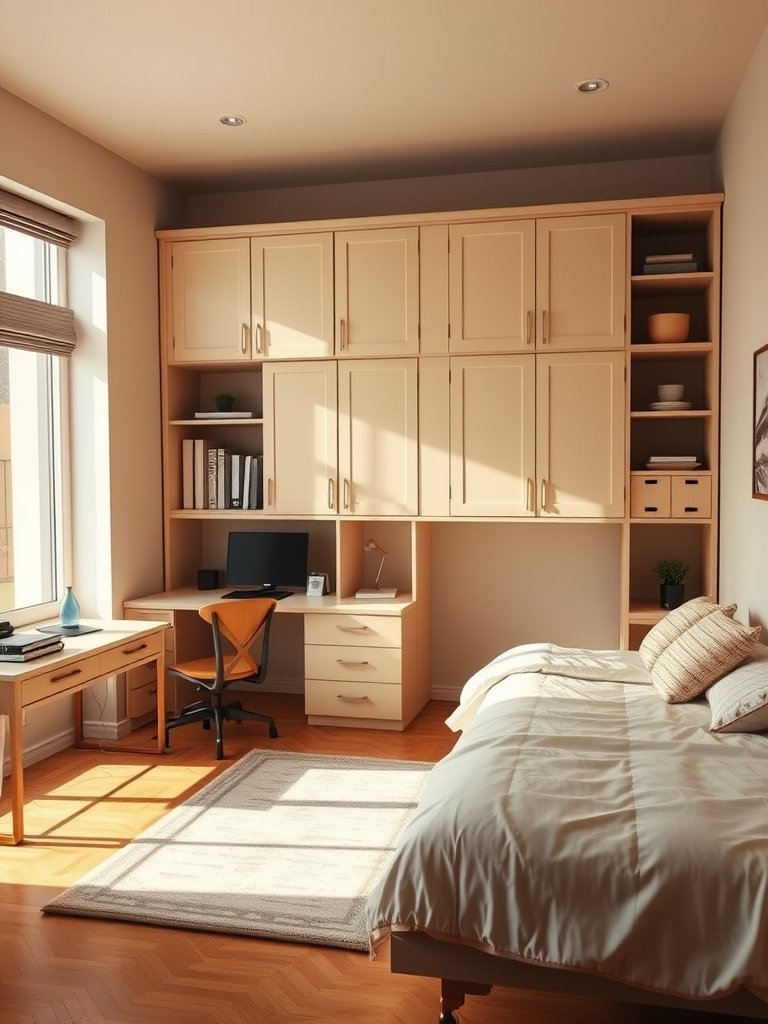
Quick buyer’s checklist & recommended timeline (measure → order → install)
Ready to buy? Print (or save) this checklist to avoid classic mistakes:
- Room measurements: wall width, depth for bed open and closed, door swing, and window locations.
- Ceiling height: confirm you have at least 8 ft clear.
- Stud finder map: mark anchor points or plan for reinforcements.
- Mattress: measure thickness (target ≤ 11″) and type.
- Desk usage: list what you must fit (monitor, keyboard, printer, lamp).
- Power strategy: outlets, cable routing, planned lighting or USB sockets.
- Storage plan: separate drawers, shelves, or mobile bins for office/guest supplies.
- Budget: set an all-in range ($2K–$6K) with buffer for shipping/upgrades.
- Installer: book or vet a pro with Murphy bed experience; confirm liability coverage.
- Delivery: clear space for pallet/boxes; prep basic tools; schedule install for when helpers are available.
Typical timeline: 1–2 weeks for in-stock delivery, 2–5 weeks for custom orders, 1 day for install, plus 1 day buffer for surprise issues. For more project timelines, see our ADU garage conversion cost guide and minimalist kitchen design guide.
Short case studies / real-world examples
Case Study 1: Success
An urban couple in Seattle installed a queen Murphy bed with desk combo (engineered wood, factory white finish) in their 10×12 ft spare room. Specs checked: 65″ width, 85″ height, 20″ depth closed, 54″×40″ desk, and 14″ under-bed clearance. Pro install cost $550, plus $3,400 unit, $250 shipping—all-in $4,200. Power and lighting planned; all work gear stored in a mobile cart. Zero regrets after converting their home office to a guest suite for family.
Case Study 2: Cautionary Tale
A Boston buyer ordered a discount Murphy bed with desk combo online. They missed the ceiling height minimum (only 7’10” clear), desk fit was tight at 42″, and their mattress was 12″, which caused closing issues. They had to reframe their room and swap for a thinner mattress—delay cost was $800 extra and strained timeline. All avoidable by double-checking specs and preparing the space first.
FAQ
How much should I budget for a quality Murphy bed with desk combo?
Expect $2,000–$4,000 for good queen models with professional installation. Custom shelves, finishes, or pro upgrades can push final costs to $6,000 or more.
Are Murphy bed desk combos hard to install?
Installation is more complex than standard furniture. Most models require stud anchoring, a two-person lift, and careful alignment—professional install is highly recommended unless you are a capable DIYer with help.
What are the biggest ergonomic mistakes with these combos?
Desk areas are often smaller than standalone workstations. Plan your monitor, keyboard, chair, and lighting needs in advance and consider separate rolling storage to keep the desktop clear and usable.
What are the safety risks and how do I prevent them?
Main risks: improper anchoring, exceeding weight limits, and using undersized hardware. Always use supplied anchors, check all torque points, and never overload mattress or desk areas. Gas springs and fasteners should be inspected yearly.
Can I add plug sockets or lighting after installation?
It’s possible but inconvenient. Best practice is to plan electrical upgrades and integrated lighting during the pre-install phase, before anchoring the cabinet to the wall.