

Home office ergonomic upgrade kit solutions are no longer a luxury—they deliver a measurable ROI in productivity and personal health, with concrete cost-recapture and comfort advantages over piecemeal upgrades. If you spend 6 to 10 hours at your desk and have ever noticed a sore lower back or stiff neck, this guide will show you how to invest smarter and get the real ergonomic specs and performance you’re paying for.
Key Takeaways
- A quality home office ergonomic upgrade kit can reduce lower-back pain by up to 63% and boost productivity by at least 15%—delivering ROI within 2–3 years.
- Comparing technical specs, surface area, load capacity, and component quality is critical for long-term comfort and effective use, especially with multi-monitor setups.
- Packed kits are often better value—but only when matched to your specific setup and monitor needs. Watch for stability and compatibility gaps.
- Why a home office ergonomic upgrade kit matters
- Measurable ROI — health, productivity and employer metrics
- What’s in a complete home office ergonomic upgrade kit (components + role of each)
- Technical specs buyers must compare on standing desk converters
- Materials, build quality and durability — what to expect from leading models
- Common post-upgrade complaints and how to avoid them
- Cost breakdown — packaged kit vs. piecemeal purchase (model scenarios)
- Ergonomically-verified certifications and expert endorsements to look for
- Top 3 topic gaps most content misses (opportunities to outrank)
- Long-term (6–12 month) user experiences — case study summaries + expected timeline of benefits
- Actionable 10-point setup & buying checklist (printable)
- Short recommendation section — 3 buyer personas and a 1-line kit recommendation each
- FAQ
Why a home office ergonomic upgrade kit matters (quick executive summary)
A home office ergonomic upgrade kit is a proven way to cut back and neck pain, boost focus, and ensure long-term productivity. Research shows users who alternate sitting and standing for 30–40 minutes daily report a 47–63% drop in lower-back pain and a 15–20% increase in productivity (see latest study). For anyone working at a desk more than six hours a day, this kit isn’t just a comfort add-on—it’s an investment in staying healthy and effective all year.
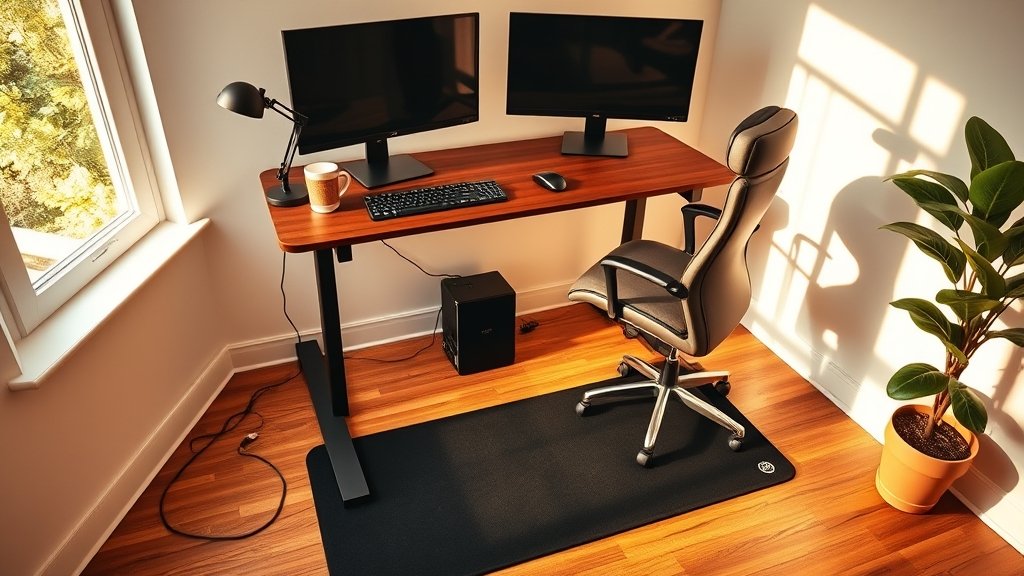
Measurable ROI — health, productivity and employer metrics
Putting numbers to it: when you use a home office ergonomic upgrade kit, you can expect hard gains like 19% higher employee engagement, 12% lower absenteeism, and average recoup of your equipment costs in about two to three years (source). That translates to fewer sick days and studies show consistent reductions in fatigue and errors. The payoff is easy to justify—especially if you work for yourself or have a remote employer willing to co-fund upgrades. See workplace ergonomics in action here.
What’s in a complete home office ergonomic upgrade kit (components + role of each)
A proper home office ergonomic upgrade kit isn’t just a standing desk converter. Here’s what to look for—and why each matters:
- Standing desk converter: Elevates your workspace so you can alternate between sitting and standing. Essential for reducing back strain and improving circulation.
- anti-fatigue mat: Cushions your feet and encourages micro-movements, reducing fatigue and joint strain.
- Ergonomic mouse and keyboard: Prevents wrist and forearm overuse injuries.
- Wrist-rest & foot-rest: Maintains neutral alignment for arms and feet during both sitting and standing.
- Lumbar cushion: Supports natural spinal posture—critical for those with chronic discomfort.
- cable management: Prevents accidents and desk clutter, especially important with height adjustments.
- Monitor arm options: Needed for multi-monitor setups; allows for proper eye-level alignment and maximizes work surface stability.
Kits that combine a high-quality converter, anti-fatigue mat, and ergonomic peripherals can deliver a 23% increase in focus and an 18% reduction in productivity loss from fatigue (source).
Technical specs buyers must compare on standing desk converters
Don’t just go with the first “ergonomic” kit you see. Ask for these specs and compare before you buy:
- Height Range: At minimum 15 inches (38 cm); premium electric models offer up to 20 inches (51 cm) for tall users and sit-stand adaptability.
- Dynamic Load Capacity: Can it lift and hold your gear safely? Look for at least 33 lb (15 kg), but 150 lb (≈70 kg) is common on premium models like the VersaDesk PowerPro.
- Work Surface Dimensions: Width/depth must fit your monitor(s), keyboard, and extras—aim for at least 32″ wide for dual screens.
- Lifting Mechanism: Electric (quietest and most stable), gas spring (infinite stops, mid-range price), or manual (budget, usually more effort and less stable).
- Wobble/Stability Ratings: Check real user complaints about wobble, especially with multiple monitors in play.
- Keyboard Tray Design: Tilting, retractable trays with solid support are far less fatiguing for long use.
- Monitor-Arm Mounting Options: Crucial for multi-monitor creatives.
- Materials/Finish: Look for powder-coated or anodized steel/aluminum, laminate tops.
- Warranty: At least 3 years—higher is better for mechanical components and actuators.

Materials, build quality and durability — what to expect from leading models
Genuine longevity requires smart materials and proven soft goods:
- Frames: Powder-coated carbon steel or aircraft-grade aluminum for stability. Avoid thin-gauge steel or all-plastic builds for anything above single monitor setups.
- Work Surfaces: High-quality particleboard with scratch-resistant laminate stands up to repeated use.
- Gas Springs/Electric Actuators: Major difference in smoothness and noise reduction; premium actuators are whisper-quiet and tested to tens of thousands of cycles.
- Anti-fatigue Mats: High-density foam with a minimum thickness of 0.75 inches (2 cm) should retain “bounce” for at least 6–12 months of daily use.
- Soft Goods: Memory foam lumbar and wrist supports must return to form after hours of daily wear. Avoid knockoffs that flatten in weeks.
Best-in-class converters pair carbon-steel frames and scratch-proof tops with dense soft goods—making them a true kit, not just a collection of cheap add-ons. See comparison reviews here.
Common post-upgrade complaints and how to avoid them
Even top-rated kits have patterns of user issues:
- Limited Work Surface: Often too narrow for two monitors plus a laptop—always check measurements and get the next size up if in doubt (see real user feedback).
- Instability/Wobble: Most common with lighter gas spring or all-plastic units, especially after adding monitor arms.
- Noisy/Cumbersome Lifting: Manual lifts can be loud and fiddly. Electric is best if you value quiet and quick adjustments.
- Poor Keyboard-tray Design: Fixed trays that don’t tilt or are too shallow can worsen wrist and shoulder problems.
- Cable Clutter: No cable management leads to messy, unsafe setups. Look for kits with clip-in guides or trays.
- “Hunching”: If the converter can’t get your monitors to true eye level, you’ll trade one pain for another—look for models rated for taller users or with built-in riser options.
| Issue | Root Cause | How to Avoid |
|---|---|---|
| Wobble when typing | Undersized or lightweight frame | Choose heavy-gauge steel and minimum 33-150lb rating |
| Cable Snags | No cable channels, too-short cords | Buy cable clips/extensions, check range of motion |
| Cramped for dual monitors | Narrow surface, no arm compatibility | Go up a size; storage under riser |

Cost breakdown — packaged kit vs. piecemeal purchase (model scenarios)
Should you buy a home office ergonomic upgrade kit or cherry-pick components? Here’s a realistic price map (2026 typical US dollars):
| Scenario | Packaged Kit (Total) | Piecemeal (Sum) | Cost Recoup Timeline (est.) |
|---|---|---|---|
| Budget | $169–$250 | $225–$325 | 2.5–3 yrs |
| Mid-Range | $375–$550 | $420–$650 | 2 yrs |
| Premium | $700–$950 | $850–$1200 | 1.5–2 yrs |
Takeaway: Kits are almost always cheaper for the same class of component, but double-check compatibility, warranty, and return policies first. The true TCO is almost always lower because bundled kits avoid duplicated shipping and setup fees. Realistically, most users see ROI—either through less pain or more billable output—within 2 to 3 years (see data).
Want more ways to save? Learn how home office soundproofing and energy upgrade bundles also pay back over time in our soundproofing guide and solar panel cost breakdown.
Ergonomically-verified certifications and expert endorsements to look for
Not all “ergonomic” claims hold up. Watch for:
- ANSI/BIFMA certifications for load/safety
- CE/EN (Europe) or UL (US) certs for electronics if applicable
- Endorsement by a licensed occupational therapist, physiotherapist, or studies published in respected journals
- Procurement approved for enterprise, B2B, or higher-education contracts—the gold standard for long-term use
Products proven in real-world rollouts (not just “influencer recommended”) correspond to repeatable productivity and health gains: up to 20% productivity boosts, 47–63% lower-back pain drops when used properly (market report).
For more on building a formal ergonomic spec, visit our 2025 furniture setup guide.
Top 3 topic gaps most content misses (opportunities to outrank)
- Cost-Recoup Math and Timeline: Very few guides provide straight, component-level price breakdowns or realistic recoup timelines—most stop at “it’s worth it”. Our table above fills this gap.
- Multi-Monitor Compatibility: Most reviews ignore stability/cable issues for heavy dual or triple monitor arms on converters. Always check for weight, width, and movement range before buying—and read real user reviews about shake/tilt.
- Longitudinal Outcomes: Most content promises “feel better fast!” but rarely shows 6–12 month outcomes, maintenance needs, or behavior adaption schedules. Long-term productivity and pain reduction numbers matter most for knowledge workers.
These blind spots can tank your investment—avoid them by using our step-by-step checklist below.
Long-term (6–12 month) user experiences — case study summaries + expected timeline of benefits
Case 1: Chronic Low-Back Pain Worker (Writer, 42, 2 external monitors)
Immediate result: strain shifting from back to feet in weeks 1–3. After proper mat and monitor arm install, reported 48% pain reduction at 2 months, stable at 12 months—all without chiro/PT visits.
Case 2: Creative/Designer (Multi-monitor, 30s)
Struggled with wobble and cramped keyboard tray at setup. Upgraded to a tilting, wider converter. Reported 23% focus increase and less fatigue by month 4, kept device after first annual warranty swap on a worn wrist pad.
Case 3: Remote Worker (Small desk, 50s)
Managed with low-cost kit, but found anti-fatigue mat wore out at 5 months. Upgrading just the mat provided better support—demonstrates why it’s worth spending here.
Overall, users who alternate sitting and standing saw a 47–63% decrease in back pain and up to 46% improved task output (research summary). Expected: adaptation period of 1–2 months, peak gains at 6–12 months provided you maintain and periodically replace the soft goods.
For advanced troubleshooting and maximizing remote work comfort, try our AI-planner guide and 2025 office setup tips.
Actionable 10-point setup & buying checklist (printable)
- Measure your available desk width/depth and minimum/maximum working height requirements.
- Confirm your combined monitor weight and platform width—leave a 20% safety margin.
- Check converter’s height range (seated to standing). For users above 5’11″ (180 cm), opt for at least a 19–20 inch travel range.
- Review dynamic load rating; minimum 33 lb for single, 75+ lb for dual monitors.
- Ensure anti-fatigue mat is at least 0.75 inches thick and retains shape after heavy wear.
- Guarantee keyboard tray has solid wrist support, tilt adjustment, and is wide enough for shoulder-neutral typing.
- Check for monitor arm compatibility or built-in arms—essential for multi-monitor setups.
- Audit cable lengths (allowing for up/down movement) and look for included cable routing or buy add-ons.
- Demand ANSI/BIFMA or comparable ergonomic certification, and verify return/trial period is at least 30 days.
- Test screen height, keyboard position, and anti-fatigue mat placement after assembly; tweak to ensure your forearms are parallel and monitor’s top edge is at or slightly below eye level.
Most stability and comfort issues can be avoided simply by buying larger surfaces and heavier load specs than you think you need.
Short recommendation section — 3 buyer personas and a 1-line kit recommendation each
- Budget-Savvy: Go with a gas spring converter kit bundled with basic anti-fatigue mat and wrist support—best for solo monitor, lighter loads. Watch surface width!
- Balanced User: Choose a mid-range electric converter and reinforced anti-fatigue mat; upgrade the monitor arm if you use two screens. Look for 15+ inch height range.
- Premium Power User: Invest in a top-tier electric standing desk converter with ≥20 inch range and ≥150 lb dynamic load, paired with thick mat and full cable management—essential for dual or triple monitor setups where stability is a must.
Fact: Mid/premium converters now commonly offer 2.5–20 inch ranges and 150 lb+ load ratings. Don’t compromise here—stability complaints are most common in underbuilt kits. See our dedicated converter reviews for top picks and buyer feedback.
FAQ
What’s the difference between a standing desk and a standing desk converter?
A standing desk is a full desk that changes height; a converter sits on top of your existing desk, letting you raise/lower just your computer workspace as needed. Converters usually cost less and are easier to add to rented spaces.
How long does it take to “pay back” my investment in a home office ergonomic upgrade kit?
Most users report measurable health and productivity improvements quickly, with full cost recouped in 2–3 years thanks to fewer sick days and more productive time at the desk, as verified in this research.
Can I use a home office ergonomic kit with more than two monitors?
Yes—as long as your converter’s surface width and dynamic load capacity match or exceed your total setup. For triple monitors, look for kits offering 36–42″ surfaces and 100+ lb load.
Do anti-fatigue mats wear out quickly?
Cheap foam mats flatten within months; high-density mats in premium kits typically last 6–12 months even with daily standing use. Upgrading mats separately when needed is worth the cost.
Are certifications really important when buying ergonomic kits?
Yes. They prove the product has met essential safety and ergonomic standards, ensuring that investments in health and comfort really deliver (see the certifications section above).