

Reclaimed wood dining table buyers have never had a stronger case for investing in sustainable, character-rich furniture—especially when comparing against a new solid wood farmhouse dining table. But making the right choice for your home and family comes down to a clear-eyed look at market data, actual durability, certifications, maintenance, and getting the details right before purchase. This practical guide helps you decide with confidence for 2026 and beyond.
Key Takeaways
- The reclaimed wood dining table market is growing faster than any other niche (9.3% CAGR 2025–2033) and is driven by demand for sustainability, provenance, and authenticity.
- Both reclaimed and solid wood farmhouse dining tables offer lasting value, but each has unique durability, sourcing, and maintenance tradeoffs—understanding these is essential to avoid buyer’s remorse.
- Certifications like FSC and SVLK, top thickness, joinery, and finish matter as much as looks—use the technical buying checklist to sidestep disappointment and ensure true long-term value.
- Market snapshot — why now is a smart time to buy
- Reclaimed vs. solid — why shoppers choose each
- Durability and common user complaints — a head-to-head
- Maintenance, expected lifespan, and care differences
- Sustainability, certifications & sourcing to demand
- Technical buying checklist — species, thickness, joinery, and finishes
- Price expectations & regional context
- Top 3 underreported angles competitors miss
- Quick decision flow & purchase checklist
- Resource links & what to ask suppliers (templates)
Market snapshot — why now is a smart time to buy
The demand for both reclaimed wood dining tables and solid wood farmhouse dining tables is surging as more households upgrade for quality, sustainability, and statement design. According to recent research, the global wood dining table market is expected to reach USD 4.85 billion in 2026 with a robust 7.03% CAGR projected through 2034. Notably, the reclaimed wood category is set to outpace all other segments with a projected 9.3% CAGR from 2025 to 2033, while the broader dining table market hits USD 9.23 billion in 2026.
This upswing is fueled by rising home values, a premiumization wave in furniture markets, and especially consumer demand for pieces that marry longevity with clear environmental credentials. The North American solid wood segment, for example, is expected to see record growth—over 12.1% CAGR for solid wood dining tables from 2026 to 2033 (source).
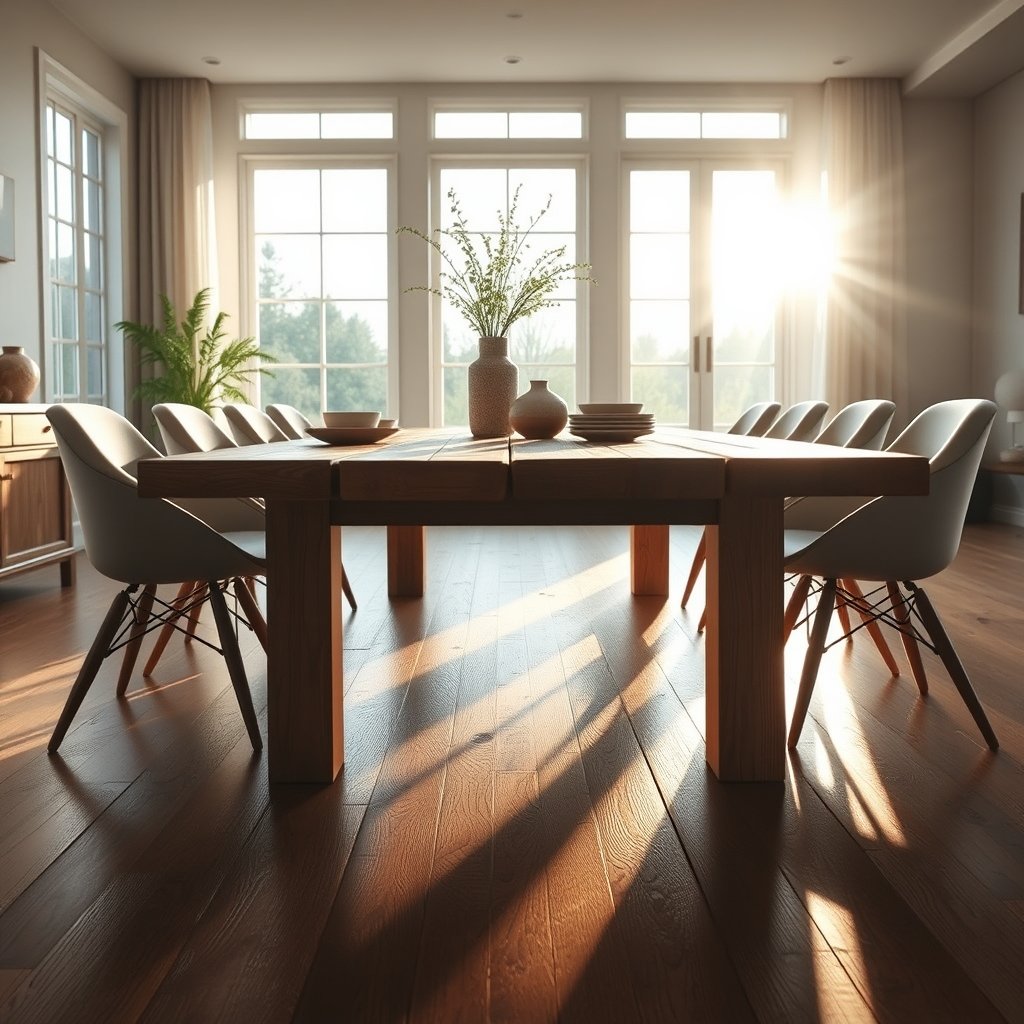
Simply put, investing in a well-built wood table now isn’t just about today’s use—it’s an asset likely to hold value and appeal long after trends pass.
Reclaimed vs. solid — why shoppers choose each (positioning & values)
Choosing between a reclaimed wood dining table and a solid wood farmhouse dining table comes down to three factors: what matters most to you, how you use your dining space, and your approach to environmental impact.
- Reclaimed wood dining table: Prioritizes visible history, unique grain, and authentic signs of prior use. It is ideal for those wanting waste diversion, low-VOC (volatile organic compound) finishes, and an unmistakable sense of provenance.
- Solid wood farmhouse dining table: Favored by buyers who value clean, certified sourcing, and the reassurance of a table that can stand up to daily life for generations. Long-term durability, the ability to refinish repeatedly, and consistent wood grain appeal most here.
Both types resonate with buyers seeking sustainability, but through slightly different lenses: “reuse and character” for reclaimed, “responsibly sourced and repairable” for solid. Many contemporary design trends—like expandable tops and quiet-luxury finishes—appear across both types (see more trends).
Durability and common user complaints — a head-to-head
Before falling for aesthetics, know the most common points where owners wish they had asked better questions up front. Here’s a direct look at how each table type stacks up in the real world.
| Aspect | Reclaimed Wood Dining Table | Solid Wood Farmhouse Dining Table |
|---|---|---|
| Durability Issues (Reported) |
|
|
| Cosmetic Flaws |
|
|
| Main Complaint (per research) | Maintenance need and surface unpredictability | Weight, scratches, occasional warp |
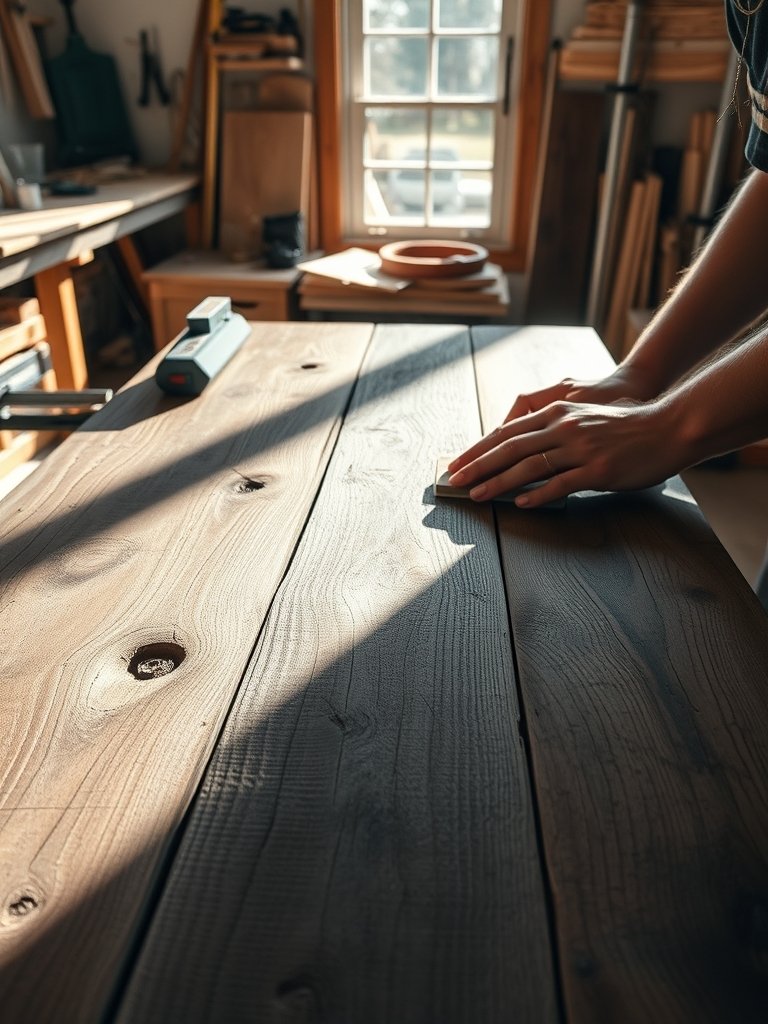
Most real-world complaints are avoidable by checking top thickness, joinery, and finish before buying. If you expect “zero maintenance,” reconsider—reclaimed especially needs periodic attention, while solid can be sanded and returned to like-new for decades.
Maintenance, expected lifespan, and care differences
Care routines matter as much as the original wood. A reclaimed wood dining table typically requires resealing with natural oils or wax every 6-12 months to maintain moisture resistance and keep stains out. If not, softwoods especially may discolor or pick up family-food mishaps more quickly.
A solid wood farmhouse dining table can usually be sanded, refinished, and even repaired—a huge win for long-term flexibility and value. According to research, you can expect to “purchase once and use for the next decades” (see reference).
- Humidity: Keep levels between 35–55% to reduce stress on all wood.
- Surface protection: Always use coasters, placemats, and gentle cleaning products—avoid all-purpose chemical sprays.
- Repair: For dents or white water marks, most solid tables can be sanded; reclaimed may require filler or creative patching.
For either style, set a calendar reminder for periodic inspection—especially after major humidity swings or big family events.
Sustainability, certifications & sourcing to demand (what proves it’s green)
If you want real sustainability—ask for proof, not just marketing. Here are the certifications and practices to look for with each type:
- Reclaimed wood dining table: Ask for documented salvage sources (mill certificates or seller’s evidence), chain of custody trail, and low-VOC finish documentation. Even better: specific age, original use, and region of the wood’s prior life.
- Solid wood farmhouse dining table: Demand FSC (Forest Stewardship Council) or PEFC, plus evidence of regional or sustainable harvest. For Indonesian products, SVLK certification is key (see why here).
Sustainability tip: Reclaimed wood is always the lowest carbon option, but a well-certified solid table is a close second if sourced and finished correctly.
Technical buying checklist — species, thickness, joinery, and finishes
A visually stunning table is only as good as its construction. Keep this checklist handy at the furniture store, online shop, or when reviewing photos or documentation:
- Wood species/Janka hardness: Favor higher numbers for active households. Hickory (1,820 lbf), White Oak (1,360 lbf), Red Oak (1,290 lbf) all excellent (Janka scale source).
- Tabletop thickness: Minimum 1.25″ (32mm) for lasting stability—thicker for large span tables.
- Joinery: Prefer mortise-and-tenon or dowel joinery, not just screws or glue blocks. Visible joinery under the tabletop is a mark of quality.
- Leg attachment: Look for bolted, not just screwed-on legs—ensures easier moving and long-term strength.
- Finish: Low-VOC oil, wax, or water-based polyurethane are best. Ask for full cure times and care instructions.
- Reclaimed wood stabilization: Should be kiln dried and treated for insects; filled major cracks should use transparent resins, not wood putty.
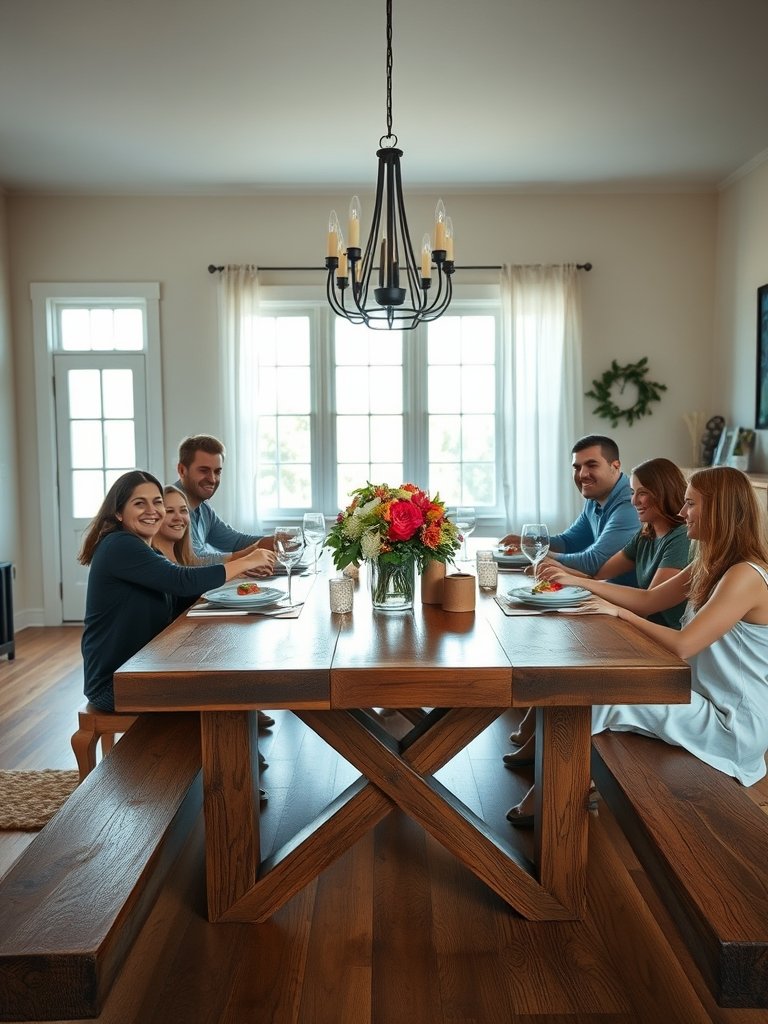
Red flags to avoid: Flimsy tops under 1″, surface-only stains/finishes, prefinished “distressed” veneers, or lack of any sourcing paperwork. Tables with minimal assembly or that weigh suspiciously little may not last through real family use.
Price expectations & regional context (how much should you budget?)
Entry-level reclaimed wood dining tables in the US typically start around $900, with typical midgrade models in the $1,200–$2,500 range (more for custom or larger pieces). High-end, provenance-certified reclaimed tables may exceed $5,000 due to salvage, milling, and finishing labor.
Solid wood farmhouse dining table pricing tracks similarly, but certified, thick-top models often cost more owing to raw lumber and joinery. The broader dining table market is valued at approximately USD 9.23 billion in 2026 and is projected to grow at a 6.29% CAGR (market analysis). Solid wood furniture as a whole is a USD 6.04 billion market in 2026, reflecting steady demand.
Regional pricing swings matter: North American tables tend to command higher price points for “shop-local” provenance, while imported reclaimed and solid tables (especially from Indonesia or Eastern Europe) vary with certification costs and import duties. Custom sizing, thickness, and finish requests usually come with a premium.
Top 3 underreported angles competitors miss (opportunity gaps to exploit)
- Deeper sourcing transparency: Chain-of-custody documentation showing exactly where and when wood is salvaged or cut—ask for photos or mill serials.
- Annual and long-term maintenance cost: Factor in resealing, refinishing, and repair costs over 10+ years for realistic budgeting—most guides skip this.
- Modular or expandable design: Family-size and entertaining needs are shifting—how does the extension or drop-leaf joinery actually hold up? Most guides ignore practicality here.
These issues don’t always get the spotlight, but addressing them now puts you ahead of most buyers and can help unlock better resale value or years of hassle-free use.
Quick decision flow & purchase checklist (actionable takeaway)
Here’s a clear, step-by-step guide for evaluating your options—print this or save on your phone for in-store or online shopping:
- Usage profile: Family daily meals, formal/holiday use, kids, pets, and typical group size?
- Budget set: Pin down a comfortable pre-tax total with 10% wiggle room for upgrades or delivery fees.
- Certification scan: Request supplier proof (FSC, SVLK, documented origin).
- Finish & maintenance plan: Know up front how and when table needs resealing, what care products are needed, and if you can DIY minor repairs.
- Seller questions: Ask about joinery, thickness, exact wood species (with Janka rating), historical use for reclaimed, and repair history (if used).
- Inspect top for thickness and evenness (min 1.25″).
- Check for visible solid joinery under the tabletop (mortise/tenon, dowels, heavy screws).
- Request finish details—ask for the VOC content and how long cure takes.
- Look for underside and seam treatments (resins, fillers, bug treatment).
- Try to move a corner—excessive lightness = suspect durability.
- Review certification documents or salvage ID tags.
- Photograph characteristic knots, nail holes, or inlays—the more documented, the better for future resale.
- Ask for humidity and maintenance guidance in writing.
- Evaluate stability—does it wobble or flex if you press on corners?
- Check support rails for cracks or evidence of poor repairs.
With reclaimed wood dining table demand growing rapidly (~9.3% CAGR) and solid wood farmhouse dining tables still showing strong resale and longevity value, the time to act—armed with research—is now.
Resource links & what to ask suppliers (templates)
Supplier/email questions template:
- Can you provide a photo and written documentation of the original wood source or salvage project?
- What certification systems does this table meet (FSC, SVLK for Indonesian products, PEFC)?
- How thick is the tabletop, and what species is used (with Janka hardness rating)?
- Which finish is applied, and is it low-VOC and child-safe? How should I maintain it?
- Is the table kiln-dried and treated for insects? Can you describe the joinery under the tabletop?
Explore more about modular family furniture, quiet luxury home decor trends, and tips for light control improvements for your dining space. For sustainable backyard upgrades, check cold plunge pool guides or native plant landscaping.
Essential resource links:
- FSC (Forest Stewardship Council) — leading certification for sustainable wood products
- PEFC — Program for the Endorsement of Forest Certification
- SVLK — Indonesia Timber Legality Assurance System
- Janka Hardness Scale — understanding wood species durability
Glossary:
- SVLK: Indonesia’s government timber legality system for export wood
- FSC: Global certification for responsibly managed forests
- Chain-of-custody: Documented tracking of wood from source to sale
- Janka hardness: Measures wood’s resistance to dents/scratches
Frequently Asked Questions
What is the difference between a reclaimed wood dining table and a solid wood farmhouse dining table?
A reclaimed wood dining table is made from salvaged wood sourced from old structures and features history and unique character, while a solid wood farmhouse dining table is crafted from new, sustainably sourced lumber—often with simpler, uniform grain and the ability to be sanded and refinished many times.
Are reclaimed wood dining tables more sustainable?
Generally yes, as they reuse existing materials and divert wood from landfills. Look for proof of documented salvage and low-VOC finishes for best results.
How do I maintain a solid wood farmhouse dining table?
Routine cleaning, humidity control, and using coasters go a long way. Sanding and refinishing can restore the surface—one of the main advantages of solid wood tables over other materials.
What certifications should I ask for?
Always ask for FSC or PEFC for new wood, and SVLK for Indonesian sources. Reclaimed should have clear documentation of salvage and region of origin; low-VOC or natural oil finishes are also important.
What’s a reasonable price for a high-quality reclaimed wood dining table?
Expect to pay between $1,200–$2,500 for a quality mid-range piece, and upwards of $3,500+ for custom or provenance-rich tables. Premium designs or historic wood can exceed $5,000.