

AI basement finishing planner technology is changing how homeowners like Sarah plan basement renovations—offering instant layouts, faster cost signals, and fewer surprises when dealing with contractors. But what does an AI planner actually deliver, and how can you use it smartly without falling for showroom-slick illusions or missing hidden costs? Here’s exactly how to use one for practical, contractor-ready results.
Key Takeaways
- Modern AI basement finishing planners provide quick, visual design options and preliminary cost estimates—saving weeks of guesswork before you ever talk to a contractor.
- Common pitfalls include overly “perfect” but inaccurate designs, cost estimates that miss key details, and challenges translating AI plans for contractor bids.
- Successful use hinges on verifying room features, choosing the right tool, and combining AI output with experienced contractor input for the best result.
- Why consider an AI basement finishing planner before hiring a contractor?
- Step-by-Step: How to use an AI basement finishing planner effectively
- Advanced Analysis & Common Pitfalls of AI basement finishing planners
- Conclusion: Should you trust an AI basement finishing planner?
- Frequently Asked Questions
Why consider an AI basement finishing planner before hiring a contractor?
If you’re thinking of finishing your basement, using an AI basement finishing planner makes the earliest design steps dramatically easier. These tools generate multiple realistic layout options in minutes, deliver instant visualizations for family and contractor input, and provide ballpark cost signals—often before you’ve even booked a single tradesperson.
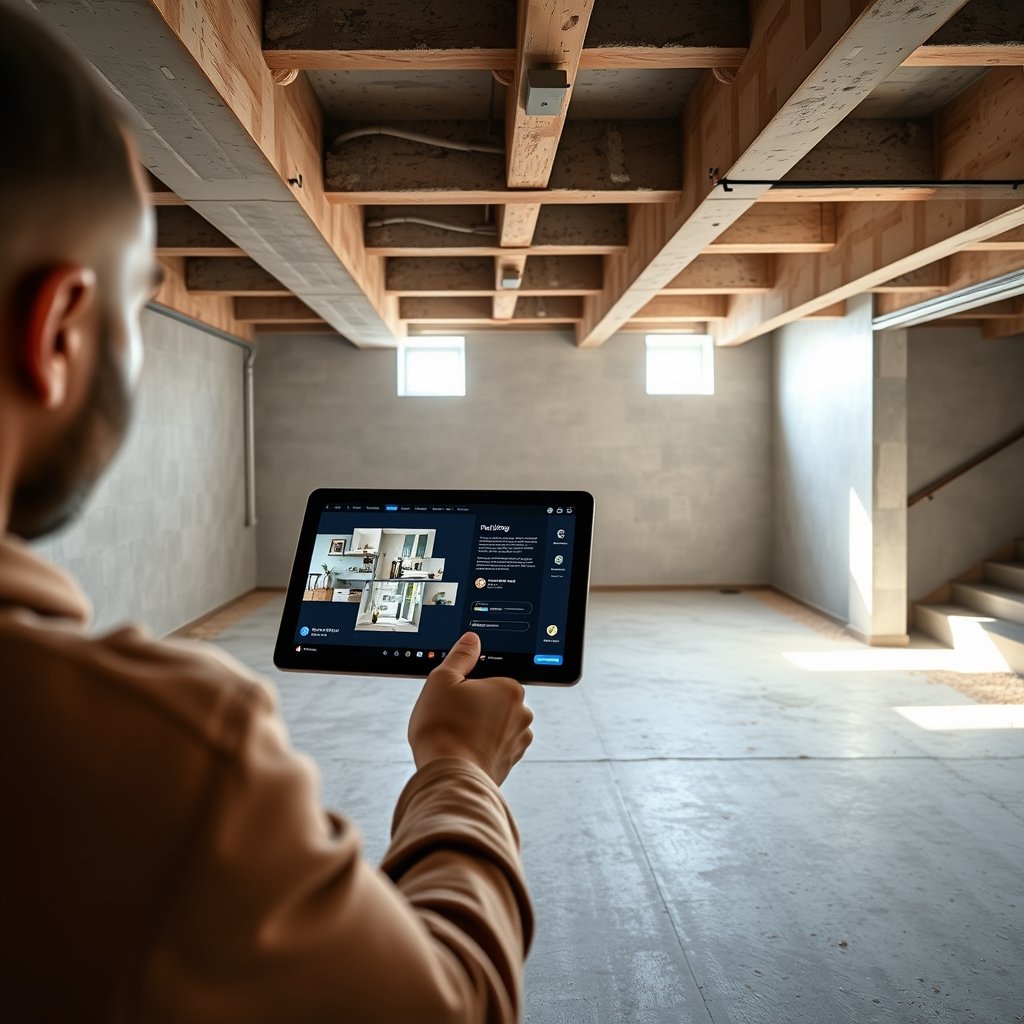
This matters because scope changes remain the number one driver of budget overruns and project delays in home renovations—especially in complex spaces like basements. When you begin with a digital concept you can rapidly adjust and share, your early contractor conversations are fact-based. By 2026, nearly one in four homeowners (24%) used an AI planner in their renovation process, and a full 84% stated the tool changed at least one of their core design or spending decisions [source].
Instead of going back and forth for weeks with rough sketches or waiting on a designer’s calendar, the AI basement finishing planner lets you try multiple furniture arrangements, add a bathroom or home office, test egress windows, and instantly preview different wall/floor treatments—all risk-free. This tech democratizes the “design–bid–build” process and gives you leverage when asking realistic questions about estimates or buildability with your contractor.
Still, the immediate magic comes with an important caveat: not every design detail translates perfectly from digital to reality, and cost estimates may be more optimistic than what the field truly demands. That’s why knowing exactly how—and when—to use these tools makes all the difference.
Step-by-Step: How to use an AI basement finishing planner effectively
Here’s a practical, no-jargon guide for homeowners who want results—not just pretty floorplans.
- Gather precise measurements—length, width, ceiling height, window placement, and identify any angled sections or utility runs. Mark them clearly on a sketch or smartphone app.
- Collect clear photos—at least one from each corner, and close-ups for architectural quirks (beams, HVAC runs, sump pumps).
- Choose an AI basement finishing planner—look for planners supporting 3D walk-throughs, automatic material takeoffs (for better cost signals), local code prompts, and downloadable contractor-ready files (get more tips here).
- Input your data carefully—manually adjust for real-world quirks. Don’t accept the “auto” shape if it doesn’t match what you just measured or photographed.
- Generate at least two layout options—compare flow, furniture fit, bathroom placement, and costs side by side. Use “copy and modify” to test quick changes.
- Export detailed plans and estimates—prefer PDF/DWG formats; check for local code notes and a materials breakdown if included.
- Share with a contractor or independent estimator—use their feedback to spot any AI misses (load-bearing posts, stair geometry, egress legality, plumbing reroute limits).
- Get fixed bids based on the AI plan—but include space for contingencies if the AI estimate seems lower than what three contractors quote.
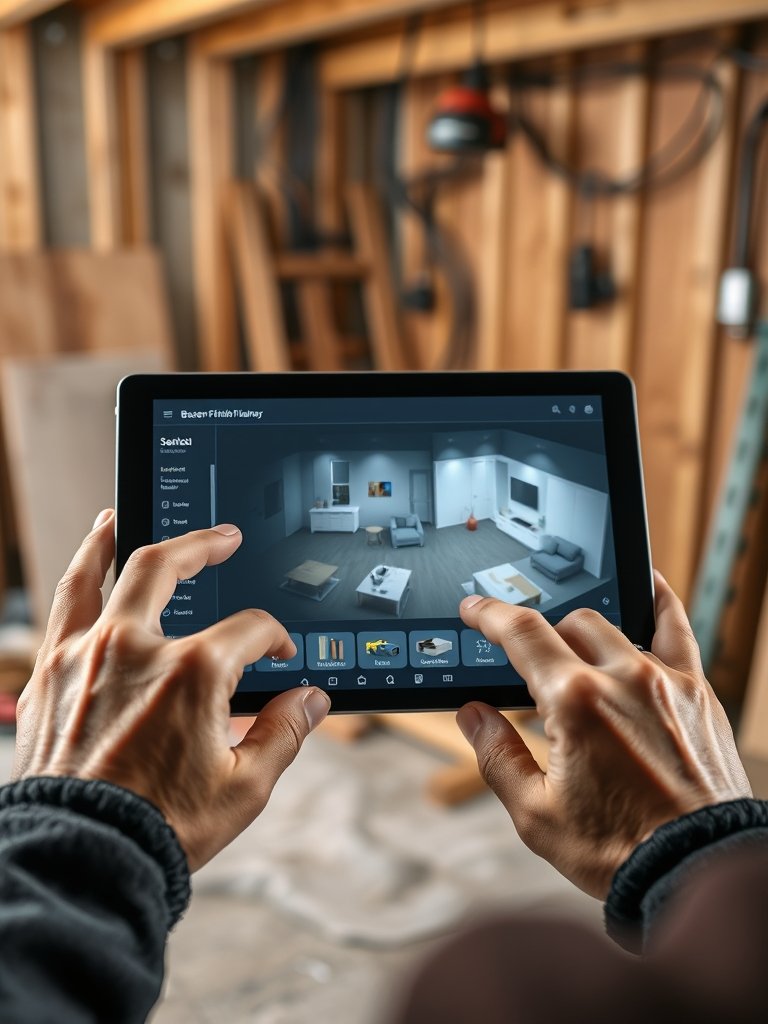
You deserve contractor-ready clarity, not pixel-perfect illusions. Choosing the right planner means prioritizing real-world export formats, clear cost assumptions, and permission to edit quirks. You’ll find deeper walkthroughs about AI renovation planning and the importance of code compliance on our ADU garage conversion guide and home EV charger installation checklist.
For those considering more than just a basement, explore AI smart home hub setups and crawl space encapsulation options for a full-home modernization plan.
Advanced Analysis & Common Pitfalls of AI basement finishing planners
No matter how slick your AI basement finishing planner’s interface is, user feedback and research show clear, recurring limitations:
- Imperfect design outputs: AI tools often miss architectural oddities, mis-size furniture, or create “showroom” spaces with no allowances for wiring, pipes, or practical HVAC needs. Real basements are rarely perfect rectangles.
- Unreliable cost estimates: These often leave out hidden labor, remedial work (like mold or water mitigation), premium finishes, or unique permit fees. On average, AI estimates err on the optimistic side because they lack market-specific pricing and do not “see” what’s behind walls.
- Poor contractor handoff: Contractors report confusion when presented with AI plans that don’t conform to standard blueprint or code requirements. Many AI exports lack complete framing, structural, or egress annotations, making the bidding process slower instead of faster.
| Feature/Process | AI Basement Finishing Planner | Traditional Designer/Human-First |
|---|---|---|
| Concept Speed | Minutes to initial plan and variations | Days or weeks for custom layouts |
| Accuracy for Quirky Spaces | Medium (often misses custom elements: odd posts, angled ceilings) | High (onsite verification, tailored detailing) |
| Cost Estimate Realism | Fast, but can be incomplete or market-insensitive | Comprehensive, includes local nuance, slower turnaround |
| Contractor-Readiness | Requires plan export; integration gaps common | Standard in format and communication |
| Iterative Revisions | Easy and unlimited | Possible, but time-consuming |
Nearly 84% of tool users say AI influenced a renovation decision, yet most wish they’d checked the fine print before taking every 3D visualization or “instant quote” at face value [source]. Cross-check estimates using downloadable itemized lists, and always request a field walkthrough before finalizing a scope with your contractor.

If you want an extra edge, consider this: the biggest opportunities to do better than competitors or the “average” homeowner are (1) insisting on a full export with annotations for your contractor, (2) manually verifying AI-measured oddities, and (3) accounting for an error margin of at least 10–15% in early cost planning for all unforeseen details.
For more on scope creep control, see also our heat pump water heater rebate guide which highlights similar pitfalls and opportunities for budget-savvy homeowners tackling energy retrofits.
Conclusion: Should you trust an AI basement finishing planner?
AI basement finishing planners are powerful allies for homeowners who want to plan smarter, get to cost clarity faster, and head off the “unknowns” that so often derail basement projects. But these tools are not infallible: their biggest strengths lie in rapid layout iterations and early budgeting—while their main weakness is glossing over the quirky, messy realities of real homes.
Your best approach is to use an AI basement finishing planner as your starting point, but double check all details with measurements, photos, and—critically—an experienced local contractor. This blended workflow puts you in charge and drastically reduces the risk of scope creep, budget surprises, or expensive last-minute redesigns. Ready to take the first step? Try a free or demo version of a reputable tool, gather your real measurements, and commit to validating every smart digital suggestion before you spend a dollar on framing or finishes.
Frequently Asked Questions
How accurate are cost estimates from an AI basement finishing planner?
They’re useful for ballpark budgeting but often miss regional labor costs, permit fees, and site-specific prep (like moisture control). Always allow a 10–15% buffer and check every line item with your contractor.
Can I use AI plans directly for building permits?
Usually not by themselves. Most building departments require stamped plans or additional annotations for code and egress compliance. Bring the AI export to your contractor or local architect to finalize for permits.
What should I verify in AI-generated layouts?
Double check measurements against your actual basement, confirm all load-bearing posts are present, make sure ceiling heights are correct, and ensure utility locations (HVAC, water, electrical) are accurately represented.
How do I share AI designs with a contractor for the best response?
Export plans in PDF/DWG format, include dimensioned layouts, and list specific material and fixture choices. Add notes about any “quirky” features the AI may have missed, and ask contractors to flag any discrepancies during the bid process.
Are there privacy concerns with uploading my basement data to AI tools?
Yes—ask providers how your floorplans/photos are stored, who can access them, and whether your data will be used to train future models. Look for tools with data deletion and privacy options for peace of mind.