

Heat pump water heater upgrades are surging in 2024, but getting true cost clarity is harder than it should be. Many homeowners are stunned by install adders, slow payback in cold climates, and real-world quirks. In this guide, you’ll see exactly what a heat pump water heater costs to buy and own, what makes or breaks the economics in your region, and blunt pros and cons—including pitfalls you rarely read about elsewhere.
Key Takeaways
- Fully installed heat pump water heater costs run $3,000–$7,000 depending on region, site, and incentives—about 30–50% more up front than standard tanks.
- Annual energy savings are typically $200–$550, with real payback commonly 5–7 years after rebates. Cold climates and space limitations can stretch this timeline.
- Noise, install constraints, and incentive paperwork are the main pain points. Read on for realistic owner experiences and a blunt checklist to know if this tech is truly right for your home.
- Total cost breakdown — purchase, installation, and maintenance
- Regional and “hidden” installation adders that change the economics
- Performance and efficiency — UEF, COP, and what those numbers mean for homeowners
- Realistic annual savings and payback period (how long until the premium is recouped)
- Common owner pain points and negative experiences (what verified users report)
- Installation requirements and technical limitations buyers must check before upgrading
- Maintenance needs and expected reliability — what owners should budget for
- Latest tech, efficiency improvements, and smart features (models since 2023)
- Incentives, rebates, and tax credits (how they change the math) — what to look for in 2024
- Decision checklist — who should buy a HPWH now, who should wait, and retrofit options
- Top 3 content gaps competitors miss (what this article will answer in depth)
- Quick FAQ block
Total cost breakdown — purchase, installation, and maintenance (national averages)
When considering a heat pump water heater, transparency on cost is critical. As of 2024, the average purchase price for an integrated HPWH ranges from $2,500 to $6,000, according to Energy Star data. Add $2,000 to $4,500 for typical installation—more if specialized electrical work or plumbing relocations are needed. Annual maintenance is usually $150–$300, covering filter cleaning and condensate drain checks.
For comparison:
- Conventional electric tank model: purchase $1,200–$2,200, install $600–$2,000, yearly upkeep $100–$200
- Standard gas tank model: purchase $1,300–$2,500, install $800–$2,500, yearly upkeep $120–$250
This means a heat pump water heater cost is about 30–50% higher upfront, but the running costs are 3–4x lower, which can offset the starting premium if your install isn’t atypically expensive.
Regional and “hidden” installation adders that change the economics
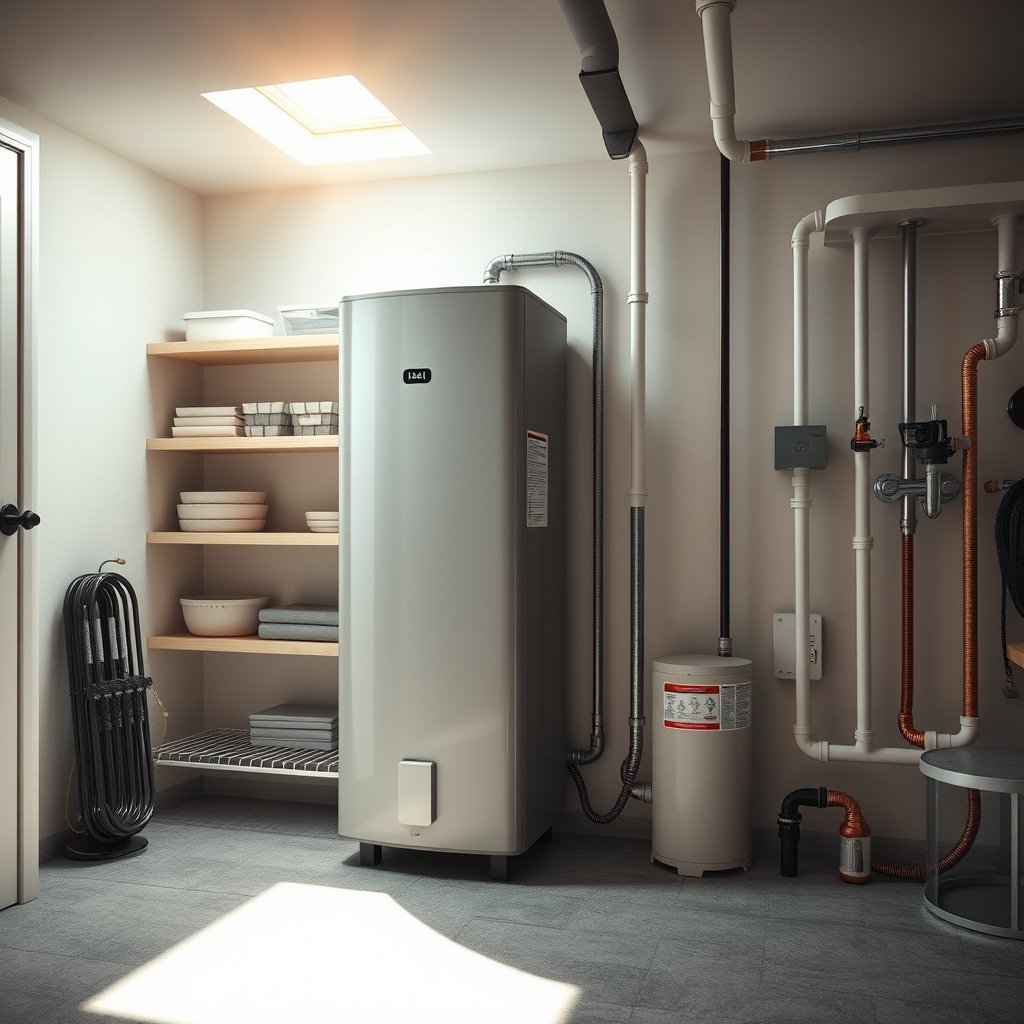
Many savvy homeowners price-shop heat pump water heaters online but miss “regional adders”—hidden costs that can tip the scales. In colder climates (Northeast, Midwest), total heat pump water heater cost often lands between $5,000 and $7,000 after installers add $500–$1,000 for:
- Creating a fully-insulated space
- Ensuring 1,000 cubic feet minimum air volume (needed for efficient operation and warranty)
- Running or upgrading a drain for condensate
In milder climates (Southeast, South Central, West Coast), installed cost bands are often $3,000–$4,500—sometimes lower if retrofitting is simple.
Other “hidden” install drivers include:
- Need for a 240V dedicated circuit (electrical panel upgrades can add $700–$2,000)
- Multi-trade scheduling (both electrician and plumber)
- Permits or incentive paperwork requirements
Plan carefully and confirm all site requirements before signing a contract.
Performance and efficiency — UEF, COP, and what those numbers mean for homeowners
Heat pump water heater efficiency is measured by UEF (Uniform Energy Factor) and COP (Coefficient of Performance). Homeowners often see advertising of UEF 3.3–4.2 or COP 3–4, but what does that mean in practice?
- HPWHs deliver 3–4 times the efficiency of electric resistance tanks—so you use 25–30% of the energy for the same hot water, especially in warm spaces.
- Standard electric/gas tanks carry a UEF of 0.63–0.95—meaning much higher utility costs for the same usage.
- Learn more directly from the Consumer Reports efficiency guide.
This efficiency gap is why most rebates and tax credits require you to select a certified UEF ≥3.3 HPWH model.
Realistic annual savings and payback period (how long until the premium is recouped)
The big draw for homeowners: annual energy bill savings. Nationally, expect $200–$550 less per year on water heating costs, depending on your household usage patterns, local rates, and incoming water temperature.
Typical payback time for the extra heat pump water heater cost is 5–7 years—even shorter in areas with high electric rates, moderate climates, or when aggressive rebates apply. In cold northern regions, longer payback (or even break-even) is possible if up-front install costs spike or unit runs often in resistance mode.
See Rewiring America’s savings calculator for tailored modeling.
Common owner pain points and negative experiences (what verified users report)
Despite the clear efficiency win, real-world owners often run into three main frustrations:
- Noise: Compressor and fan can produce a moderate mechanical hum—especially if installed near living spaces or bedrooms. The ORNL study (ORNL PDF survey) shows noise is the leading complaint.
- Reliability/service delays: Some units see premature compressor failures or require both a plumber and electrician for warranty service, causing longer repair times and potentially more out-of-pocket expense if trades are hard to schedule locally.
- Cold climate performance drops: When the air temp around the tank drops below ~40°F, the unit’s efficiency falls sharply—ending up in hybrid or resistance mode and potentially increasing your electric bills instead of cutting them. condensate drain can also freeze or back up.
Mitigation steps include careful placement (garage, utility rooms away from primary living zones), checking dB ratings before buying, and lining up a maintenance-trained installer with solid reviews.
Installation requirements and technical limitations buyers must check before upgrading
Before committing, check these site requirements:
- Ambient temp 40°F–90°F year-round for reliable efficiency
- Open area of at least 1,000 cubic feet (about 12×12×7 feet room)
- Floor drain to handle condensate output
- Clear ceiling height for the tank style (some hybrid models are tall and heavy)
- Proximity to the main panel for electrical upgrades (most units need 240V circuit)
- Ability to vent exhaust air if space is tightly sealed
- Access for multi-trade service (plumber, electrician)
If one or more of these are not met, consider a heat pump retrofit kit on your existing tank, or wait until an all-in-one solution with easier install is feasible.
Maintenance needs and expected reliability — what owners should budget for
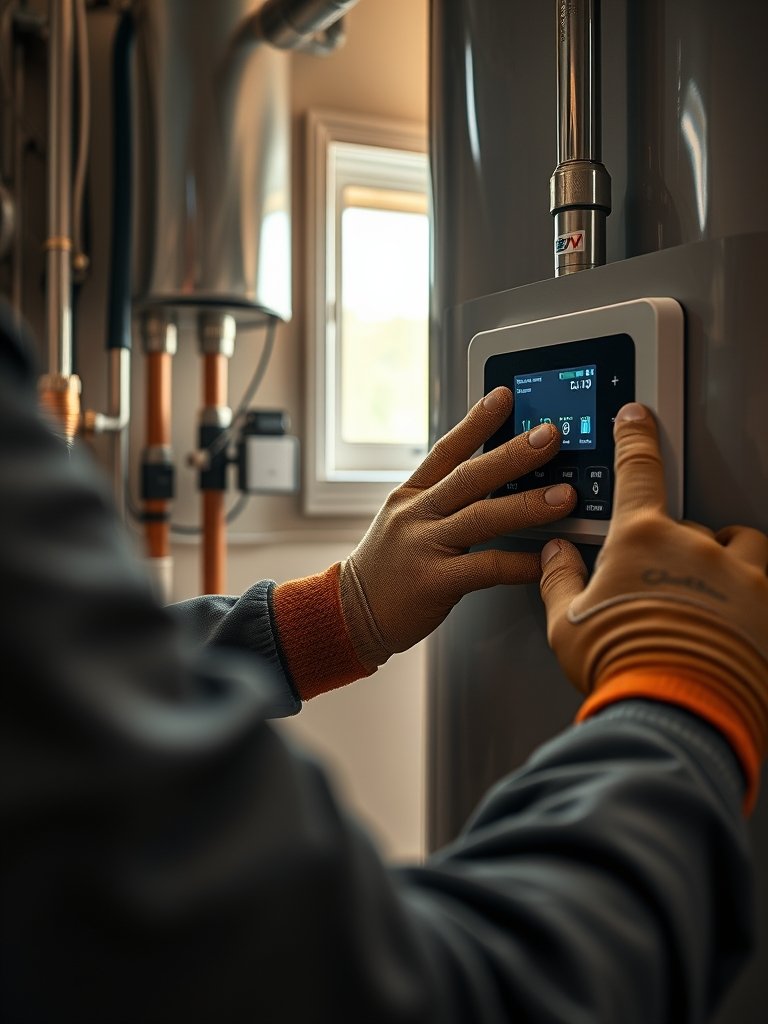
Annual service for a heat pump water heater means cleaning the air filter, verifying the condensate drain, and occasionally inspecting or servicing the compressor. Most owners can do basic cleaning but should budget $150–$300 per year for professional checks or repairs, a bit higher than for standard tanks ($100–$250/year). Many warranties run 6–10 years, but compressor failures outside warranty can be costly.
Ask your installer if their warranty covers labor—not just parts. And clarify if you’ll pay for multi-trade diagnosis if something breaks.
Latest tech, efficiency improvements, and smart features (models since 2023)
2023 and newer HPWH models have pushed COP ratings to 3.5–4.2, and nearly all offer:
- Hybrid control modes to auto-switch between heat pump and resistance mode
- Grid-responsive features (like responding to utility price signals or time-of-use electric rates)
- Integration with smart home platforms and virtual power plants (VPP)
- Improved noise-dampening and smarter diagnostics
When quoting, ask about Energy Star certification, remote app control, over-the-air firmware support, and whether your state offers extra incentives for grid-enabled models. For rebate stacking guidance, see our full heat pump water heater rebate guide.
Incentives, rebates, and tax credits (how they change the math) — what to look for in 2024
Federal, state, and utility incentives make a direct impact on final heat pump water heater cost. For 2024, most homeowners qualify for up to $2,000 through the federal IRA tax credit (30% of project cost), plus additional rebates from energy offices or utility programs tied to efficiency certification and pro installation.
- Check current incentive availability at Rewiring America and DOE Energy Saver.
- Beware: Most programs require proof of certified model and work by an approved installer. DIY installs usually do not qualify for rebates.
- Prepare for some lead time on rebate checks—the paperwork and inspections delay payment in many programs.
Incentives often shorten payback by 2–3 years. They are worth the effort, but read every fine print before beginning work.
Decision checklist — who should buy a HPWH now, who should wait, and retrofit options
Use this checklist with your contractor to make a clear decision. (Print and bring it to your site walk):
- ✔ My install space has at least 1,000 cubic feet of air and is 40°F–90°F year-round
- ✔ I have or can install a drain for condensate (don’t skip this step!)
- ✔ Noise of a refrigerator/compressor is OK in the location, or sound can be isolated
- ✔ My panel/electric service can handle a 240V circuit, or I’ve scoped upgrade costs
- ✔ I’m comfortable with $3,000–$7,000 all-in cost, minus credits/incentives
- ✔ My household hot water use is steady or high enough to make savings worthwhile
- ✔ I’ve checked real rebates and confirmed model/installer eligibility
If you answered “no” to any item, consider:
- Hybrid conversion: Use a retrofit heat pump on your existing tank to cut costs (see our rebate and hybrid cost guide).
- Delay: Wait for the next-gen all-in-one models with better cold climate performance and simpler install.
- Keep gas backup: In sub-40°F zones, a dual-fuel or parallel install preserves reliability during extreme cold snaps.
Three real-world owner scenarios:
| Scenario | Upfront Cost (after incentives) | Annual Savings | Estimated Payback |
|---|---|---|---|
| Cold-climate (Northeast, high install) | $5,800 ($2,000 rebate applied) | $300 | ~6.5 years |
| Mild climate (West/South, standard install) | $3,800 ($2,000 rebate applied) | $450 | ~4 years |
| Retrofit to existing tank (minimal site work) | $2,400 ($1,000 rebate applied) | $250 | ~5.6 years |
Top 3 content gaps competitors miss (what this article will answer in depth)
- Regional “hidden” install adders: Unlike most guides, we break down how cold climate site work ($500–$1,000+) can erase savings or extend payback.
- Noise-mitigation tied to measured dB stats: Few reviews quantify compressor/fan noise by placement—see our comparison of sound ratings and tactics to isolate or move units.
- Step-by-step incentive qualification/paperwork: Most articles gloss over the hassle and requirements (model/installer certification, site photos). We flag all documents and common rebate delays upfront, so you avoid six-month waits on key rebates.
For help stacking heat pump, solar, and other home rebates, see our solar panel installation cost guide.

Quick FAQ block
How much does a heat pump water heater cost to install in 2024?
National average is $2,500–$6,000 for the unit, plus $2,000–$4,500 for installation. In cold climates with extra site work, total can reach $7,000. See detailed breakdowns above.
How long to recoup costs for a heat pump water heater?
Most owners recoup the premium in 5–7 years, or slightly faster in regions with high energy rates and good rebates. Actual payback varies by climate and install complexity.
Will a heat pump water heater work in my cold basement?
Only if the space stays at least 40°F year-round and provides 1,000 cubic feet or more of air. Otherwise, efficiency drops and payback slows. Consider a hybrid or dual-fuel setup for sub-40°F zones.
How noisy are heat pump water heaters?
Most generate a moderate hum similar to a refrigerator. If installed near bedrooms, noise may be a nuisance—see our mitigation tips and user survey findings above for exact dB info.
What maintenance is required for a heat pump water heater?
Basic filter and condensate drain cleaning every 6–12 months. Annual service visit ($150–$300) recommended for compressor/controls check and warranty protection.
Conclusion
In short, a heat pump water heater offers best-in-class energy savings and can pay for itself in 5–7 years, but only if you account for all regional and site-specific install costs, noise limitations, and qualification pitfalls. Double-check your space, your panel, and your paperwork before you buy—then make a confident, financially smart upgrade.
Ready to see how much you could save? Start with our full HPWH rebate guide, or ask a qualified installer for a site-specific estimate today.