

arched pantry door kit demand is rising in 2024 — but if you want authentic design and a truly professional result, you’ll need more than just a pretty arch. Here is your complete, installer-focused guide to choosing, buying, and successfully installing an arched pantry door kit, with real stats, realistic costs, and checklists that ensure you avoid frustration and rework.
Key Takeaways
- The arched pantry/cabinet segment remains niche but is growing, representing $1.1–$1.3 billion in 2024 (1.5–2% of the $70.6B US kitchen-cabinet market).
- Top installation issues are cleaning curves, hinge and weight mismatches, binding due to seasonal wood movement, and a measured 9% industry error rate.
- Successful installs depend on exact measurements, multi-axis hinge selection, and realistic specs — use the included checklist/template before you buy.
- 2024 quick market snapshot for arched pantry door kits
- Step-by-step: Choose and fit your arched pantry door kit
- Advanced analysis & common pitfalls with arched pantry doors
- Conclusion & next steps
- Frequently Asked Questions
2024 quick market snapshot for arched pantry door kits
The arched pantry door kit segment is growing as more designers and homeowners seek subtle accents for kitchen and pantry remodels. According to 2024 research, arched pantry and cabinet door products are a niche estimated at $1.1–$1.3 billion this year — roughly 1.5–2% of the $70.6 billion US kitchen-cabinet market (Freedonia Group).
That market share is small but increasing, posting a 4–6% annual growth rate as “soft-arch” designs make their way from high-end spec sheets into mid-range homes. Lead times are improving, but material and customization factors still command a premium.
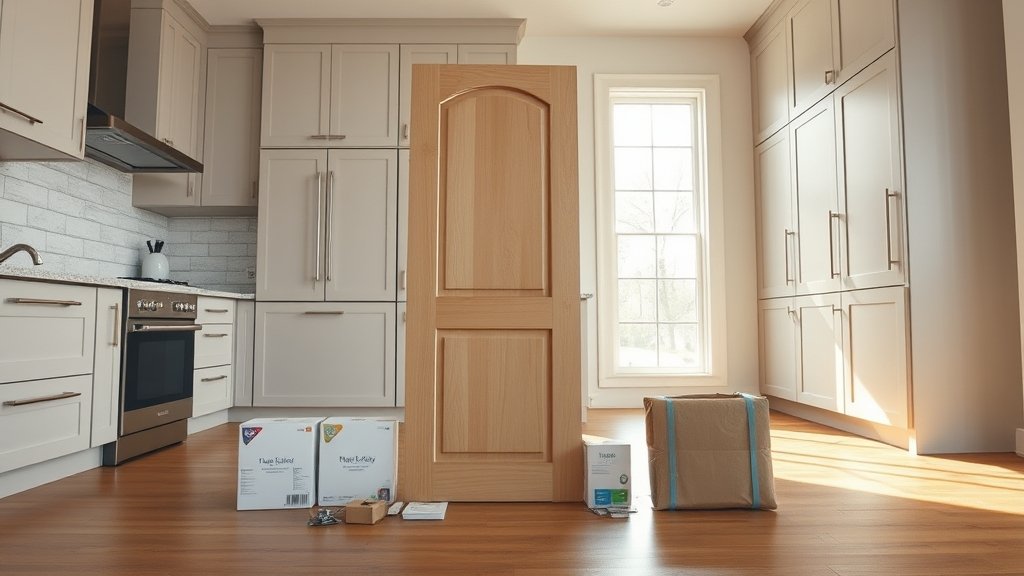
Arched door kits remain a statement upgrade: you’ll see them most often in “inset” or overlay applications, sometimes with a glass or metal insert. They’re especially popular in renovations aiming for design authenticity and subtle, rounded transitions — but market supply is still fragmented across RTA, semi-custom, and specialty shops.
Step-by-step: Choose and fit your arched pantry door kit
If you’re a homeowner or contractor planning to install an arched pantry door kit, here’s a simple, proven roadmap:
- Measure precisely — twice.
- Frame opening height, width, depth (use a millimeter/inch steel rule).
- If inset: Confirm reveal (inset industry standard is 3/32″ per Conestoga/industry guidance).
- Mark for any out-of-square — arches magnify errors.
- Decide on overlay or inset mounting.
- Inset gives a cleaner, furniture-grade look, but is less forgiving.
- Overlay is more common for quick retrofits or where perfect tolerances are hard to achieve.
- Define your arch and panel style.
- Typical arch radii: 6–12″.
- Available heights: 84–96″.
- Widths: usually 24–36″.
- Solid wood, engineered veneer, or MDF/acrylic inserts (ask for a sample).
- For visual impact, consider a decorative glass or metal arched cabinet door insert.
- Choose your finish.
- Stain, matte paint, or textured finish.
- Request finish samples and confirm against your lighting (finish colors look different in showroom vs. home).
- See guidance in Cabinet Trends: 2025.
- Specify the right hinges/hardware.
- Multi-axis adjustable hinges are a must for inset doors or any tall pantry application. Ignoring hinge-to-weight ratio causes sagging within 2–3 years (industry data).
- Soft-close features help prevent damage over time.
- Ask your supplier for hinge pre-drilling patterns.
- Confirm availability and lead times.
- Ready-to-assemble (RTA) or flat-pack kits have dropped install times from ~7 days to ~3 days, and major vendors are investing in faster fulfillment (Market Research Future).
- Custom or semi-custom kits may require 3–8 weeks.
- Get an apples-to-apples quote.
- Material, custom arch radius, hinge/hardware, finish, and installation.
- Flag your region/location: Pricing fluctuates by city/state. Request up-to-date supplier quotes before committing.
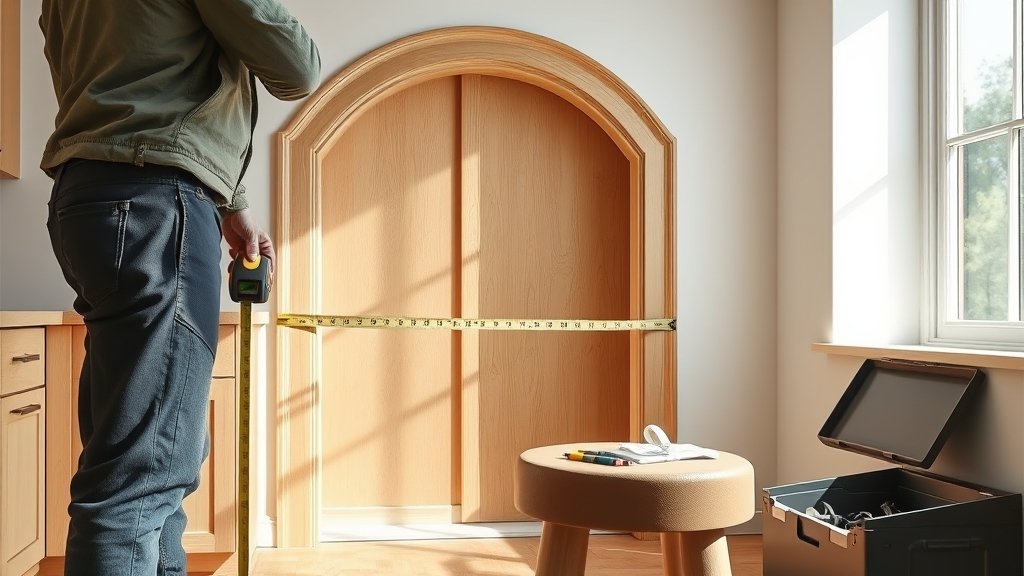
Don’t forget: For a true premium look, consider pairing arched door kits with minimalist kitchen design choices like neutral palettes, handleless cabinetry, or premium wood finishes.
Real-World Case Example:
A Seattle homeowner wanted a walnut-veneered arched pantry door kit during a modern kitchen renovation. By using our checklist, she specified a 9″ arch radius, 88″ height, and verified the door’s final weight with the cabinetmaker — enabling the installer to upgrade to three multi-axis soft-close hinges (instead of the usual two). No sagging was reported two years later. Total install time: 3.5 days for cabinet + door. Installer commented, “Having exact measurements and the weight spec ahead of time saved us from having to rehang the door after it started to lean — it’s solid and looks amazing.”
Advanced analysis & common pitfalls with arched pantry doors
Even with the right arched pantry door kit, mistakes during measurement or hardware selection are common. Industry-wide, the installation error rate is about 9% — often leading to costly rework. Here’s what to watch out for, with data-backed advice:
| Problem | Root Cause | How to Avoid |
|---|---|---|
| Difficulty Cleaning Curves | Curved surfaces collect dust. Hard to wipe corners. | Choose stain/paint finishes over deep-groove profiles. Consider glass/acrylic inserts for easy wipe-down. |
| Sagging Doors (in 2–3 years) | Hinge weight rating too low; not enough support. | Match or exceed hinge torque/weight spec to door slab weight — especially for large/tall doors. |
| Binding/Tight Movement | Inset doors with tight tolerances (3/32″ reveal) move with seasonal humidity. | Add tolerance for wood movement; use multi-axis adjustable hinges; avoid in areas with severe humidity swings. |
| Measurement Errors | Inaccurate opening or arch measurement. | Double-check width, height, arch radius. Always confirm with supplier’s cut-sheet. Templates help. |
| Missing or Incompatible Hardware | Kit lacks hinge plates or soft-close options. | Always request full hardware with pre-drilling. Verify overlay or inset mounting matches your cabinet style. |
According to verified reviews, ignoring hinge-to-weight ratios is the most common cause of returns (see USA Cabinet Express: Common Pitfalls). One customer put it simply: “I loved the look but within two years, the arched door had started sagging off-center. Cabinet shop said new hinges were needed. Wish I’d known up front.”
Inset arched doors require particular care — they sit flush in the frame and need tight tolerances. Even small shifts due to humidity can cause binding or scraping, unlike overlay or sliding options. Expect more frequent adjustment and check for 3/32″ reveals on all sides for smooth, long-term function.
Maintenance is a real-world concern: Curved doors tend to collect dust and require more cleaning effort than rectangular or sliding alternatives (The Kitchn: Cabinet Trends). Choose low-profile or glass-insert designs to simplify routine care.
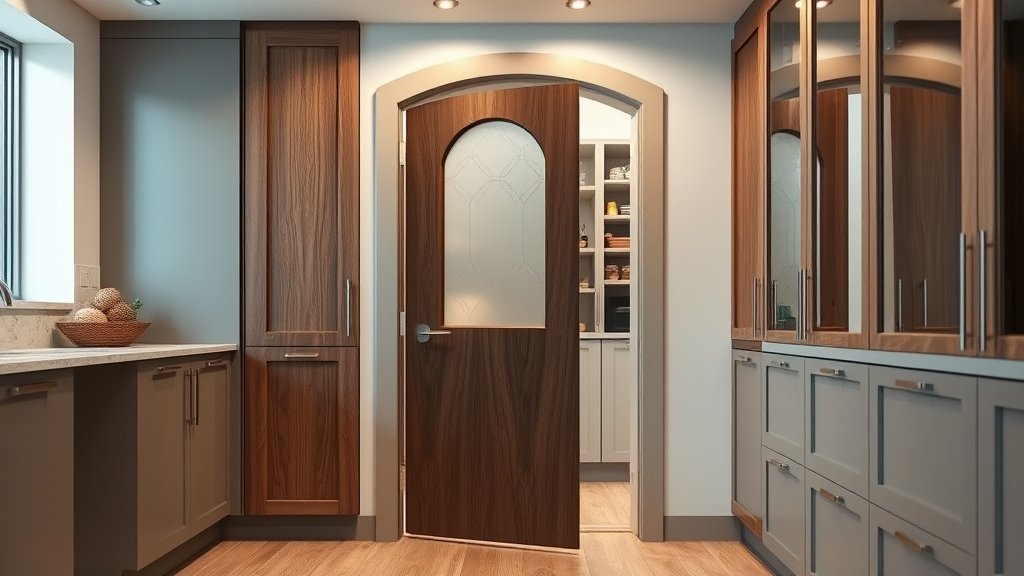
To avoid missing critical details, download and print our step-by-step buying and installer checklist (at the end of this post).
Conclusion & next steps
A high-quality arched pantry door kit delivers standout style — if you take time to plan, measure, specify, and install correctly. To avoid rework and regret, request at least three quotes (RTA, semi-custom, and full custom), demand the hinge’s weight and torque specs in writing, and confirm current supplier lead times and warranty before committing. Remember, the arched pantry door kit segment is a unique, fast-growing niche but supply, price, and lead-times are still variable — always gather up-to-date local data for your project.
Next steps:
- Print the installer brief and checklist below to use with your local supplier or contractor.
- For more related remodeling upgrades, see our guides on cabinet refacing vs replacing, interior window shutter installation, and LVP flooring installation DIY.
- Want total peace of mind? Consider pairing your new arched pantry with a soundproofed home office or upgrade to minimalist kitchen design for a cohesive, modern look.
Ready to transform your space? Download the checklist and start quoting your arched pantry door kit project today.
Frequently Asked Questions
Are arched pantry door kits more expensive than rectangular ones?
Yes, due to their niche production, specialty hardware, and more complex installs, arched kits generally cost 20–60% more than standard rectangular doors. Always get region-specific quotes to confirm.
Can I retrofit an arched cabinet door insert into an existing rectangular opening?
Yes, some suppliers offer retrofit arched cabinet door inserts, but you must measure precisely and check the swing envelope for binding.
What hinge types are best for tall arched pantry doors?
Multi-axis adjustable hinges with soft-close features are recommended — particularly for inset doors. Always verify the hinge’s rated weight capacity matches your door slab.
How do I prevent arched doors from binding with seasonal changes?
Maintain furniture-grade 3/32″ reveals for inset doors, use multi-axis hinges, and if possible, choose engineered materials or allow for a small tolerance to adapt to humidity shifts.
Is cleaning an arched pantry door harder than cleaning a rectangular one?
Yes, the curved surface collects dust and is harder to wipe clean — consider flat, low-profile finishes or glass/acrylic inserts to reduce cleaning effort.