

Whole home battery backup is becoming an essential part of energy resilient homes in 2024, offering continuous power during outages and offsetting peak utility rates. Whether you want basic outage protection or a true off-grid setup, knowing the real costs, options, and pitfalls is critical before you commit.
Key Takeaways
- Whole home battery backup installations average $12,000–$15,000 before incentives, but full off-grid systems can exceed $100,000 in some regions.
- Most guides skip over real-world reliability complaints and omit key performance comparisons between systems like Tesla Powerwall and Generac PWRcell.
- Proper sizing, well-designed grid isolation, and realistic maintenance expectations are crucial for success (and to avoid buyer’s remorse).
- What Is Whole Home Battery Backup and Why Do Homeowners Want It?
- Step-by-Step Guide: Planning, Sizing, and Installing a Whole Home Battery Backup
- Advanced Analysis & Common Pitfalls: Costs, System Comparison, and What Top Articles Miss
- Conclusion: Should You Install Whole Home Battery Backup?
- Frequently Asked Questions
What Is Whole Home Battery Backup and Why Do Homeowners Want It?
A whole home battery backup system is a high-capacity battery (usually lithium-ion) connected to your home’s main panel. It stores energy—either from the grid, solar panels, or both—and automatically powers your entire house during outages.

Unlike portable backup batteries or gas generators, a properly-sized whole home battery backup can:
- Keep all essential (and even high-power) appliances running seamlessly during grid loss
- Let you avoid loud, high-maintenance generators
- pair with solar for maximum grid independence and savings
The driving reasons to invest include:
- Frequent power outages (storms, wildfires, unreliable grids)
- Avoiding time-of-use electric rates and demand charges
- Peace of mind for medical devices or work-from-home needs
- Prepping for true off-grid capability with solar and batteries
If you’re also considering smarter upgrades for your property—like ADU garage conversions or electrification for EV charging—battery backup can be a smart next step.
Step-by-Step Guide: Planning, Sizing, and Installing a Whole Home Battery Backup
Getting the right whole home battery backup is not just buying the biggest battery you can afford. Planning, design, and installation play a huge role in safety, compliance, and cost-effectiveness.
- Assess Your Needs and Loads
List every appliance and circuit you want to back up. Prioritize essentials (fridge, heating/cooling, medical equipment, internet). For most homes, a 10-13.5 kWh system covers the basics, but whole-home backup (everything running) may require 20 kWh or more. - Get a Professional Load Calculation
Use your past utility bills and an electrician’s help to estimate your hourly and daily kWh usage during an outage. - Pick the Right Battery System
Compare top brands:- Tesla Powerwall 3: 13.5 kWh per unit, stackable, ~$12,000-$13,500 per unit after install, good for automation and smartphone integration.
- Generac PWRcell: Widely available, modular design, competitive pricing, less slick interface.
- Alternatives (LG, Enphase, Growatt): Range from 5 kWh to 20 kWh, different strengths in warranty, cost per kWh, and backup capabilities.
Consider inverter specs carefully—they determine max loads that can run at once.
- Plan Your Grid Integration
Decide if your whole home battery will be grid-tied (for solar savings), fully off-grid, or hybrid. True off-grid requires much larger systems, a robust transfer switch, and critical load panels. - Installation & Permits
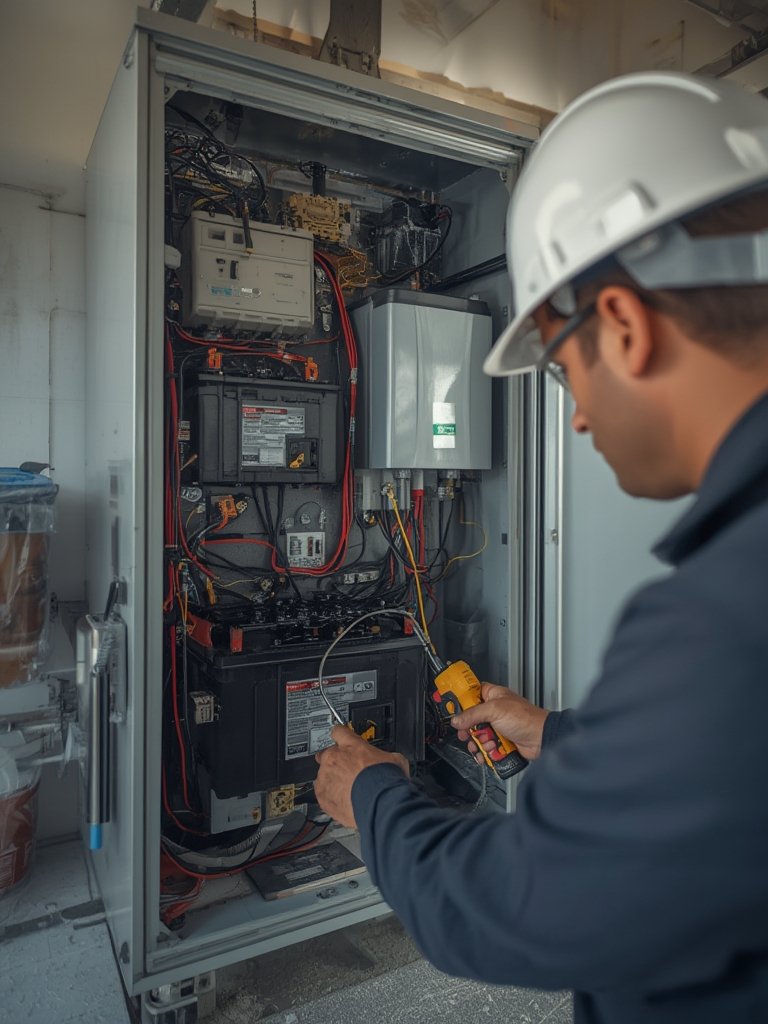
Hire a licensed electrician who has experience with home battery backup installations. Improper wiring voids warranties and can be dangerous. Be sure permits are pulled—just like with Level 2 home EV charger installations, code compliance matters. - Test & Maintain Your System
Run scheduled outage drills. Clean and inspect hardware every six months. Understand warranty limitations and what support is (and isn’t) included from the manufacturer.
You can also tie battery backup into projects like heat pump water heater upgrades for greater energy bill savings and better emergency reliability.
Advanced Analysis & Common Pitfalls: Costs, System Comparison, and What Top Articles Miss
Most “top” battery backup guides focus on pricing or basic benefits, but they rarely detail the real dangers, design snags, or regional cost realities you’ll face as a homeowner. Here’s what you really need to know.
Real Cost Comparison By State (2024 Averages for ~13.5 kWh Systems)
| State/Region | Cost per kWh | Total Cost | Source |
|---|---|---|---|
| Florida | $1,339 | $8,944 (after credits) | Source |
| Western North Carolina | $900–$1,100 (add’l kWh) | $12,000–$25,000 (10–15 kWh) | Source |
| Texas | $1,042 | $14,067 | Source |
| California | $1,158 | $15,633 | Source |
| Michigan | $1,348 | $13,480 | Source |
| Mississippi | $1,522 | $20,547 | Source |
Regional add-ons: Permit and install labor can add $2,000–$4,000 for complex integrations (multiple subpanels/circuits). Real off-grid setups push above $100,000 due to battery bank size, solar array cost, and custom inverters.
See the cold plunge pool guide for another example of how project costs spiral with complexity.
Common Pitfalls to Avoid
- Overpaying for Unneeded Capacity: Most homes only need 10–15 kWh backup, but aggressive sales tactics upsell 30+ kWh systems. Know your loads.
- Poor Grid Isolation: If your electrician doesn’t install a proper transfer switch or critical loads panel, your battery may underperform or risk backfeeding the grid (a code violation).
- Ignoring Long-Term Maintenance: Batteries last 8–12 years, but cheap brands or improper installs may void warranties or trigger reliability issues. No third-party data currently exists on brand reliability or failure rates—an important research blind spot.
- Inadequate Performance Comparison: Very few sources give honest specs on backup duration, max power output, or efficiency. Don’t just trust marketing figures; always ask for performance warranties in writing.
- Assuming “One-Size-Fits-All” Off-Grid Ability: Not all systems are designed to run fully islanded/off-grid. For actual grid-independence, plan for larger inverters, double the battery bank, and a robust solar array, similar to what’s outlined for complete electrification projects like EV charger installations.
What Competitor Articles Miss
- No homeowner complaint data: There’s little public data on reliability, longevity, or customer support issues for any major battery brand. Expect to deal with early-adopter growing pains, especially on newer models.
- Lack of in-depth brand/system comparisons: Specifications are often generalized. One Powerwall does not equal every “whole home” battery—especially regarding power output (kW), auto-transfer features, or off-grid capability.
- No market adoption statistics: Even deep-dive competitor guides fail to provide current or projected adoption numbers for U.S. or global markets. You’re largely navigating a still-emerging space.
Are There Maintenance or Upgrade Hidden Costs?
- Warranties: Expect 10 years standard for most systems. Upgrading for a longer warranty can add 10–25% upfront.
- Maintenance: Annual checks (by you or a pro) are advised. Wires, connection points, and inverter fans can require regular inspection or cleaning. No region-specific data, but expect $0–$300 yearly if hiring it out.

Conclusion: Should You Install Whole Home Battery Backup?
Whole home battery backup lets you ride out power outages, reduce peak electric bills, and move closer to true grid-independence. But real-world costs and design challenges mean you must plan carefully—right-sizing, permitting, and ongoing maintenance are crucial to long-term satisfaction.
If you’re ready to invest in a whole home battery backup, get a load audit, ask for written system specs, and get quotes from several qualified installers. Contact us today for a local recommendations list—or explore projects like EV charger installation to further boost your home’s resilience.
Frequently Asked Questions
How much does a whole home battery backup actually cost after incentives?
Most U.S. homes pay $8,944–$9,800 for a standard 10–13.5 kWh system with the federal 30% tax credit applied. Some regions and high-end installs may be higher. Use a load audit to avoid buying more capacity than needed. [Reference]
Do I need solar panels to use whole home battery backup?
No, but pairing solar with batteries allows you to keep recharging during long outages and maximize savings. Without solar, your battery can still charge from the grid, but won’t provide renewable energy benefits.
How long will my battery backup system last during an outage?
This depends on your system’s kWh size and appliance loads. A 13.5 kWh battery may run essentials for 12–18 hours, while a whole-home setup (including AC, washer, dryer) may be depleted in 4–6 hours if all loads run at once.
Can I add more batteries in the future?
Most major systems (like Tesla Powerwall or Generac) allow you to “stack” units for higher capacity. Installers recommend sizing for future expansion—add wiring and inverters with excess capacity if you expect to grow your system.
What are the biggest mistakes to avoid when installing whole home battery backup?
Common mistakes are oversizing or undersizing (based on bad load estimates), skipping permits, hiring inexperienced installers, and failing to test your system regularly to verify real-world performance.