

Home sauna kit indoor solutions are transforming how homeowners create private wellness spaces. If you want stress relief, detox, or just luxury at home, this guide breaks down what you can really expect — costs, installation, pitfalls, and smart ways to get it right.
Key Takeaways
- U.S. indoor sauna kit sales and residential installations are surging, with infrared models and 2-person units in high demand.
- Most home sauna kit buyers underestimate space needs, electrical requirements, and ongoing maintenance costs before installing.
- Choosing between traditional and infrared sauna kits involves trade-offs in energy use, installation complexity, health benefits, and upfront costs.
- What Is a Home Sauna Kit Indoor? Why It’s Booming
- How to Install a Home Sauna Kit Indoor: Step-by-Step
- Advanced Analysis & Common Pitfalls: What Most Guides Miss
- Conclusion
- Frequently Asked Questions
What Is a Home Sauna Kit Indoor? Why It’s Booming
A home sauna kit indoor is a pre-manufactured package with everything you need to build a sauna in a spare room, garage, or basement. It usually includes insulated panels, benches, a heater (traditional or infrared), controls, and lighting—all designed for straightforward at-home assembly.
Booming interest in wellness and stress relief, plus advances in energy efficiency and compact design, have made these kits more popular than ever. In 2024, US home sauna kit sales and installations reached $255.5 million with strong growth predicted through 2033. Infrared saunas are the fastest-growing segment, and 2-person indoor kits are especially in demand for their balance of space-saving design and comfort.

Most indoor sauna kits are DIY-friendly, but choosing between traditional vs infrared can have a real impact on installation, operating costs, and what you get out of each session. These kits fit the post-pandemic demand for in-home wellness—but most buyers consistently underestimate the real space, electrical, and long-term upkeep requirements involved.
How to Install a Home Sauna Kit Indoor: Step-by-Step
Safe installation of an indoor home sauna kit takes more than assembly instructions. Here’s how to get realistic, lasting results in any U.S. home.
1. Pick the Right Kit—And Get Everything in Writing
Look for kits that match your room size and meet UL/certification for U.S. homes. 2-person models are more flexible for apartments and smaller rooms. Verify warranty terms and what’s included (some budget kits skip insulation, forcing costly upgrades later).
2. Prep the Room: Moisture, Flooring, Ventilation
Choose non-porous, waterproof flooring (tile or sealed concrete are best), and ensure a vapor barrier is present if you’re in a basement or garage. Plan for at least one small vent for fresh air—even infrared units benefit. Confirm walls can handle minor moisture drift.
3. Electrical Setup: The Non-Negotiables
Traditional sauna heaters (electric) typically need a 220V–240V dedicated line, 20–40 amp circuit, and a GFCI breaker. Infrared sauna kits often run on 110V but can still require dedicated circuits for safe, code-compliant use.
- Check your electrical panel capacity before purchase. Upgrading your panel adds significant cost/complexity.
- Hire a licensed electrician for all new electrical work. Submit permit paperwork if your city/county requires it—the fines for noncompliance are real.
- Use only manufacturer-approved wiring and follow clearance specs for both heater types.
4. Assembly and Final Inspection
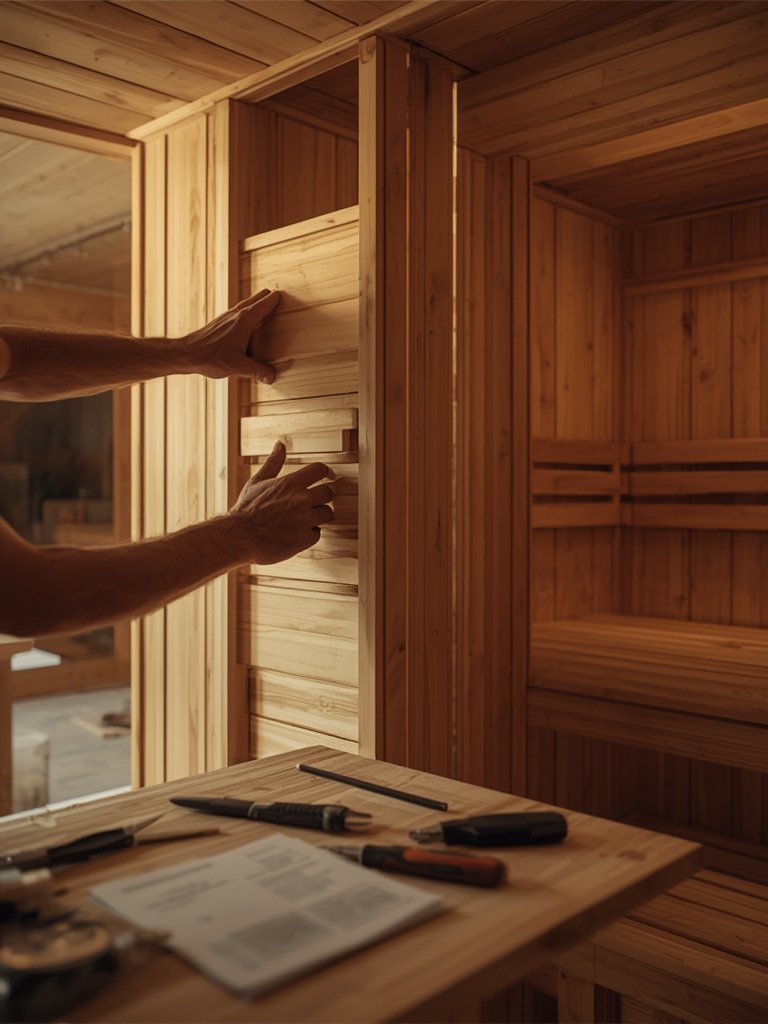
Most home sauna kit indoor packages come with modular walls that snap together or bolt at the corners. Follow manufacturer directions for sealing joints and aligning doors. Install benches and controls last. Double-check all electrical and heater connections before powering on.
5. Testing and Maintenance Routine
Run your sauna kit for a 30-minute test cycle. Check for leaks, electrical issues, and verify safety shutdown functions. Clean benches and walls regularly with non-corrosive cleaners. Infrared models produce less humidity (lower mold risk), but every sauna room benefits from a quick wipe-down and periodic service.
Considering a major energy-efficient home upgrade? Explore rebates for ENERGY STAR water heaters to stack even more savings on your wellness remodel.
Advanced Analysis & Common Pitfalls: What Most Guides Miss
Beyond the basics, most competitor articles skip over real-world barriers to installing a home sauna kit indoor. Here’s where most DIYers and pros run into trouble—and how to avoid it.
Most Common Pitfalls
- Space Miscalculation: Kits often “fit” but leave no room for a changing area, bench access, or adequate ventilation. Always allow at least 1–2 feet of clearance around the sauna for comfortable use and safe operation.
- Electrical Surprises: Your panel may not support a sauna heater’s load—panel upgrades run several thousand dollars and often require permitting similar to EV charger installs.
- Hidden Costs: Budget kits skip vapor barriers, floor drain adapters, or certified wiring. These “extras” add up fast. Expect real DIY total cost of $2,500–$7,500; pro installs $5,000–$15,000+ (especially for luxury finishes or city compliance).
- Maintenance Reality: Traditional saunas need yearly heating element checks and wood panel upkeep. Infrared models require less, but no sauna is truly “zero maintenance.”
Infrared vs Traditional: At a Glance
| Feature | Traditional Sauna | Infrared Sauna |
|---|---|---|
| Heat-up Time | 30–45 min | 10–15 min |
| Energy Use | High (3–8 kW) | Low (1.5–2.5 kW) |
| Electrical Need | Dedicated 220V/240V, 20–40A | 110V–120V typically |
| Maintenance | Regular wood care, heating checks | Lower, but still needs cleaning |
| User Satisfaction | Tradition, “deep heat” feel | Easy setup, faster access |
The market’s moving fast: traditional models lead in volume, but infrared kits are the fastest-growing and often the easiest for DIY installation, especially for 2-person units in apartments or condos.
Thinking of adding other wellness upgrades? Read about cold plunge pools for recovery or ADU conversion tips if you want the ultimate home spa experience.
Conclusion
Installing a home sauna kit indoor offers a direct path to daily wellness—if you plan for the real needs: space, electrical, code compliance, and maintenance. Infrared kits are energy-conscious and faster to set up, traditional models deliver authentic “deep heat,” but all require research and honest budgeting. Compare kit specs carefully, prepare for hidden costs, and know when to call a licensed electrician.
Ready to make your wellness dreams a reality? Explore the latest home sauna kit indoor models, check your space and power needs against each, and get quotes from at least two local licensed installers. Your private home spa is closer than you think—just budget for the real work.
Frequently Asked Questions
How much space do I need for a 2-person indoor sauna kit?
Most 2-person home sauna kits need a floor area of at least 45 to 60 inches wide and 40 to 50 inches deep, with minimum 80-inch ceiling height. Always allow at least a foot of clearance on all sides for access and ventilation.
Can I install a home sauna kit indoor on my own, or do I need a pro?
Many kits are designed for DIY assembly, but you’ll need a licensed electrician for any dedicated circuit or wiring upgrades—especially for 220V traditional heaters. Some cities require permits for all new 220V circuits. Always check local building codes before starting.
What’s the difference in operating cost between infrared and traditional sauna kits?
Infrared saunas run on about half the electricity of traditional electric models and heat up faster. Operating a traditional sauna can cost $1–$2 per use, while infrared often runs under $1. Actual cost depends on session length and local power rates.
What regular maintenance does a home sauna kit indoor require?
Wipe down all surfaces after each use to prevent moisture buildup. Traditional units need annual heating element and wood checks. Infrared requires less maintenance overall, but both benefit from a full deep clean every 3–6 months.
Where can I find more in-depth guides on home upgrades?
For electrical upgrades, see our code-compliant EV charger installation guide. For water heater efficiency, try our heat pump water heater rebate breakdown.