

LVP flooring installation DIY is a powerful way to update your home on a real-world budget—if you know what to expect. Choosing to install luxury vinyl plank flooring yourself can save thousands, but mistakes in prep, moisture protection, or plank alignment can cost you even more. This honest guide breaks down costs, steps, and real pitfalls for a successful result, whether you’re renewing the living room or tackling bathrooms and basements.
Key Takeaways
- DIY LVP installation can save $1,500–$4,000 over hiring a pro, but thorough subfloor prep and moisture control are critical.
- Click-lock LVP is the most DIY-friendly, but rushing leads to gaps, misalignment, and tricky cuts around doorways.
- Budget wisely for hidden costs like old floor removal and underlayment—you’ll need more than just planks to finish strong.
- What Is DIY LVP Flooring Installation & Why Consider It?
- Step-by-Step Guide: How to Install LVP Flooring Yourself
- Advanced Analysis & Common Pitfalls
- Conclusion
- FAQ
What Is DIY LVP Flooring Installation & Why Consider It?
DIY LVP flooring installation means purchasing luxury vinyl plank (LVP) material and installing it yourself instead of paying a flooring contractor. LVP is popular in 2024 for its waterproofing, durability, and affordability. The main reason homeowners go DIY is cost savings: you can install a standard 1,000 sq ft for about $1,500–$3,000, compared to $3,500–$8,000+ for professional work. The savings come from your labor, but you’ll still encounter material costs, tool rentals, underlayment, trim, and potential subfloor prep.
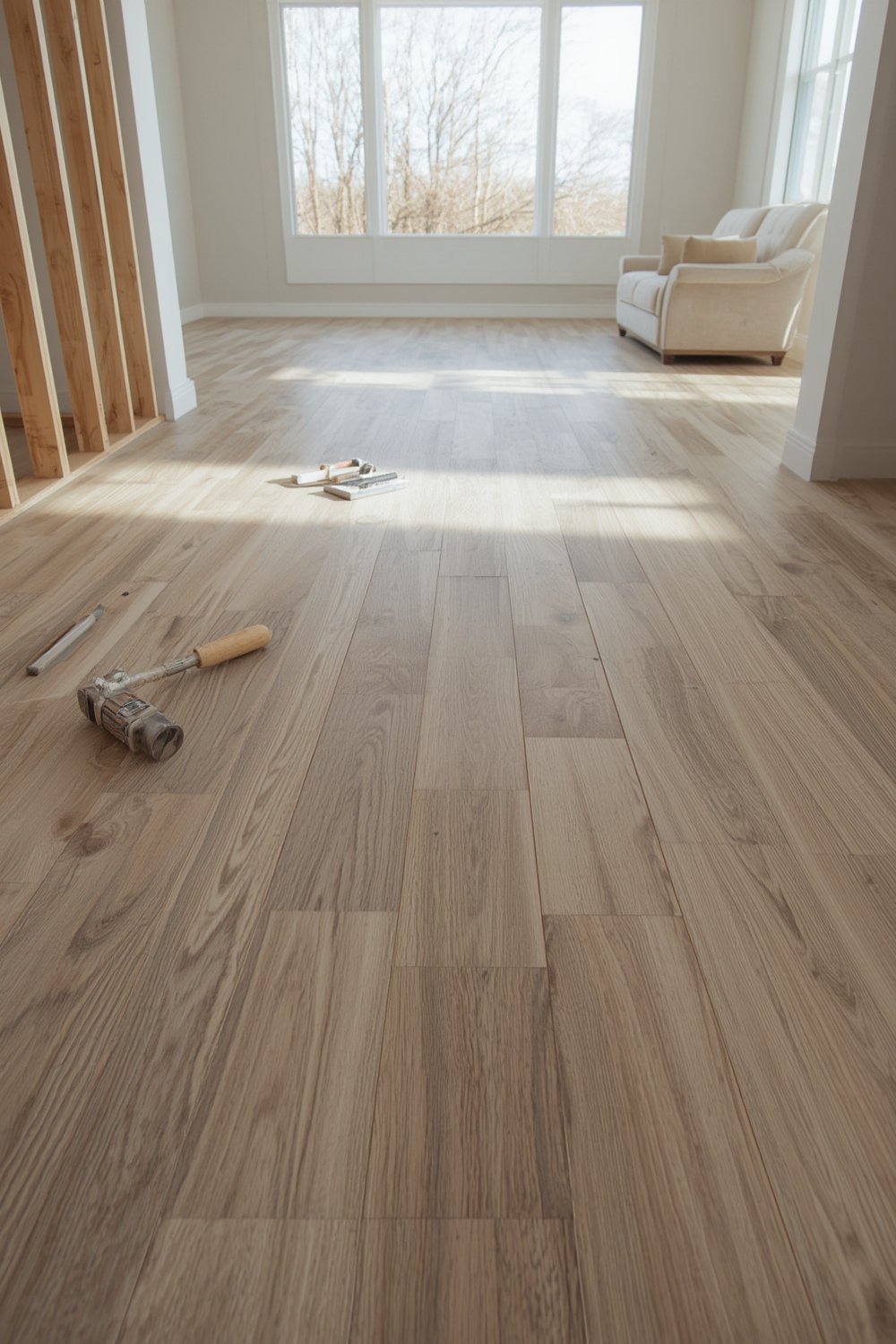
DIY is ideal if you’re comfortable with detailed measurement, lots of kneeling, and solving the inevitable quirks of your home’s subflooring. Click-lock LVP is especially user-friendly. However, skipping steps—like proper leveling or skipping a moisture barrier over concrete—often leads to expensive do-overs. If you can follow careful instructions and don’t mind a learning curve, DIY can deliver results as good as a pro at half the cost.
For more on how installation compares to skilled trade efforts—like home EV charger installation—be sure to see our code-compliant installation guides.
Step-by-Step Guide: How to Install LVP Flooring Yourself
Here’s how to tackle an LVP flooring installation DIY project step by step for solid, lasting results.
- 1. Measure & Budget
Accurately measure your space (length x width) and add 10% extra for waste. Order mid-range LVP ($2.00–$3.25/sq ft) for best value [source]. Don’t forget underlayment, trim, and transitions. - 2. Remove Old Flooring
Remove carpet, tile, laminate, or linoleum. Watch for asbestos in old tiles and budget $0.50–$2.50/sq ft for this step [source]. - 3. Assess and Prep the Subfloor
Check for high spots, dips, or moisture issues. Level uneven areas ($1–$3/sq ft if necessary). Do moisture testing on slabs—install a vapor barrier if readings are high. - 4. Install Underlayment
Roll out the underlayment, overlapping seams as directed. For concrete, use a product with a built-in vapor barrier ($0.30–$0.60/sq ft). Tape seams tightly and trim at walls. - 5. Plan Your Layout
Run planks parallel to the longest wall for best look. “Dry-fit” the first row to check for width at the opposite wall and avoid tiny strips. - 6. Begin the Installation
Start in a corner, clicking planks together row by row. Stagger seams at least 6″. Use spacers for a expansion gap at walls. - 7. Cut Around Obstacles
Use a jigsaw or vinyl cutter for notches at door jambs and air vents. - 8. Install Trim and Transitions
Reinstall or install new baseboards. Add transition strips between rooms and at doorways ($30–$50 per location). - 9. Clean Up and Inspect
Remove dust, double check seams, and walk the floor for clicks or loose edges.
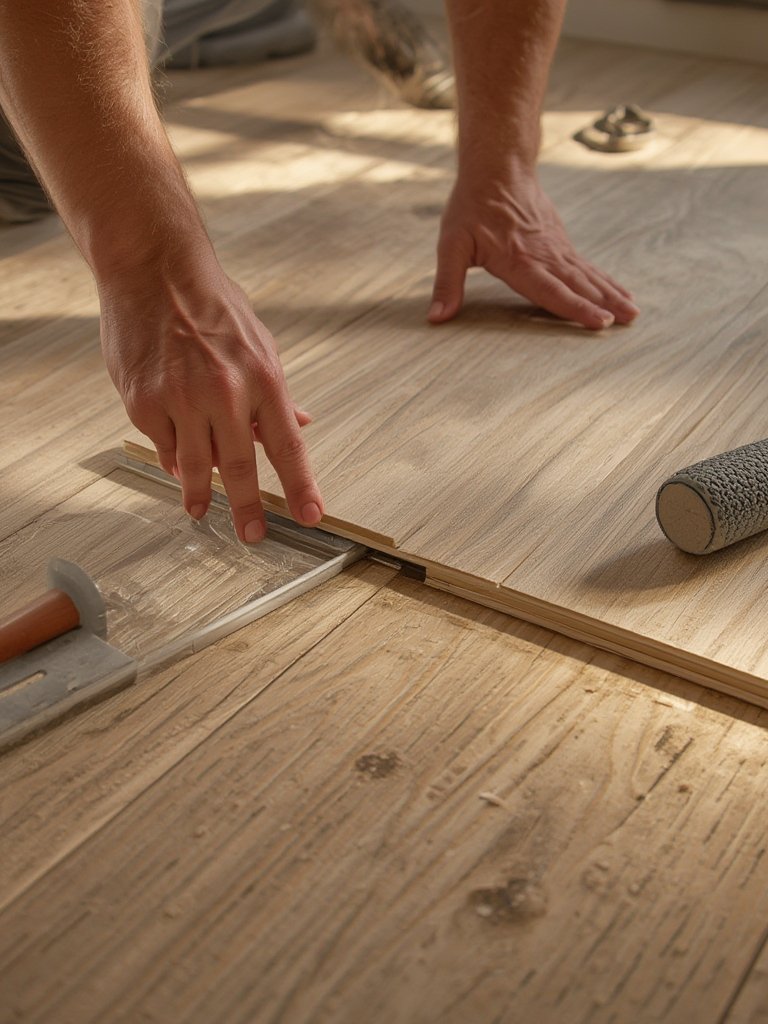
For specialized spaces (basements, bathrooms), research moisture barriers and local best practices. Be especially careful about expansion space—vinyl expands and contracts with temperature changes.
Want more insights on adding value to your home? See our guide on ADU garage conversion for rental income.
Advanced Analysis & Common Pitfalls
Even experienced DIYers run into LVP hassles. Here’s what’s most likely to bite:
- Poor subfloor prep: Skipping leveling or not checking for hidden moisture (especially over concrete) leads to bouncy floors, peaking, or even planks that pop apart after a season.
- Wrong underlayment: Using the wrong underlayment in basements or on slabs can make planks feel hollow—or worse, trap moisture that causes mold and mildew.
- Skipping expansion gaps: Forgetting a 1/4″ gap at walls means buckling or planks lifting as temperatures shift.
- Misaligned planks: Forcing planks that won’t click means visible seams or damaged locking tabs.
- Tough cuts around doorways/vents: Rushing these steps means ugly gaps or chips—take your time, and use scrap for practice cuts.
| Feature | SPC (Stone Plastic Composite) | Traditional LVP |
|---|---|---|
| Rigidity | Very rigid, resists dents and heat [source] | Softer, more flexible |
| Wear Layer | 20+ mil, top durability | 4-20+ mil, varies by product tier |
| Feel Underfoot | Hard, can be cold/noisy | Softer, warmer, better sound absorption |
| Waterproofing | 100% waterproof (premium only) | Waterproof if mid-level or above |
| Best For | High-traffic, retail, locker rooms, kids/spills | Bedrooms, home offices, built-in comfort |
| Cost Premium | +$0.50-$1.00/sq ft | Baseline cost |
For maintenance, LVP is tough but not indestructible. Dropped tools during install can dent it. Sliding heavy appliances across finished floors causes gouges—use moving pads. Note that while LVP is waterproof, moisture from below (like a damp slab or failed vapor barrier) can still cause issues over time.
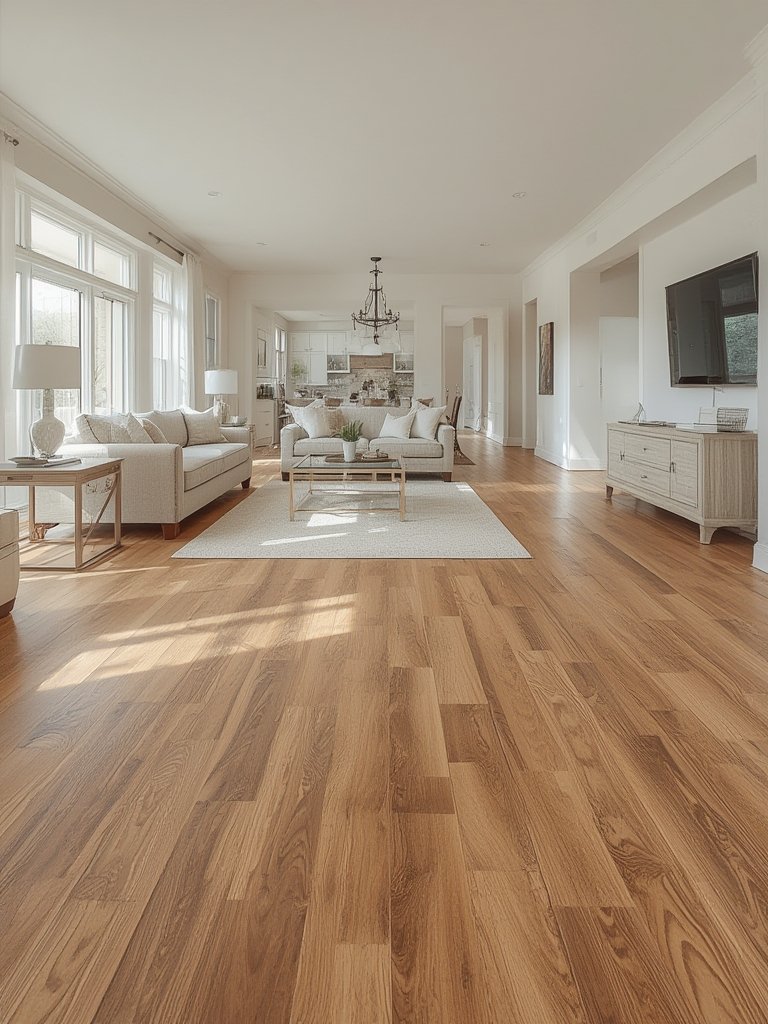
If you’re curious how LVP stacks up against other upgrade options and ongoing costs, our heat pump water heater rebate guide gives a comparable deep dive on costs, ROI, and long-term value.
Conclusion
LVP flooring installation DIY is a realistic, high-impact home improvement as long as you plan carefully for subfloor prep, moisture, and expansion. By budgeting for all materials—not just planks—you can expect to pay $1,500–$3,000 to DIY a 1,000 sq ft area and still beat pro installer quotes by more than $1,500. Follow proven techniques, watch for pitfalls, and your results will impress.
Ready to get started? Download a printable materials checklist and explore our latest guides for more home upgrade strategies.
For homeowners hungry to learn more, check out practical, proven projects like cold plunge pool installation or how to install a home EV charger safely.
FAQ
How much money will I really save with DIY LVP installation?
If you install LVP yourself, you’ll typically save $1,500–$4,000 on a 1,000 sq ft project—the difference is mostly labor, which runs $2–$4/sq ft when hiring a contractor [source].
What’s the toughest part of DIY LVP flooring installation?
Subfloor leveling and moisture management are hardest for most DIYers. Flaws here lead to long-term peaks, gaps, or water damage. Take extra time on prep and always use a vapor barrier over concrete.
Can I install LVP directly over tile or old vinyl?
In many cases, yes—if the surface is flat, stable, and free from moisture. Remove loose sections and fill grout lines. For old vinyl, check for asbestos before disturbing it.
What’s a mid-range LVP product that’s good for DIY?
Look for LVP with a 12–20 mil wear layer, click-lock edges, and a reasonable warranty. Many options run $2.00–$3.25/sq ft and deliver a good balance of quality and value [source].
Is LVP a good idea for bathrooms or basements?
Yes—if you install a full moisture barrier and seal all edges carefully. Pay extra attention to seams and transitions near tubs or basement slabs to prevent water seeping below the flooring.