

Fluted wall panels interior projects are redefining how homeowners and designers create textured, modern feature walls—combining elegance, acoustics, and flexibility for any room. If you want to add depth or a luxury touch with panels that are trending worldwide, this guide breaks down the key facts, steps, pitfalls, and realistic options for 2024.
Key Takeaways
- Fluted wall panels see significant growth in both residential and commercial interiors due to sustainability, acoustics, and modern style.
- PVC and MDF panels are the most DIY-friendly solutions, especially for uneven walls or humid areas.
- Choosing the right panel material—wood, plastic, or metal—directly impacts durability, maintenance, and cost.
- What Are Fluted Wall Panels Interior & Why Are They Booming?
- How to Install Fluted Wall Panels for Interiors (With DIY Secrets)
- Advanced Analysis & Common Pitfalls (What Most Guides Miss)
- Conclusion: The 2024 Approach to Fluted Wall Panels Interior
- FAQs on Fluted Wall Panels Interior
What Are Fluted Wall Panels Interior & Why Are They Booming?
Fluted wall panels are vertical or concave grooved panels designed to bring texture, depth, and modern aesthetics to walls. Unlike flat boards or tiles, fluted panels instantly add a high-end architectural feel, dampen noise, and can serve as bold feature walls in living rooms, bedrooms, kitchens, or commercial spaces. Their rising demand is fueled by new materials like PVC and MDF, which make installation easier and more affordable while retaining the look of luxury wood or metal finishes.

Market research shows that the global wall panels market reached $16.28 billion in 2024 and is set for steady growth at 4.3% CAGR towards 2032. Demand is equally strong in residential settings (thanks to DIY innovations and seasonal home renovation spikes) and in commercial interiors like offices or hotels, where sound absorption and refined looks are a priority.
Softwood panels remain the affordable base, while the fastest growth comes from moisture-resistant plastic slats—especially important where humidity or cleaning needs are a concern. Asia Pacific is surging ahead due to urbanization, but North America leads for eco-friendly, LEED-certified installations. For TV walls, living rooms, and even luxury bathrooms, fluted designs are being combined with pastel colors and biophilic wood to set new trends for 2024 and beyond.
How to Install Fluted Wall Panels for Interiors (With DIY Secrets)
Ready to add visual drama or sound reduction to your interiors? Here’s a step-by-step fluted panel installation guide for homeowners and renovators. Most projects can be DIY—if you choose the right materials and prepare carefully.
1. Gather the Right Tools and Materials
- PVC, MDF, or wood fluted wall panels (choose size based on wall application and moisture needs)
- construction glue for PVC/MDF, optional brad nails for wood)
- Measuring tape and level
- Saw (hand saw for MDF/PVC, power saw for dense wood panels)
- Caulk or seam filler (for joints)
- Protective gloves, dust mask
2. Prep the Wall Surface
- Repair holes or loose plaster—panels need a firm base.
- Clean dust and grease, especially in bathrooms or kitchens.
- For bathrooms or moisture-prone areas, attach a non-porous waterproof backing before installing panels.
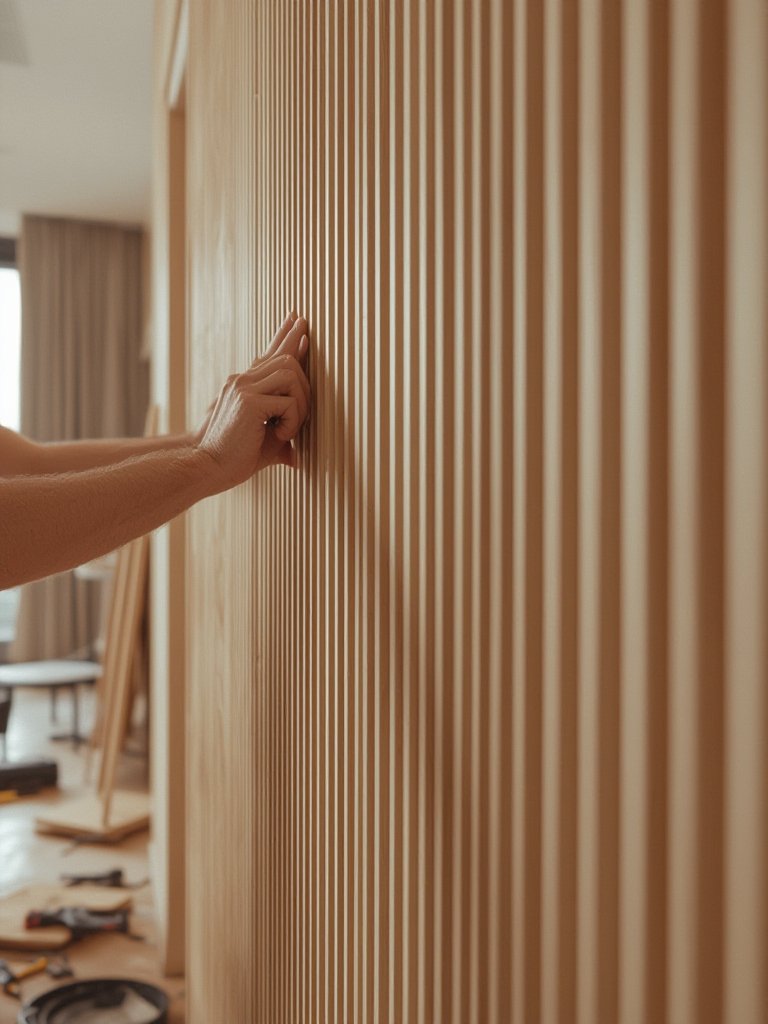
3. Measure, Mark, and Dry Fit
- Measure wall height and width carefully.
- Dry fit the first few panels at the corner or starting point to ensure even placement.
- Trim and pre–cut openings for electrical outlets or switches before final placement.
4. Panel Installation (Step-by-Step)
- Apply construction adhesive in vertical beads on the wall or backing board (more for heavier panels/larger surfaces).
- Press each panel firmly into place. Use a level to ensure each is perfectly vertical.
- For corners or tight spots, trim panels with a fine–tooth saw.
- Stagger end joints if installing over a wide surface—this improves aesthetics and strength.
5. Secure and Finish
- Additional brad nails can add security for wood panels but are rarely needed for lightweight PVC or MDF.
- Fill any gaps with matching caulk or a color-ready seam filler. For bathrooms, use mildew-resistant caulk.
- Wipe panels with a damp cloth to remove adhesive residue before it hardens.
6. Clean Up and Ongoing Maintenance
- Wipe PVC and plastic panels with a mild cleaner—no need for sanding or repainting.
- Wood panels may require gentle cleaning and should be sealed, especially if exposed to moisture or sun.
Still unsure if your interior is ready for the upgrade? Check out guides on maximizing space with conversions or compare your feature wall plan to other bold home additions.
Advanced Analysis & Common Pitfalls (What Most Guides Miss)
Fluted wall panels are not risk free. Many DIYers and even pro installers make mistakes that reduce quality, drive up costs, or lead to long-term problems. Here’s a realistic breakdown of the most common pitfalls and how to avoid them.
Common Pitfalls
- DIY-unfriendly panels: Many affordable panels are designed for professional installs, not DIY. This leads to problems with alignment, sagging, and messy seams—especially on uneven residential walls.
- Wrong material for the room: Wood warps or fades in humid bathrooms unless properly sealed. Plastic panels (especially the 7.1% CAGR growth type) perform best in wet or high–traffic areas, but some lack the warmth of wood.
- Poor substrate prep: Installing panels over unstable, dirty, or damp walls leads to adhesive failure or mold. Always use a vapor barrier and waterproof backer for moist environments.
- Maintenance surprises: Wood requires regular cleaning and sealing. Plastic or PVC are nearly zero maintenance, but not all have UV protection if exposed to direct sunlight.
2024 Fluted Panel Material Comparison
| Material | Durability | Acoustics | Maintenance | Best Use |
|---|---|---|---|---|
| Wood | High (if sealed) | Excellent | Moderate (requires cleaning/sealing) | Living rooms, TV walls |
| PVC/Plastic | Very High (moisture & impact resistant) | Very Good | Low (wipe clean, no fading) | Bathrooms, kitchens, high–traffic rooms |
| MDF | Moderate (must avoid wet) | Good | Low–Moderate | Bedrooms, hallways |
| Metal | Highest (industrial grade) | Very Good | Low | Accent/feature TV walls |
Cost Breakdowns & Hidden Expenses
- Material cost: Wood/plastic/MDF panels change price depending on thickness and finish. Softwood panels dominate affordable projects.
Plastic (especially for bathrooms)—higher upfront, but less maintenance and longer life. - Labor: Most residential fluted paneling is now DIY, but tricky rooms (uneven, curved, or humid) may need pro help.
- Tools: Panel saws and adhesives are a must. Plan for cutoff waste—oversize orders are ideal for clean seams.
For broader cost context, read how large upgrades (like converting your garage to an ADU) compare to smaller refreshes such as paneling or feature wall additions.

Extra Tips: Moist Environment Installs
- Always use PVC or recycled plastic in humid rooms—these materials are designed for moisture-prone areas and require no extra sealing.
- Apply panels over a vapor barrier and consider non-porous backings to prevent mold and delamination.
Want to see other installations with highly technical requirements? Our Level 2 EV charger guide shows similar step-by-step care for wall-based upgrades. Looking to maximize savings on eco renovations? Start with our heat pump water heater rebate checklist.
Conclusion: The 2024 Approach to Fluted Wall Panels Interior
Fluted wall panels interior projects are trending for a reason: they instantly add modern texture and acoustic benefits to any space with relatively simple installation—if you choose the right materials and prep carefully. Whether you’re following the luxury wood, industrial metal, or highly practical PVC route, today’s options offer something for every design and skill level.
To transform your space, research your panel options, measure precisely, and always match material to application. Ready to start your project? Make your first upgrade a feature wall, or pair your plan with bigger remodels for the best results. Fluted wall panels interior could be the one upgrade that truly changes how you see, hear, and use your favorite space.
FAQs on Fluted Wall Panels Interior
Are fluted wall panels suitable for bathrooms and humid areas?
Yes. Use PVC or plastic fluted wall panels for maximum moisture resistance in bathrooms, laundry rooms, or kitchens. Wood panels can warp unless professionally sealed or installed over vapor barriers.
Can fluted wall panels be a DIY project?
Absolutely. PVC and MDF fluted panels are designed for easier cutting and attachment, making DIY installation realistic for most skill levels. Always dry-fit panels before final installation for best results.
How do fluted wall panels affect acoustics?
Fluted panels disrupt sound waves, improving absorption and reducing echo. They are commonly used in offices, hotels, and TV lounges. For even better results, pair with acoustic underlayments.
What’s the difference between PVC, MDF, and wood fluted panels?
PVC is best for wet areas and low maintenance. MDF is affordable and easy to trim but avoid in high-humidity rooms. Wood offers a natural, luxury look and superior acoustics but needs sealing and regular maintenance.
Does paneling damage existing walls if removed?
Most fluted wall panels use adhesive that may pull some paint or drywall when removed. Use a primer-sealer on fragile surfaces before installation if you want easy reversibility later.