

Home office soundproofing walls are a must if you want to block distractions, improve privacy, and create a professional environment for meetings and content creation at home. In 2024, options range from commercial acoustic panels to DIY upgrades. Many users demand real decibel reductions, easy installation, and reliable results—but common missteps can waste money and deliver little improvement. Here’s precisely what works and what to avoid for effective home office soundproofing walls.
Key Takeaways
- State-of-the-art soundproofing wall materials can cut noise by up to 30 dB, but small leaks or wrong installation often ruin the effort.
- Effective soundproofing balances mass, absorption, airtight sealing, and acoustic treatment—not just foam panels or curtains.
- DIY options can work but lack of user data and common pitfalls mean mistakes are easy; commercial panels deliver steadier results for most.
- 1. The Core Concept: What Matters for Home Office Soundproofing Walls?
- 2. Step-by-Step Guide: Soundproofing Your Home Office Walls
- 3. Advanced Analysis & Common Pitfalls
- 4. Conclusion
- 5. FAQ: Home Office Soundproofing Walls
The Core Concept: What Matters for Home Office Soundproofing Walls?
Home office soundproofing walls need to stop outside noise from getting in and prevent your voice from leaking out. The latest research shows that solutions like high-density gypsum fibre panels reduce noise transmission by 15 to 30 decibels (source). Extra layers—such as ⅝” drywall with Green Glue—push STC ratings into acoustically private ranges, favored by media producers and professionals who rely on clear video calls.
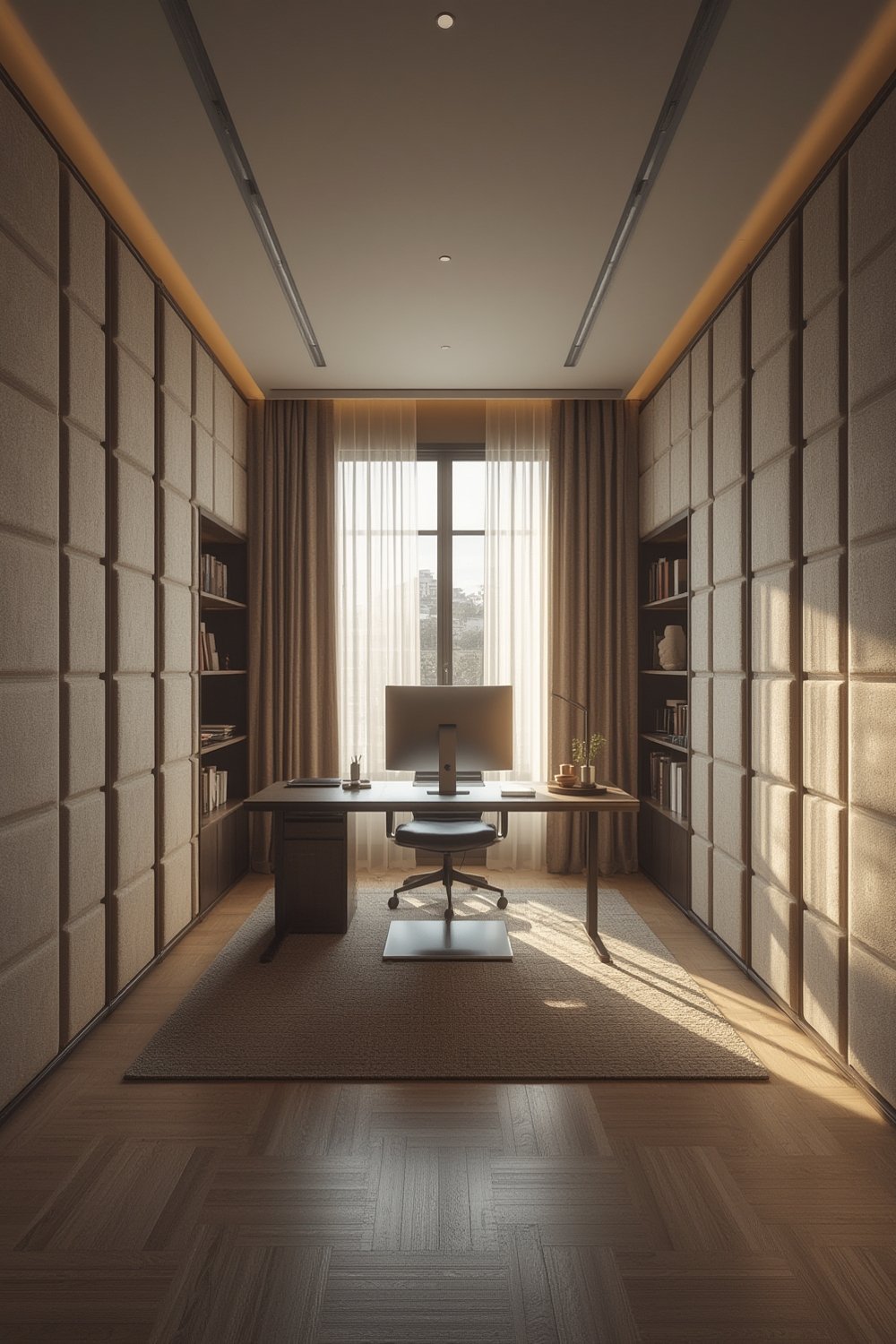
Soundproofing isn’t just about adding mass. Combining layers of mass (like Mass Loaded Vinyl or double drywall), filling air cavities with dense mineral wool, and addressing leaks with weatherstripping creates the best barrier. Small gaps around doors or windows can cut performance dramatically. Confusing absorption and soundproofing is common—acoustic foam absorbs echoes inside but does little to block transmission. True soundproofing requires airtight construction and integrated solutions.
For floors and ceilings, dense carpets and ceiling tiles absorb some noise and reduce reverberation. In some cases, commercial soundproof phone booths offer plug-and-play privacy.
Step-by-Step Guide: Soundproofing Your Home Office Walls
Here’s a focused process to make your home office walls truly soundproof—with details based on 2024’s best research.
- Identify Weak Points: Stand in your office during peak noise times. Listen at doors, windows, and wall outlets. Sound almost always leaks here first.
- Seal the Perimeter: Apply high-grade weatherstripping to door edges. Use acoustic sealant on visible cracks and gaps along windows and moldings. Lab tests show up to 10 dB improvement from sealing leaks alone.
- Add Layers to Walls: Install an extra ⅝” drywall layer with Green Glue sound damping compound. This boosts the wall’s STC and is standard for pro studios and rental ADU build-outs (see this ADU garage conversion guide for structural methods).
- Use Mass Loaded Vinyl (MLV): Sandwich a sheet of MLV between wall layers before drywalling—or hang as a membrane under decorative panels for an accessible solution. MLV forms a heavyweight, flexible barrier that dramatically blocks transmission.
- Add Absorption: Mount commercial acoustic panels or dense mineral wool panels (not just cheap foam squares) on the interior side of finished walls. This reduces echoes and further absorbs sound.
- Address Doors and Windows: Replace hollow cores with solid wood or use double doors for tricky entries. Double-glazed windows paired with heavy curtains can achieve up to 40 dB noise reduction compared to a bare window.
- Finish with Floor and Ceiling: Rugs with dense fibers absorb both airborne and impact sound. Sound-insulating ceiling tiles offer another layer of protection—and they increase privacy between floors if you need content creation-friendly isolation.
- Test and Adjust: Once installed, schedule a video call or make live recordings at various wall points. Listen for echo and stand near problem areas. Seal any unexpected leaks or order extra panels as needed.
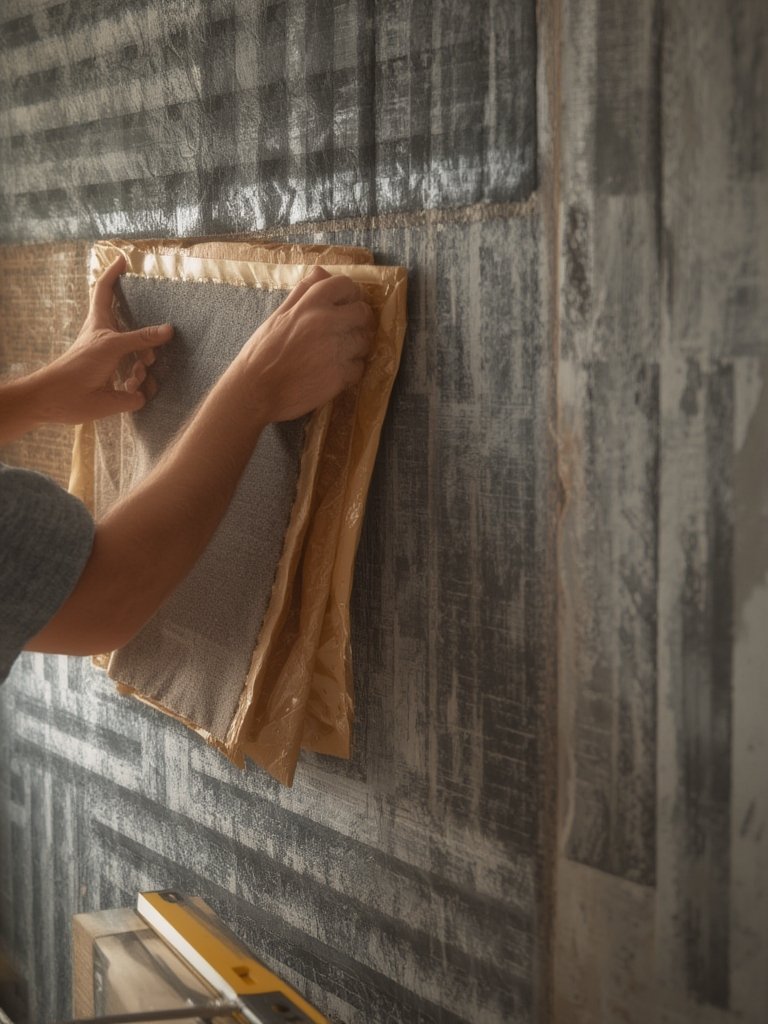
For more guides on upgrading at-home infrastructure, check out our in-depth resource on home EV charger installation—where code compliance and noise management matter too.
If you have special HVAC, cable, or ethernet lines crossing your soundproofed wall, use acoustic putty pads to seal around them tightly. Don’t let digital infrastructure become an acoustic weak point.
Want to maximize project ROI? Factor soundproofing improvements into rental potential (see how garage conversions for ADUs leverage proper insulation for privacy). In most cases, combining mass+absorption is far more effective than buying thicker foam alone.
Advanced Analysis & Common Pitfalls
The most common mistake is assuming that foam panels or curtains alone offer true soundproofing. In reality, without adding mass and careful sealing, the best foam can only cut internal echoes by 3–4 dB—hardly noticeable if you have a noisy neighborhood or kids at home.
DIY acoustic panels are popular but there’s limited user data on their real effectiveness in 2024. The best documented example: linen-wrapped commercial foam panels that were easy to install, reduced echo, but did not block outside noise (source). True sound isolation comes from building up layers, not just absorption.
Here’s a breakdown of the most common pitfalls users face, and a realistic cost/performance comparison based on the top research.
| Solution | Estimated dB Reduction | DIY Difficulty | Common Pitfalls | Impact on Aesthetics |
|---|---|---|---|---|
| Acoustic Foam Panels (Basic DIY) | 3–4 dB (echo only) | Easy | Poor transmission block; ineffective for loud noises | Moderate (plain look) |
| DECIBOARD Panels (Gypsum Fiber) | 15–30 dB | Medium / Pro | Requires proper mounting; costly if pro-installed | Blends with standard walls |
| MLV with Curtains | 30–50 dB (windows) | Medium | Gaps undo effect; heavy panels hard to hang | Bulky but custom options exist |
| Green Glue + ⅝” Drywall | STC 50+ (varies) | Pro / Contractor | Missed seams, not for renters | Indistinguishable from normal wall |
| Double Windows, Solid Door | 20–40 dB | Pro | High cost, structural change | Matches interior |
| Commercial Sound Booth | 30 dB+ | Plug-and-Play | Size, Price ($5–10k) | Modern, minimal |
Pitfalls to avoid:
- Leaving gaps unsealed around doors, outlets, window frames.
- Choosing wall-mounted foam alone for transmission block rather than absorption.
- Using complex multi-component systems without pro help—leads to weak links and wasted money.
- Ignoring HVAC, internet cable, or ceiling vents as sources of acoustic leakage.
Decoupling with special mounting systems like DECIBOARD C-MUTE anchors reduces vibration bridging issues. Studios often double up windows and doors, not just upgrade drywall. Always integrate soundproofing with actual acoustic treatment inside for a pleasant sound—think high-density panels, acoustic cotton, and thick rugs.
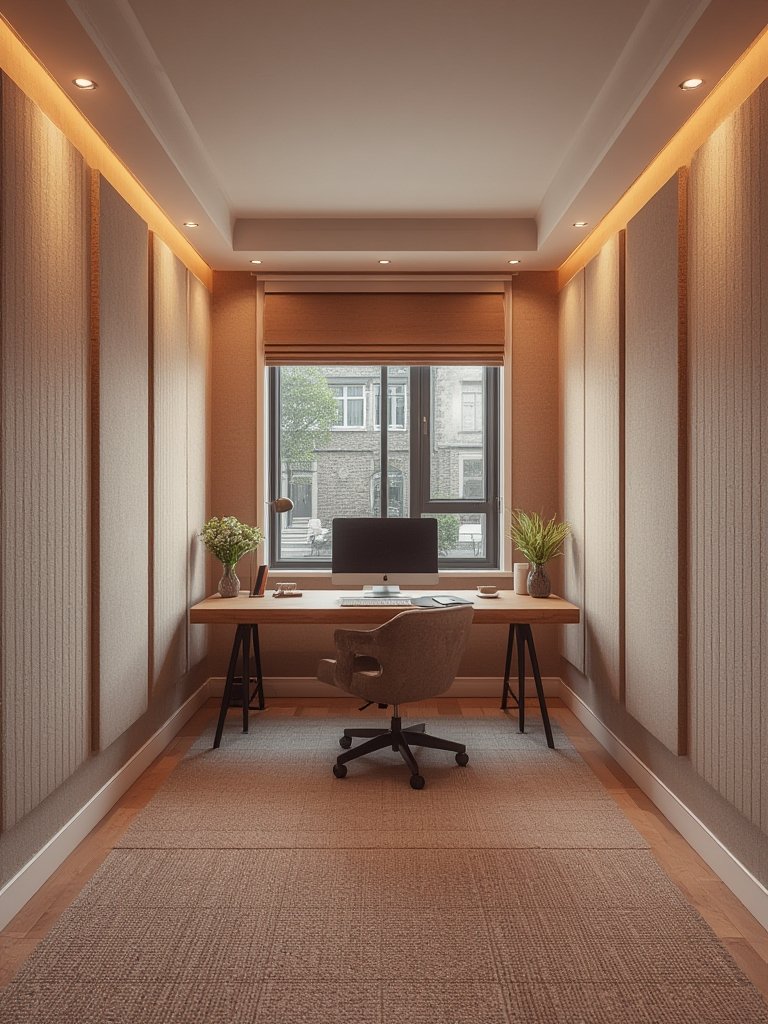
Beyond noise, you’ll want to keep your workspace attractive and functional. Acoustic panels can be artistic or wrapped in custom fabrics, while commercial booths offer clean integration and lighting controls. Finished soundproof walls are indistinguishable from regular walls. Carpets and panels double as design elements—see the cold plunge pool backyard guide for more on practical home upgrades with style.
No strong evidence indicates that wall soundproofing impacts Wi-Fi or ethernet performance. Properly executed, it should not interfere with ventilation if you avoid blocking air returns or vents.
Conclusion
Getting home office soundproofing walls right in 2024 means more than hanging a few panels. Focus on blocking air gaps, adding dense layers, and integrating smart absorption to stop both noise transmission and echo. For reliable peace and professional quality on calls—or if your home doubles as a creative studio—invest in a systematic approach. Want more tips for enhancing your modern home? Browse our guides on heat pump water heater rebates and ADU garage conversion budgeting to maximize comfort and long-term value. Now is the time to take control—upgrade your home office soundproofing walls and experience the benefits of true privacy and focus.
Ready to build a quieter, more productive home office? Take action now—don’t settle for subpar results.
FAQ: Home Office Soundproofing Walls
What is the average decibel reduction I can expect from basic acoustic foam panels?
Most DIY foam acoustic panels absorb only 3 to 4 dB of sound, mainly cutting echo rather than blocking outside noise.
Does adding more foam make my walls fully soundproof?
No. Adding foam helps control internal reflections, but real soundproofing requires mass, airtight sealing, and proper layering like double drywall with Green Glue.
Are commercial soundproofing panels better than DIY panels?
Commercial panels often deliver more predictable results and are easier to install. DIY panels can work with careful design, but lack of consistent user data means performance can vary.
How can I prevent sound leaks around my office door?
Install weatherstripping on all edges of the door and use a solid core door. Add a door sweep to block under-door gaps for the best results.
Will soundproofing impact my Wi-Fi or ventilation?
If installed carefully, soundproof walls should not interfere with Wi-Fi or ventilation. Keep air returns unobstructed and cables sealed with putty pads.