

smart electrical panel upgrade is at the top of many savvy homeowners’ lists in 2024. But does the bigger upfront price pay off for your home? We break down costs, ROI, and step-by-step implementation—so you can decide with real data and skip expensive surprises.
Key Takeaways
- Expect to pay $3,000–$5,000 installed for a smart electrical panel upgrade versus $1,000–$3,000 for a standard replacement.
- If upgrading lets you avoid a $4,000–$15,000 utility service upgrade, your payback can be immediate—otherwise expect a realistic ROI in 4–7 years.
- Homes with solar, battery, or EV charging see faster returns and unique benefits from load management features.
- Executive summary — is a smart electrical panel upgrade worth it?
- Cost comparison — smart panel vs traditional electrical panel (2024 installed and equipment costs)
- What drives installation cost variability (checklist for homeowners and electricians)
- The single biggest upside most articles miss — deferring or eliminating utility service upgrades
- Measurable benefits users report (energy savings, outage insights, safety) and ROI scenarios
- Real user pain points and negative reviews — what to watch for before you buy
- Market adoption & forecast snapshot (residential and commercial through 2026)
- Feature checklist — what leading smart panels include today
- Code, insurance, and incentive landscape in 2024 that impacts the upgrade decision
- How to evaluate vendors and installers
- Decision framework and quick calculator inputs
- FAQ and buyer’s checklist
- Closing — recommended call to action
Executive summary — is a smart electrical panel upgrade worth it?
The verdict: a smart electrical panel upgrade brings ROI and real value if you need advanced load control, have (or plan to add) solar, battery, or EV charging, or can use load management to avoid a costly service upgrade. Installed costs are typically $3,000–$5,000, much higher than a traditional panel ($1,000–$3,000), but strategic load management can help many homes avoid a $4,000–$15,000 utility upgrade. For most, payback is 4–7 years, but households with electrification plans or service constraints may see an immediate return when a service upgrade is avoided.
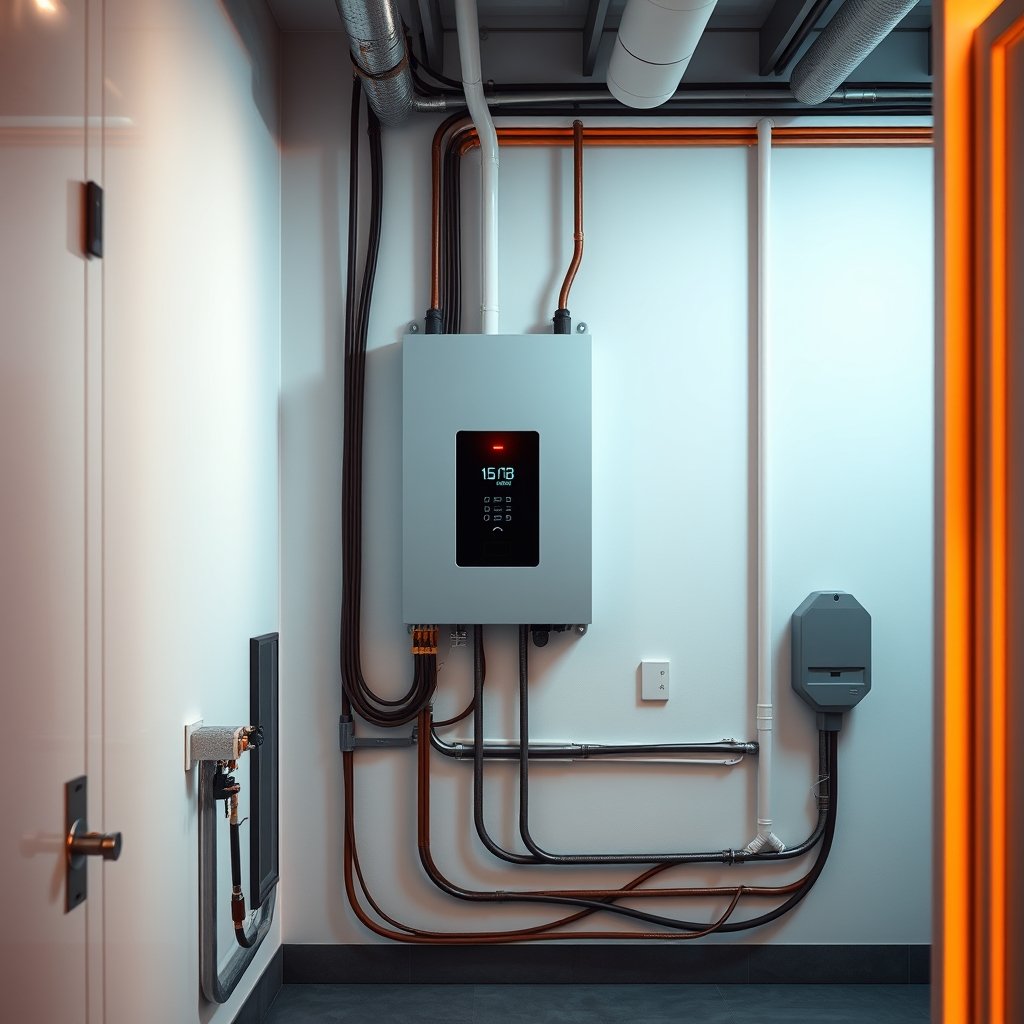
Cost comparison — smart panel vs traditional electrical panel (2024 installed and equipment costs)
Let’s break down the math:
| Cost Item | Smart Panel | Traditional Panel |
|---|---|---|
| Equipment (Panel Only) | $2,100–$4,500 | $500–$1,400 |
| Labor (Install) | $900–$1,500 | $500–$1,300 |
| Permit/Utility Fees | $100–$400 | $100–$400 |
| Service Upgrade (If Needed) | Often not required* | $4,000–$15,000 |
| Typical Total Installed | $3,000–$5,000 | $1,000–$3,000 ($3,000–$5,000 with service upgrade) |
*A smart panel can eliminate the need for a utility service upgrade (source).
Adding an EV charger? If your home service is marginal, smart load management beats paying for a new 200A utility connection.
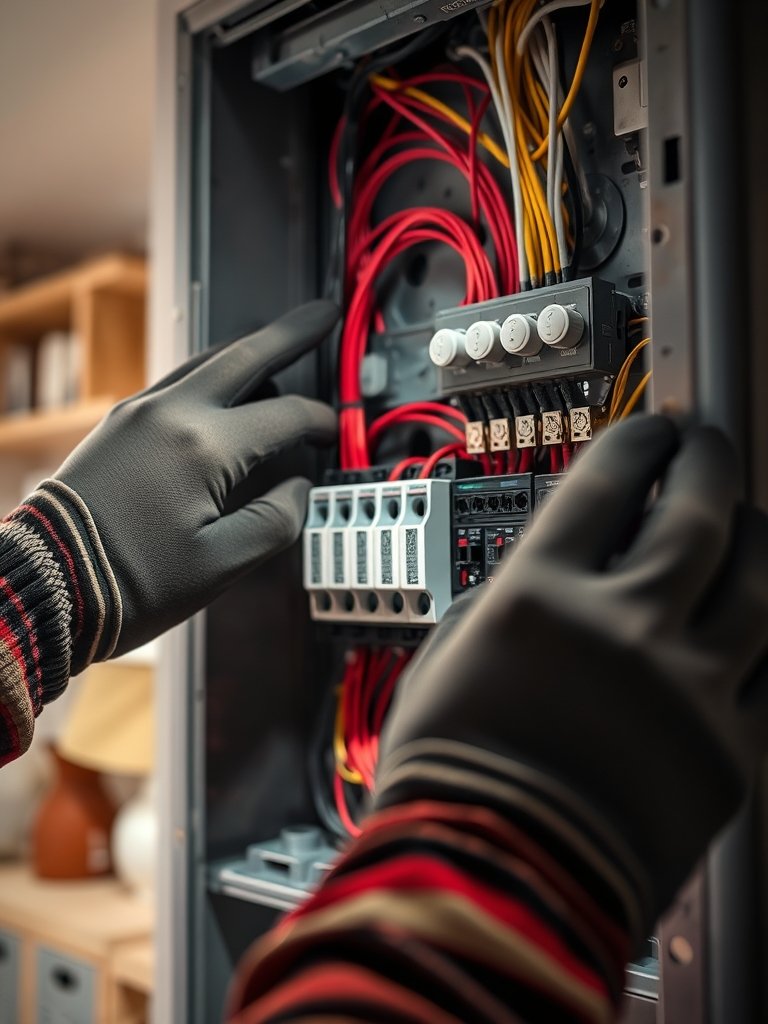
What drives installation cost variability (checklist for homeowners and electricians)
Installing a smart electrical panel upgrade isn’t one-size-fits-all. These variables impact your bottom line:
- Panel Capacity: 100A vs 200A vs rare 400A panels change price and labor required (higher amps mean more labor and supply cost).
- Retrofit Complexity: Tight spaces, older homes, and previous DIY wiring create more work and extra fees.
- Number of Circuits: More branch circuits take longer to move and connect—each additional circuit can add real cost.
- Conduit or Meter Work: If your meter base or main conduit is outdated or too small, you may need a pricey upgrade.
- Regional Labor: Where you live matters. Labor in major metros is often $85+/hr; rural areas may be cheaper.
- Permit Fees: Varied by municipality, but can add $100–$400 easily.
- Surge/Protection Upgrades: Many jurisdictions now require surge suppressors or AFCI/GFCI protection.
- Solar, Battery, or EV Integration: Ties to your solar inverter or home battery may add $400–$2,000 in extra hardware and labor.
- Utility Coordination: Scheduling utility shutoff or main disconnect adds both time and hidden fees.
Labor rates, circuits, conduit work, and permit/utility coordination are the biggest cost wildcards—make sure your quote details each one (details).
The single biggest upside most articles miss — deferring or eliminating utility service upgrades
This is where the math really changes: If your current main panel is “maxed out” but you want to add solar, battery, an EV charger, or heat pump, a traditional panel often forces a full 200A+ utility service upgrade at $4,000–$15,000. But with a smart panel vs traditional electrical panel, real-time load control can allow you to keep your existing service by automatically scheduling high-draw appliances. This can instantly tip your ROI positive—in some cases, the avoided upgrade pays for the smart panel in year one (industry PDF).
Bottom line: Always ask, “Will a smart panel let me avoid a service upgrade?” For many, that’s the number one decision driver.
Measurable benefits users report (energy savings, outage insights, safety) and ROI scenarios
Homeowners who install a smart electrical panel upgrade report:
- 5–10% annual energy reduction (~$200–$600/yr) thanks to real-time monitoring and automated load shedding (source).
- Demand charge and peak-usage avoidance ($300–$800/yr) if you’re on time-of-use or demand-rate electric billing.
- Outage and trip data for better resilience—see which circuits trip and remotely restart non-essential loads.
- Built-in overload, arc fault, and fire-risk detection often qualifies for insurance discounts.
Sample ROI Estimates:
| Home Type | Assumed Install Cost | Annual Savings (Low/High) | Payback (Years) | Net Benefit (5 Years) | Net Benefit (10 Years) |
|---|---|---|---|---|---|
| Average Home | $4,000 | $300–$600 | 6–7 | $2,000–$4,000 | $5,000–$8,000 |
| Solar + Battery Home | $3,800 | $600–$1,200 | 3–5 | $4,000–$5,000 | $8,000–$12,000 |
| EV + High-Load Home | $4,200 | $700–$1,400 | 3–5 | $4,500–$6,000 | $9,000–$14,000 |
Assumptions: Electricity at $0.19/kWh, energy savings 7%, demand charge savings $400/yr, realistic install price per home. Higher savings possible with precise load scheduling and solar/EV optimization.
For more ways a smart home can boost both efficiency and resilience, see Whole Home Battery Backup: 7 Best Ways to Maximize Resilience.
Real user pain points and negative reviews — what to watch for before you buy
Even the best smart electrical panel upgrade comes with its share of headaches:
- App/Wi-Fi Dependency: Lose your Wi-Fi and your remote features are unavailable. Not all brands work offline.
- Software Subscriptions: Some vendors (example: SPAN Edge ISP) charge $1,500 up front plus $120/year for advanced features (industry analysis).
- Repairability/Parts: Early-adopter hardware may lack a long-term repair supply chain.
- Wiring Compatibility: Homes with pre-1970s wiring often require upgrades for smart panels—ask for a compatibility check before you buy.
- Vendor Support: Some products lack local electrician support for warranty repairs—beware “online only” offers with no local install base.
Combat these issues by:
- Verifying software/service fees up front
- Asking about non-cloud/manual fallback operation
- Requesting a list of authorized local service electricians
- Ensuring compatibility with your existing panel wiring
For every tech upgrade, don’t skip your due diligence. Review practical installer questions in our in-depth AI Smart Home Hub Setup guide.
Market adoption & forecast snapshot (residential and commercial through 2026)
Smart panel vs traditional electrical panel adoption is accelerating. In 2024 the global smart electrical panel market was valued at $8.3B, and is forecast to hit $17.2B by 2033, growing at 6.1% annually (source). Major drivers: residential electrification, solar and battery adoption, and more frequent grid outages. Growth is strongest in areas with rising electric rates, high solar penetration, and new code requirements.
Commercial buildings are also rapidly adopting smart panels for peak demand management and grid services.
Want the full business case for related upgrades? See our Solar Panel Roof Installation Cost guide.
Feature checklist — what leading smart panels include today
Here’s what sets a smart electrical panel upgrade apart—and how the leaders compare to old-school breakers:
| Feature | Smart Panel | Traditional Panel |
|---|---|---|
| Circuit-Level Monitoring | Yes (all leading models) | No |
| Remote Shutoff (Per Circuit) | Yes (via app) | No (manual only) |
| Automated Load Management | Yes | No |
| Grid Interaction (TOU, Demand) | Yes | No |
| Battery/Solar Optimization | Yes (SPAN claims up to 40% longer battery backup in simulations) | No |
| Cybersecurity, APIs | Present (varies by model) | No |
| Manual Control | Yes (override on panel) | Yes |
Notable products: SPAN (full code-compliant, all circuits smart, $4,500), Lumin (adds smarts to up to 12 circuits, $2,100–$2,900), Savant (modular). Compare to basic manual-only panels ($500–$1,400 panel).
Learn how these features combine with other smart home upgrades in our Smart Home Retrofit DIY Guide.
Code, insurance, and incentive landscape in 2024 that impacts the upgrade decision
Smart electrical panel upgrade projects must meet local electrical code—most major models are fully code-compliant and UL listed. Some insurers offer premium reductions for fire/arc fault-detecting panels; ask your agent if this applies. In 2024, several states and utilities offer smart panel rebates ($200–$1,200), especially tied to electrification or grid participation programs (ref).
Permits and inspection are mandatory; expect $100–$400 in related fees. If a full service upgrade with utility is triggered, total costs rise to $4,000–$15,000—often avoidable with a smart panel solution.
For more on leveraging incentives, check out our rebates-focused Heat Pump Water Heater Rebate guide.
How to evaluate vendors and installers
Before agreeing to a smart electrical panel upgrade, ask every vendor and installer these questions:
- Is the quoted price for panel only or does it include possible wiring/meter/conduit work?
- Who pulls the necessary permits and handles utility coordination?
- What’s covered by warranty, and for how long? Who handles service/repairs?
- Are there recurring software/service fees?
- If my service is marginal, can your panel avoid a utility upgrade? Will you model ROI with my energy bills?
- Do you have authorized local electricians for future work?
Red flags: Installer is not licensed or local; hidden or recurring fees; lack of product support; unclear interoperability with solar or battery systems.
Installed costs can vary by thousands depending on installer quality and brand—always get multiple written, itemized quotes.
For a smooth upgrade process, see practical tips in our ADU Garage Conversion: 7 Best Ways to Boost Rental Income guide—much translates to electrical upgrade projects as well.
Decision framework and quick calculator inputs
Not sure if “now” is the right time for a smart panel vs traditional electrical panel? Here’s a practical framework:
- Is your current main panel nearing capacity (within 1–3 circuits of max)?
- Are you adding a high-draw load (EV charger, heat pump, induction cooktop)?
- Do you have or plan to add solar + battery?
- Have you been quoted a $4,000+ service upgrade by your utility?
- Are blackouts or breaker trips a consistent problem?
- What’s your local electric rate? High rates make smart panels more valuable.
Upgrade if:
- Avoiding a >$4,000 service upgrade is possible with a smart panel
- Expected payback on install is under 7 years (quick math: installed cost ÷ annual savings)
- You’re due for panel work anyway, or want future-proofing for solar/EV
Wait if:
- Your main panel has ample capacity and no electrification plans
- Your annual bill is low and you don’t need load management
- Major software subscription fees wipe out energy savings
For realistic planning, see step-by-step advice in Home Office Soundproofing Walls: the groundwork is similar for any major retrofit project.
FAQ and buyer’s checklist
How long does installation take for a smart electrical panel upgrade?
Most installs take 1 full day; complex retrofits, rewiring, or major utility work can push this to 2–3 days.
Is there a recurring fee to use smart panel features?
Some brands (like SPAN Edge ISP) charge $120/year for advanced features, plus a $1,500 upfront “Edge” device cost. Others are app-only and subscription-free—always check up front.
Does a smart panel require special insurance or recertification?
Panels are UL listed and meet code, but check with your insurer: some now offer discounts for smart/fire-detection panels, especially with remote monitoring.
Are smart panels compatible with all home battery or solar brands?
Not always—many (like SPAN, Lumin) list compatible inverters/batteries. Get confirmation from the panel maker and your solar/battery installer to avoid headaches.
Do smart panels increase home resale value?
Modern, code-compliant smart panels add future-proof appeal, especially for buyers planning EVs. Value impact is strongest in electrification-friendly markets.
What permits and inspections are needed?
Expect to need a city/county electrical permit, utility coordination, and a final inspection. Fees are typically $100–$400 depending on location.
What’s the average lifespan of a smart electrical panel upgrade?
Digital/smart panels are too new for 30-year track records, but rated life is typically 20–30 years, similar to standard panels. Software support may end sooner—consider ongoing update/service terms when buying.
Where can I find more guides related to electrical upgrades?
Browse our home energy and retrofit cost guides, including EV Charging Station Home Installation and Solar Battery Backup System Home.
Closing — recommended call to action
If you’re evaluating a smart electrical panel upgrade, start by getting 2–3 written quotes from local electricians. Always ask if a smart panel will let you defer a service upgrade. For most, avoiding a $4,000–$15,000 service upgrade makes the ROI immediate—in all other cases, a 4–7 year payback is realistic. Ask vendors to model your household bills in a simple ROI scenario. Use the detailed checklists above to ensure you’re making an informed and cost-effective choice.