

Smart thermostat rebate 2026 programs are giving suburban homeowners and small landlords a realistic chance to drop net upgrade costs below $100 and recover the rest in a year or two just from lower utility bills—if you avoid common pitfalls. The best smart thermostats this year qualify for rebates of $50 to $200 (with some regions stacking even more) and can bring real annual energy savings of $50 or more depending on your climate and system. This actionable guide shows exactly how to stack rebates, choose the right model for your HVAC, and sidestep the deal-breaking fine print that trip up most first-timers.
Key Takeaways
- 2026 smart thermostat rebates range from $40-$75 in most states and provinces, up to $200 in California and $75 extra stackable in Los Angeles for select models (Source).
- Most rebate-qualified smart thermostats (like Google Nest Learning Thermostat, Ecobee SmartThermostat Premium, Amazon Smart Thermostat) are ENERGY STAR certified, support Wi-Fi/Matter, and cost $99–$299 retail before incentives.
- Compatibility (especially with older multi-stage HVAC) and rebate paperwork timing are the two biggest sources of savings denial or missed dollars. Our checklist and tricks below help you avoid both.
- Executive snapshot — What smart thermostat rebates look like in 2026
- 2026 Smart Thermostat Rebate-to-Savings Playbook: Step-by-Step Guide
- Advanced Analysis & Common Pitfalls
- Conclusion
- FAQ
Executive snapshot — What smart thermostat rebates look like in 2026
In 2026, the typical smart thermostat rebate is $40 to $75 in many U.S. states and Canadian provinces, with more aggressive programs offering $100 to $200 per unit—especially in California (PG&E and SCE up to $200, plus $75 extra in Los Angeles, even stackable), Massachusetts’ Mass Save ($100), Ontario/Hydro One and BC Hydro ($75–80), and New Jersey’s PSE&G or New York’s Con Edison ($50–$75, usually via post-purchase check). Most require buying ENERGY STAR certified models from qualified lists within specific dates and may offer instant point-of-sale discounts or require paperwork for mail-in rebates. Be sure to check your local utility program page to confirm eligible models and deadlines. This year, dollar-wise, a net cost under $110 is common after rebates if you don’t overpay for installation. Source
2026 Smart Thermostat Rebate-to-Savings Playbook: Step-by-Step Guide
This step-by-step process will get you the best real-world savings while stacking as many rebates as legally possible. Here’s how:
- Step 1: Research your utility and jurisdiction rebates for 2026. Start with your main utility’s website (“smart thermostat rebate 2026”), but don’t stop there—many regions allow you to layer state, provincial, or city incentives. For instance, PG&E or SCE customers inside LA city limits can stack LA’s $75 on their main rebate; Ontario and BC Hydro both run $75–$80 programs. Check program-specific lists.
- Step 2: Confirm model eligibility and compliance. Nearly all programs require ENERGY STAR certification and list of makes/models. In 2026, top qualifying models include:
- Google Nest Learning Thermostat (4th Gen, ≈$299 retail)
- Ecobee SmartThermostat Premium (≈$249)
- Amazon Smart Thermostat (≈$99)
- Vivint Smart Thermostat (≈$199—usually installed)
All support Wi-Fi/Matter, and one or more voice assistants (Google, Alexa, Siri). Don’t be lured by off-brand bargains—utility programs rarely approve them. See this comparison review for an expert breakdown.
- Step 3: Check your HVAC compatibility. For most 24V systems (gas, electric, or heat pump) it’s plug-and-play, but older multi-stage or variable-speed systems often need a C-wire or professional install—without it, some smart features won’t work and you may not qualify for full rebates. If in doubt, lacks a C-wire, learn how to check and retrofit without a C-wire.
- Step 4: Stack point-of-sale instant discounts if offered, otherwise prepare for paperwork. Wisconsin’s Focus on Energy and others allow contractors or some major retailers to process instant rebates; if so, you pay less up front and don’t need to wait. If not, keep all receipts and plan to submit within the program’s claim window (often 90–120 days).
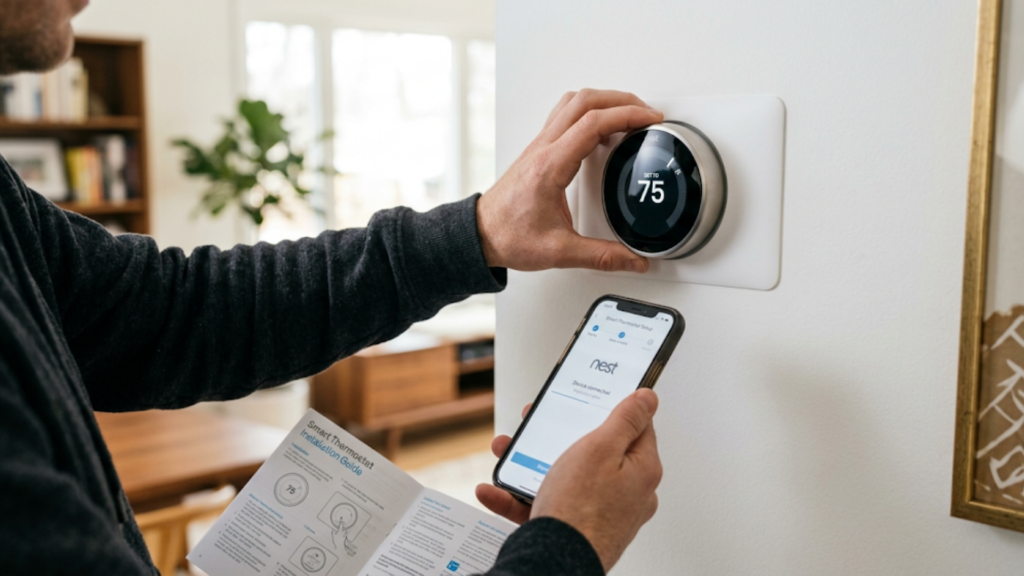
- Step 5: Install and connect your thermostat, then submit claims promptly. Even if you DIY, take clear photos of the install and receipts. Many programs (like PSE&G) require a photo of the installed product with serial number. For multi-family or larger buildings, see commercial rebate example here.
- Step 6: Track your rebate status and timeline. Mail-in and online rebates often take 4–6 weeks after review. Don’t assume anything is complete until you get the confirmation email or check in hand.
- Step 7: Enable smart scheduling and demand-response features (earn annual credits). Top programs—especially in California and Massachusetts—offer bill-credit bonuses for enrolling in demand response, adding $20–$50 per year.
- Step 8: Monitor your real savings against expectations. ENERGY STAR’s average is 8% heating/cooling reduction (≈$50 per year) but some homes save more. If results are underwhelming, double-check advanced settings or talk to support.
For more installation and troubleshooting advice—especially for older homes—see our Smart Home Retrofit DIY Guide.
Advanced Analysis & Common Pitfalls
Getting the biggest smart thermostat rebate in 2026 isn’t just about finding the highest number—most consumers miss out or end up with tech headaches by skipping the fine print. Here’s what can trip you up, plus a utility-by-utility look at the strictest and loosest program rules:
| Utility/Region | Rebate | Eligibility Rules | Submission/Discount Type | Annual Bill-Credit? |
|---|---|---|---|---|
| PG&E / SCE (CA) | Up to $200/unit + stackable $75 (LA) | ENERGY STAR May require DR program enrollment | Mail-in + some instant POS | Yes, DR bonus |
| Mass Save (MA) | Up to $100/unit | ENERGY STAR, date limits | Apply online or via mail | Yes, if enrolled in DR |
| Focus on Energy (WI) | $50/unit | ENERGY STAR | Instant POS or mail-in | No |
| DCSEU (DC) | $50/unit | ENERGY STAR, 2/unit max | Mail-in | No |
| Ontario/Hydro One BC Hydro | $75–$80/unit | ENERGY STAR, province rules | Varies—mail-in/check | Not typical |
| PSE&G (NJ) | $50–$75/unit | Buy after a set date, claim within 120 days | Mail-in (6 week review) | No |
- Compatibility Issues: Many rebate complaints in 2026 relate to legacy multi-stage or variable-speed HVAC not playing nicely with new Wi-Fi thermostats. If your old system lacks a C-wire (common pre-2010), features may be limited, and learning/scheduling can glitch until professionally resolved.
- Rebate Paperwork Timing: Don’t miss the claim window—most require you to submit within 90–120 days, with supporting install photos and original receipts. Some cap rebates at two per household (e.g., DCSEU), or have “new product only” clauses.
- Net Price Math with Rebates: Budget models (Amazon Smart Thermostat, $99) can drop as low as $49 after rebate. Mid-range (Vivint, $199 installed) or learning options (Ecobee/Nest, $249–$299) often land in the $125–$199 range after rebates.
- Commercial/Batch Installs: For small landlords or offices, a $50 per-unit rebate on 50 thermostats (e.g., $130 model) knocks $2,500 off your upfront bill. Bulk discounts matter—always negotiate with distributor or retailer.
- Long-Term Payback: Average annual savings are $50–$300, depending on your climate and occupancy. In some ideal scenarios (vendor claims: Vivint), $300/year is possible, but DOE/Energy Star guidance is more conservative.
For deeper dives on stacking federal/state/utility incentives on other energy upgrades (like heat pump water heaters), see our Heat Pump Water Heater Rebate Guide. Interested in full smart home automation stacks? See AI Smart Home Hub Setup for compatibility planning.

Conclusion
The bottom line: 2026 is the best year yet to use a smart thermostat rebate 2026 program to drive both your net purchase price and your ongoing utility bills down—often to the tune of $100+ in the first year. The biggest tripping points are picking a model from the official list, checking exact HVAC compatibility (especially multi-stage), and meeting proof and timing rules for each rebate. Use our playbook, apply promptly, and your payback will be real (not just theoretical). Ready to start? Check your utility program today, and stack any city/state rebate to maximize savings on your next energy bill upgrade.
Want practical tips for more smart home upgrades? See our actionable guides to Home EV Charger Installation, Crawl Space Encapsulation, or the latest Solar Roof Shingles Costs for deeper energy savings throughout your home.
FAQ
What is the best smart thermostat with utility rebate in 2026?
The most commonly rebate-friendly models in 2026 are the Google Nest Learning Thermostat (4th Gen), Ecobee SmartThermostat Premium, Amazon Smart Thermostat, and Vivint Smart Thermostat. All are ENERGY STAR certified, support Wi-Fi, and work with most 24V HVAC systems. Always double-check your utility’s official qualified product list for current eligibility.
How long does it take to get a smart thermostat rebate in 2026?
For mail-in or online rebates, most utilities (like PSE&G or Mass Save) process payments within about 4–6 weeks after reviewing your submitted paperwork. Instant discounts at checkout give you the rebate up front. Always confirm the processing timeline on your local program’s details page.
Can I install the thermostat myself and still get the rebate?
Often, yes—most programs allow DIY installation if you provide clear proof (photos, serial numbers, original receipts) and meet all model eligibility rules. However, if your system lacks a C-wire or is multi-stage/variable-speed, a professional install may be required for full function and eligibility. Read your utility’s rules carefully.
Are there additional savings besides the upfront rebate?
Yes. Many programs offer extra bill-credit incentives if you enroll your thermostat in demand response programs (typically $20–$50/year). Plus, real annual energy savings from smart scheduling and occupancy detection average $50/year, or potentially much more in large homes and very hot/cold regions.
Where can I find the qualifying product list for my local program?
Start at your electric or gas utility’s rebate page and look for a link called “Qualified Product List,” “Rebate-eligible thermostats,” or similar. Many list eligible brands and models directly, or link to ENERGY STAR’s searchable database. Always check before you buy!