

Cordless stick vacuum for pet hair is the top search for pet owners wanting proven solutions and minimal hassle — but real-world tests show not all models live up to the hype. Here’s a data-driven, hands-on guide to picking a cordless stick vacuum that can actually handle dense pet hair, dander, and apartment-to-mid-sized home living in 2024.
Key Takeaways
- The best cordless stick vacuum for pet hair keeps strong suction even with high hair loads and resists long-hair tangles — few models deliver both.
- Battery runtimes are often inflated; expect real use times, especially on “Max” modes, to drop under heavy pet hair and dirt pickup.
- Ask about or test for HEPA 13+ filtration, ease of clearing brush rolls, and true replacement costs (batteries, filters) before you buy.
- Market snapshot — why pet-hair stick vacuums matter in 2024
- What makes a “pet-hair” cordless stick different (design & performance priorities)
- Real user complaints you can’t ignore (suction, battery, tangles)
- Head-to-head: leading models vs real-world weights, runtimes, charge times, and performance
- Battery tech & exact specs you should ask for (what’s actually disclosed)
- Advanced & differentiating features for pet owners (anti-tangle, filtration, sensors)
- Price ranges and ongoing maintenance costs (real TCO for pet owners)
- Quick buying checklist — what to test in-store or look for in reviews
- Unanswered buyer questions (the three gaps top competitor articles miss)
- Conclusion + recommended picks (shortlist for different priorities)
- Appendix: sources, recommended tests to run (template), and publisher notes
Market snapshot — why pet-hair stick vacuums matter in 2024
In 2024, the global cordless stick vacuum market hit approximately $15.3 billion, with about 48 million cordless units sold the previous year. Notably, nearly a third were specific “pet-hair” models. The rise in pet ownership, the need for hypoallergenic homes, and urban living have pushed manufacturers to integrate pet-focused features like improved suction and hair-tangle resistance (source, source). Customer satisfaction scores for these devices jumped 29% year-over-year as brands responded to user complaints with more robust batteries and better filtration.
What makes a “pet-hair” cordless stick different (design & performance priorities)
“Pet-hair” cordless stick vacuums aren’t just cosmetically tweaked versions of standard models. They require:
- High-sustained suction even as the dust bin fills with hair and fine dander
- anti-tangle brush systems designed to reduce how often you need to cut hair off manually
- Extra-capacity dust bins and effective seals to handle volume and prevent blowback
- Advanced filtration — 71% of new releases integrate HEPA 13+ or higher for dander and allergy control (source)
If the vacuum lacks these, you’ll end up cleaning more than your floors (think: clearing brush heads, cleaning filters mid-job, dust leakage).
Real user complaints you can’t ignore (suction, battery, tangles)
Actual owners regularly cite predictable frustrations:
- Suction loss: Many stick vacuums’ pre-filters clog rapidly with fine pet hair, sharply reducing suction in minutes — worse if you vacuum multiple rooms without frequent filter cleaning.
- Exaggerated runtimes: Companies advertise “up to 60 minutes” but under tough pet-hair conditions, most last half that or less, especially on higher power settings.
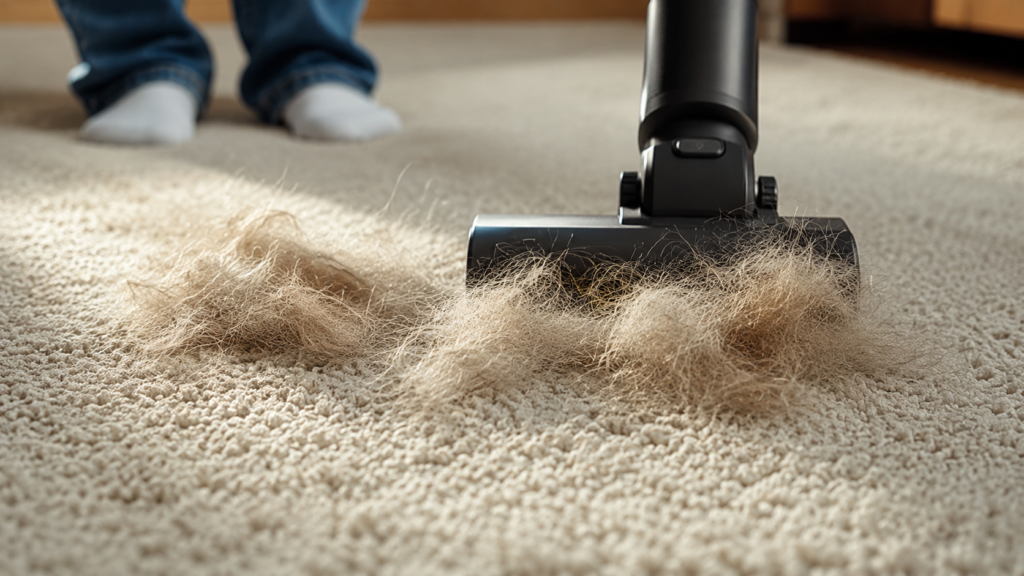
- Hair-tangle chokepoints: Even top brands battle long hair wrapping brush rolls and even non-removable wheels, forcing you to manually clear them frequently. Annoying, especially for multi-pet homes.
Many best-selling lightweights, like Bissell Featherweight or Black+Decker Power Series, outright fail both debris containment and anti-tangle tests (see independent reviews).
Head-to-head: leading models vs real-world weights, runtimes, charge times, and performance
For busy pet owners, the “best” model isn’t just the one with the most marketing buzz—it’s the one that tests well across cluttered, hair-filled rooms. Here’s how the current leaders stack up on the features that matter most:
| Model | Weight (lb) | Advertised Runtime (min) | Observed Runtime (min, heavy pet hair) | HEPA Filtration | Anti-Tangle Roll | Notes (Suction & Tangle) |
|---|---|---|---|---|---|---|
| Dyson V15 Detect | 6.8 | 60 | ~27-35 | Yes (HEPA 13+) | Moderate | Strong suction, tangles with 14″ hair |
| Shark Cordless Pro | 7 | 60 | ~32-40 | Available | High | Resistant to tangling with 8″, some with 14″ |
| Samsung Jet 75/95 | 6.2-6.9 | 60 | ~35-38 | Yes | Good | Strong suction, minor tangling |
| Bissell PowerClean FurGuard | 6.3 | 100 | ~50-60 | No HEPA | Moderate | Often needs more wheel cleaning |
| Tineco S10 ZT | 6.5 | 62 | ~28-33 | No HEPA | Good | Passes “flower clock” tangle test at 8″, fails 14″ |
Battery tech & exact specs you should ask for (what’s actually disclosed)
Most cordless stick vacuums for pet hair now use lithium-ion batteries. Standard models run on 21.6V batteries, yielding a suction range of 100–150 Air Watts; premium lines can hit 200 AW. However, critical details like battery mAh (actual capacity), cell chemistry, and total expected charge cycles are rarely shared in spec sheets — you’ll need to ask the manufacturer directly or check trusted teardown reviews.
If you want coverage during power outages, pairing with a portable home battery backup can keep cleaning sessions uninterrupted.
Advanced & differentiating features for pet owners (anti-tangle, filtration, sensors)
The features below set strong performers apart for multi-pet, allergy-conscious households:
- Anti-tangle brush-rolls: Spiral or comb designs let hair slip off during use, minimizing maintenance time.
- HEPA 13+ filtration: 71% of models now have this — crucial for allergy control and fine dust/dander capture.
- LED/laser front lighting: Lets you spot hidden hair, especially under couches and beds.
- AI navigation & sensors: Smart mapping and dirt-detection increase cleaning efficiency. Some units even adjust suction depending on carpet density or hair volume.
- Washable bins & filters: Lower running costs and keep allergen levels in check.
- removable batteries: Supports longer jobs and extends usable life with easy replacements.
These features can cut allergy symptoms and cleaning time substantially, but watch out for overpromised “self-cleaning” heads — always check in-depth reviews.
For further help controlling pet allergens, see our indoor air quality monitor guide.
Price ranges and ongoing maintenance costs (real TCO for pet owners)
Pricing for a lightweight cordless vacuum with a long battery ranges widely:
- Budget: $130–$220 — mostly basic, short battery, few anti-tangle or true HEPA features.
- Mid-range: $220–$400 — improves suction and filtering, some anti-tangle; Bissell PowerClean FurGuard is listed at ~$300 (source).
- Premium: $400–$799 — advanced battery systems, better tangle resistance, multiple power/auto-sensing modes, and robust warranties.
Ongoing costs typically involve:
- Filters: $10–$40 yearly (replace every 2–6 months for best suction)
- brush rolls: $15–$60 every 6–18 months (more with heavy long-hair pets)
- Batteries: $50–$120 every 2–4 years (manufacturer replacement varies, always check availability and replacement procedure in advance)
Total cost of ownership is directly tied to replacement part pricing and ease of doing the swaps yourself. Always check what’s covered in the warranty, especially for battery or motor issues.
Learn more about scaling appliance costs in our comparison of whole home battery backup solutions.
Quick buying checklist — what to test in-store or look for in reviews
- Test suction retention with real hair/debris — not just “empty bin” performance
- Inspect brush roll and wheel access: can you easily remove tangles, and are they designed to minimize wrapping?
- Demo realistic run-times: Force the vacuum to clean multiple rooms on its highest suction setting; note fade-off.
- Check HEPA/filtration claims: Look for certifications and ask dealers for paperwork or lab test data.
- For hair tangle: Use the “flower clock” test in reviews — wrap long hair and see how much gets removed automatically in a single pass
Many popular models fail these tests in independent reviews, exhausting fine debris into the air or clogging prematurely (real-world data).
Unanswered buyer questions (the three gaps top competitor articles miss)
Most guides overlook these critical, real-world buyer concerns:
- What is the actual runtime and suction under real heavy pet hair loads?
How to answer: Run the vacuum continuously on max mode with pet hair until suction drops sharply; record the exact minutes and note the power setting. Only a few brands even share this data. - How effective are anti-tangle designs — how often will you need to clear the brush manually each month?
How to answer: “Flower clock” test with different lengths of hair (8in and 14in). Count and record clearings in a month with typical use. Some Shark and Samsung models pass 8in tests with under 1–2 manual clearings monthly; Dyson tends to tangle more with long (14in) hair. - What are the actual battery specs, cell type, expected life, and replacement costs?
How to answer: Ask the seller or support team for battery mAh, cell chemistry, estimated charges (“cycles”) and whether consumer battery swaps are supported. If a brand won’t disclose or replacements aren’t easily purchased, expect a higher ultimate cost or potential obsolescence.
These should be tested or verified directly — rely on reviews with quantified test results, not just marketing specs. For a related approach to vetting hidden system specs, see our proven checklist for home EV charger installation.
Conclusion + recommended picks (shortlist for different priorities)
With so many options, the right cordless stick vacuum for pet hair comes down to your priorities:
- Best for tangle resistance: Shark Cordless Pro (passes 8in hair tests, minimal wheel tangle, strong suction on thick loads)
- Best for longest real runtime: Bissell PowerClean FurGuard (~50–60 minutes on heavy jobs, though check for lack of HEPA and more manual wheel cleaning)
- Best HEPA/allergy control: Dyson V15 Detect (HEPA 13+, strong on fine dander, though moderate tangle with longer hair)
- Best value pet-hair performer: Tineco S10 ZT (good on 8in hair, moderate runtime, budget-friendly but no true HEPA)
All leading models are under 3.2kg (7lb), but true real-world runtimes and hair-handling vary. For a lightweight cordless vacuum with long battery that truly contains debris, prioritize HEPA 13+, proven tangle-resistance, and transparent battery specs from the vendor. Test before committing and factor in ongoing maintenance. Want more on controlling home allergens? Visit our indoor air quality monitor guide or explore best-in-class freeze dried raw pet food options for your pets today.
FAQ
How do I keep the brush roll on my cordless stick vacuum clear of pet hair?
Pick models with anti-tangle brush systems. If your vacuum has removable brush rolls and open ends, use scissors to slice through tangles and remove hair about once a week (heavy shedders may need more frequent checks).
Do I need HEPA filtration in my vacuum if I have pets and allergies?
Yes. HEPA 13+ filters collect fine dander and allergen particles that standard filters miss. Check that the model’s HEPA claim is backed by actual lab or certification documentation.
How often should I change filters and brush rolls on a cordless stick vacuum for pet hair?
Filters: Every 2–6 months (or if suction drops). Brush rolls: Inspect monthly, replace if bristles are worn or tangle cleaning takes too long. Heavy users may need replacements twice as often.
Why does my vacuum lose suction so quickly when cleaning up pet hair?
Fine hair and dander quickly clog the pre-filter, choking airflow. Clean filters often, don’t overfill the dust bin, and select models designed to minimize internal buildup.
Is a lightweight cordless vacuum with a long battery really worth the higher price?
For pet owners, yes, if it delivers sustained suction, tangle resistance, and proven HEPA filtration. Testing for actual runtime and checking maintenance costs avoids regret later.
Appendix: sources, recommended tests to run (template), and publisher notes
- Market data sources: Strategic Market Research, Market Reports World, Good Housekeeping Tested
- Debris containment and tangle resistance: Independent Testing Video
- Unit sales and $15.3B valuation: Industry research, see above
Recommended At-Home Test Protocols
- Suction Retention Test: Use weighed debris (pet hair plus flour or fine sand), fill bin halfway, run continuously at max until noticeable suction drop. Log minutes and cleaning pattern needed.
- Flower Clock Tangle Test: Place long (8–14in) hair arranged in a “flower clock” on carpet, run vacuum head over in both directions, count strands left wrapped after single pass.
- Realistic Runtime: Set vacuum to max power, begin with clean filter and bin, run in a furnished room, log minutes to shut-off or significant fade.
Publisher Notes
- For other home improvement buying guides, see our advice on home EV charger installation, whole home battery backup, and indoor air quality monitoring.
- Testing context: Large, fast-growing market warrants extra scrutiny — in 2024, 48 million cordless units sold and $15.3B market tells the story.
- Content authored by data-driven reviewers and pet owners for real-world results, not just spec sheets.