

Indoor air quality monitor sales are surging in 2026—because evidence now ties everyday headaches, fatigue, and allergies directly to measurable pollutants at home and work. If you’re serious about comfort and health, it’s no longer enough to buy the first air sensor you see. Precision matters—and so do cost, connectivity, and the details behind those mysterious “VOC” numbers.
Key Takeaways
- The best indoor air quality monitor 2026 models combine fast response time (under 30 seconds), transparent calibration, and clear analytics.
- Most negative reviews cite poor interfaces, vague pollutant readouts, or price not matching feature depth—read the spec sheet, not just the box.
- Real-world value = accurate pollutant coverage (PM2.5, CO2, VOCs), reliable data export, and actionable insights for better air—not just raw numbers.
- Why 2026 is a turning point for indoor air quality monitors
- Real-life triggers: the actual health and comfort problems that make people buy
- Quick snapshot — What the best indoor air quality monitor 2026 should measure
- Technical specifications buyers must insist on
- The top 3 recurring negative points in 2026 reviews — and how to avoid them
- Pollutant coverage — what top 2026 models detect and where gaps remain
- Price and value in 2026 — what you’ll pay and how to judge cost‑effectiveness
- How to interpret results and take action — turning data into better air
- Buying checklist — the exact spec sheet for your purchase decision
- Top 3 sub‑topics most “best indoor air quality monitor 2026” articles miss
- Conclusion & recommended next steps
- Frequently Asked Questions
Why 2026 is a turning point for indoor air quality monitors
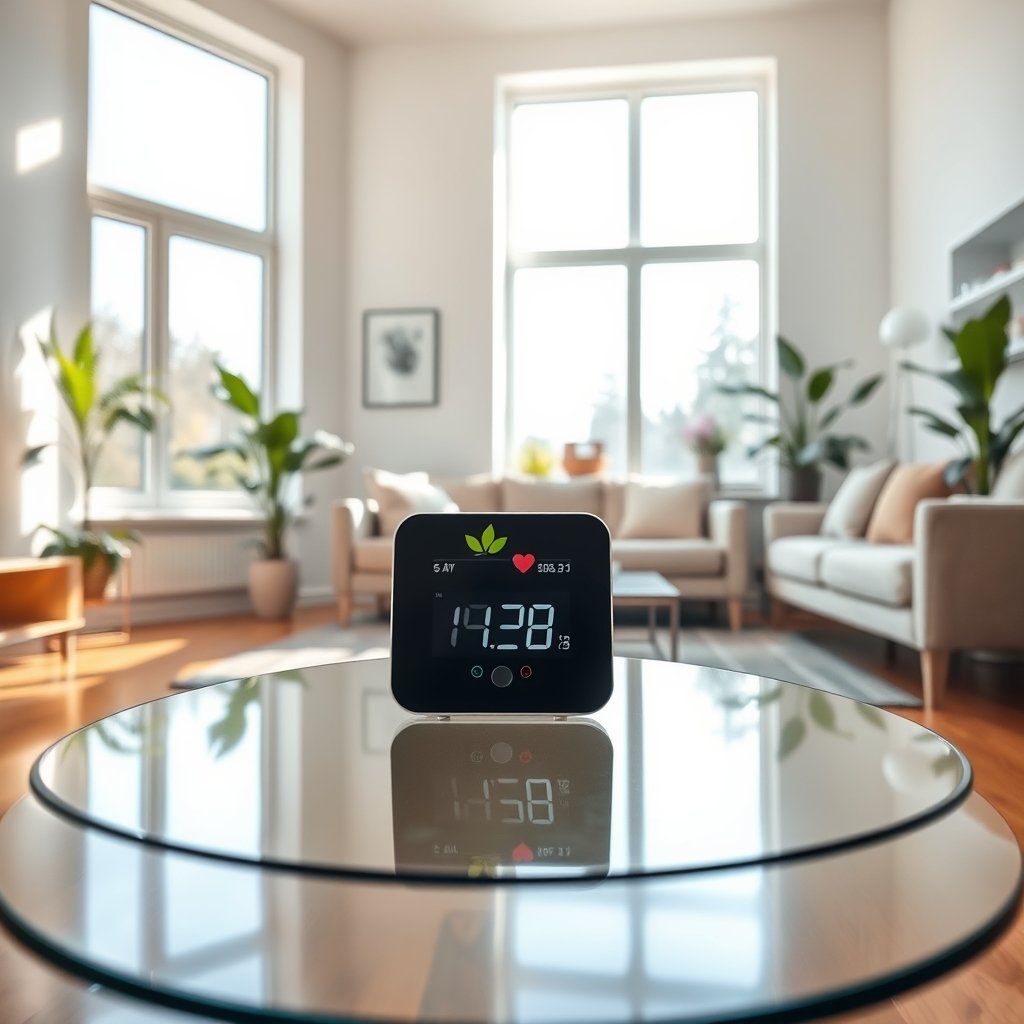
2026 marks a critical evolution for indoor air quality monitor technology—and for buyer expectations. The market exploded from about USD 5.4 billion in 2025 to a projected USD 11.84 billion by 2035, growing at an ≈8% annual rate.[1] Health-driven homeowners and workplace managers now demand more than simple PM2.5 and CO2 numbers. They want app-based analytics, integration with smart home systems, and proof that their investments lead to comfort improvements—not just more data. Reviews are scrutinizing accuracy, sensor speed, and the tangible impact of monitoring, forcing brands to compete on evidence, not hype.
Real-life triggers: the actual health and comfort problems that make people buy
Most people first consider an indoor air quality monitor after a wakeup call—a string of unexplained headaches, sinus flare-ups, or persistent fatigue at home or work. Short-term symptoms like dizziness or eye irritation often signal hidden spikes of PM2.5 or CO2. Longer-term, families worry about asthma, cardiovascular risk, or unknown exposures (like VOCs, mold, or radon) linked to serious chronic illness.[2] In workplace surveys, employees now prioritize fresh, comfortable air above free gym memberships or fancy break rooms.[3] The demand is real, and so are the stakes.
Case study: Jane, a homeowner, suffered from headaches each morning despite open windows at night. By running an indoor air quality monitor in her bedroom, she discovered CO2 was consistently above 1500 ppm overnight. Adding a small window fan—prompted directly by her monitor’s alerts—dropped morning CO2 under 800 ppm and her headaches stopped within a week.
Quick snapshot — What the best indoor air quality monitor 2026 should measure
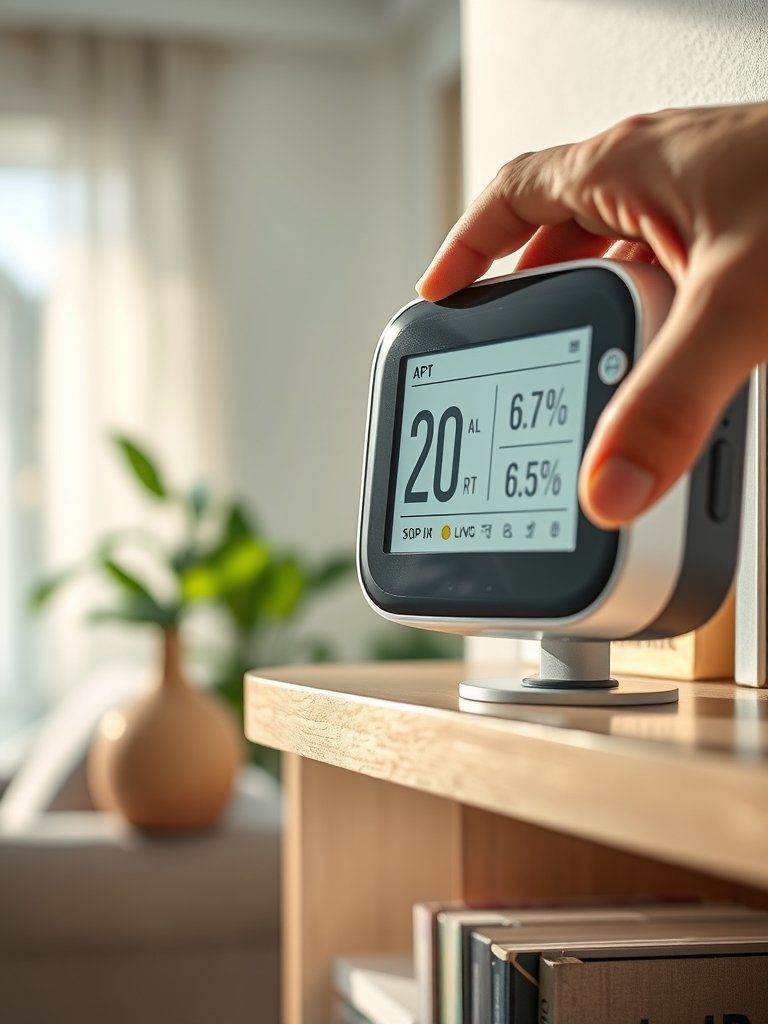
The best indoor air quality monitor 2026 covers core pollutants: PM2.5 (fine particles), CO2 (carbon dioxide), TVOCs (total volatile organic compounds), and at minimum, temperature and humidity. Many also offer PM10, CO, or formaldehyde sensors. Industry-standard sensor types include electrochemical, metal-oxide semiconductor (MOS), NDIR (for CO2), and laser-based PM sensors.[4] But not all monitors are equal: radon and detailed VOC detection are often missing, or lumped into a vague “score”—leaving serious coverage gaps for buyers who want full-spectrum risk reduction.
Glossary: Common Air Monitor Sensor Types
- Electrochemical: Best for CO, NO2, O3—high sensitivity.
- NDIR (Non-dispersive infrared): Industry standard for CO2—accurate and stable.
- Laser/Light Scattering: Used in PM2.5/PM10 sensors—fast, but sensitive to humidity.
- MOS (Metal Oxide Semiconductor): Detects many VOCs—cheap, but can drift and lack specificity.
Technical specifications buyers must insist on
Don’t settle for generic claims—insist on these specs for any indoor air quality monitor or best indoor air quality monitor 2026 contender:
- Sensor types per pollutant (see glossary above).
- Response time: The best models detect air changes in under 30 seconds.[5] Slower or uncalibrated models may miss major events like smoke or chemical exposure.
- Accuracy range: Look for stated error margins (e.g., ±10% for CO2/PM2.5).
- Calibration: Automatic (preferred) or manual—beware no-calibration designs.
- Data Logging/Export: Cloud, local SD card, API—avoid models with “locked” data or app-only retention.
- Connectivity: Wi-Fi at minimum, Bluetooth optional; advanced buyers may want API or smart home integration.
Calibration is a big deal—especially as sensors age. Some top-rated monitors auto-calibrate using outdoor reference or internal routines; others require manual resets. Review specs and instructions to avoid “ghost readings” after just a few months.
- Do not let you export or back up your own data.
- Only show a vague “VOC index” (no details or thresholds).
- Take longer than 2 minutes to update readings.
- Lack a CO2 sensor (at minimum, for bedrooms or offices).
- Have no user calibration method—manual or auto.
- Require an expensive cloud subscription for basic features.
The top 3 recurring negative points in 2026 reviews — and how to avoid them
| Negative Point | What Causes It? | How To Avoid |
|---|---|---|
| Clunky or confusing physical controls | Buttons hidden on the back or too few physical controls; reliance on mobile app for everything. | Seek models with front-facing, tactile controls and clear screen menus. |
| Limited pollutant detail (especially VOCs) | Device reports “TVOCs” or gives only color bars; no breakdown of actual chemicals. | Buy monitors with detailed reporting or support for exporting data to analyze trends. |
| High price, limited metrics, slow calibration | Charges premium but covers only 2–3 pollutants, delays accurate readings for days. | Compare the spec sheet against the price—don’t overpay for the basics. |
Pollutant coverage — what top 2026 models detect and where gaps remain
Most 2026 air monitors reliably cover:
- Particulate matter (PM2.5; some add PM10)
- PM2.5 and CO2 (the gold standard for freshness and ventilation)
- Temperature and humidity
- Basic TVOC (total volatile organic compounds)
But many fall short on specifics:
- Radon: Still rare, mostly in premium or dedicated models.
- Formaldehyde: Included only in select models, though critical for allergy/asthma risk.
- Individual VOCs: Most just show an “index,” leaving you guessing about true exposure.
- Biologicals/Mold: Direct detection is uncommon, sometimes inferred via humidity and PM spikes.
- CO, NO2: Urban buyers may want these gas sensors, but they’re rare at mid-tier prices.
Always review spec lists for your building’s specific risk profile. For example, if you’re finishing a basement as a home office, check out our ADU garage conversion guide and consider pairing a radon-monitoring unit with a standard PM/CO2 monitor for true peace of mind.
Price and value in 2026 — what you’ll pay and how to judge cost‑effectiveness
Typical retail prices (2026):
- Basic units (PM2.5, temp/humidity): $75–$120
- Mid-range (PM2.5, CO2, TVOC, temp/humidity, app integration): $150–$350
- Premium (multi-gas, radon, APIs, advanced analytics): $350–$900+
Cost is driven by sensor types (NDIR for CO2 = pricier, more accurate), pollutant coverage, quality of app and connectivity, and whether you must pay for subscriptions or sensor replacements.[6] Many buyers complain about “overpaying” for a monitor that only does PM2.5/CO2/humidity. Double-check whether you have to pay extra (yearly) for data backup or calibration—hidden ownership costs can exceed the device price after just 2–3 years.
Demand for indoor air quality monitoring is growing fast—market value is set to more than double by 2035, so expect new features but also higher sticker prices on advanced models.[7] For a primer on how other home tech costs add up (like AI smart home hubs or smart home retrofits), see our linked deep dives.
How to interpret results and take action — turning data into better air
Numbers don’t matter unless you act. Here’s how to use your monitor’s output:
- PM2.5: Over 12 µg/m³? Run HEPA filtration or ventilate—EPA notes indoor air is often 2–5× more polluted than outdoor.[8]
- CO2: Over 1000–1200 ppm = stale air. Boost ventilation with fans or open windows. Above 2000 ppm? Immediate action needed—especially in bedrooms or meeting rooms.
- TVOCs: Spikes above 300–500 ppb often follow cleaning, cooking, or new furniture. Increase airflow and avoid known chemical sources.
- When in doubt: For persistent “bad” readings (especially radon or unexplained smells), call a pro for full testing—monitors are best for detection, not diagnosis.
Tie your monitor alerts to direct interventions (window fans, portable filters, HVAC tweaks). For home projects aimed at air improvement—like soundproofing your home office or encapsulating your crawl space to prevent mold—leverage this data for real cost and health ROI.
Buying checklist — the exact spec sheet for your purchase decision
The quick “best indoor air quality monitor 2026” checklist:
- Pollutants monitored: At minimum, PM2.5 and CO2; TVOC, temp/humidity. Add radon or CO for special use cases.
- Sensor types: NDIR (CO2), laser (PM), MOS/electrochemical (VOCs/gas).
- Response time: Under 30 seconds for key pollutants.
- Accuracy: Explicit margin (±10% or better for core metrics).
- Calibration: Automatic preferred; manual acceptable, but avoid no-calibration units.
- Data retention/export: App plus local/CSV export or API. Never buy app-locked models unless you want to pay for storage forever.
- Connectivity: Wi-Fi minimum, consider Bluetooth or smart home API if needed.
- Price: Pick the band that matches your risk profile, but do not overspend for basic features.
Tip: The best indoor air quality monitor 2026 models register pollutant dips or spikes within 30 seconds and make it simple to adjust your environment based on the data—not just issue numeric alerts.
Top 3 sub‑topics most “best indoor air quality monitor 2026” articles miss
- Response time and calibration transparency: Brands rarely publish real numbers. Test with a match, incense, or deep breath—does your device react in < 30 seconds? Avoid any unit with no specified calibration support.
- Data privacy and exportability: Many monitors lock you in: “Download our app, but you can’t export your history.” Ask about CSV export, local storage, or API options. Data belongs to you—not the cloud.
- Action‑linked guidance and ROI: Truly valuable monitors connect readings to cheap interventions—ventilation, HEPA, behavioral adjustments—so you can track the real-life cost to remediation and the impact on comfort, much like you would with a heat pump water heater upgrade or crawl space moisture fix.
Conclusion & recommended next steps
Indoor air quality is no longer a luxury—it’s a health and productivity baseline. For 2026, the ideal indoor air quality monitor delivers fast, accurate readings of PM2.5 and CO2 (at minimum), offers exportable data, and supports transparent calibration. Budget models suffice for basic PM/CO2 tracking, but if you manage a workplace or want deeper analytics, step up to mid or pro tier. Always test your unit’s response time on unboxing, verify data retention options, and make a remediation plan before issues escalate. This category will keep growing (USD 5.4B in 2025, USD 11.84B by 2035)—so buy for data ownership and proven sensor performance, not just features on a box.
Ready to take control? Review our buying checklist, map your target pollutants, and invest in an indoor air quality monitor that truly supports your health—not just the market trends.
Frequently Asked Questions
What is the ideal response time for an indoor air quality monitor?
Top models detect major air-quality dips in under 30 seconds. Slower monitors may fail to catch important events (like smoke or sudden CO2 buildup). Always check the spec sheet.
Do I need radon or formaldehyde detection?
If you live in a radon zone or have frequent asthma/allergy problems, yes. For most buyers, PM2.5 and CO2 are highest priority—but check your home’s risk profile first.
Are cloud subscriptions required for basic use?
Some brands require paid subscriptions for data backup, advanced analytics, or long-term storage. Look for devices with local data logging or free export—avoid forced subscriptions unless you need enterprise features.
How often should I calibrate my monitor?
Ideally, pick units with automatic calibration. Manual calibration may be needed every 3–6 months, or more often if you move the monitor or use it in variable conditions.
Can I use one device for the whole house?
Air quality is hyper-localized—moving the unit between rooms is best for most homes. Large homes or multistory buildings may require 2–3 monitors for full coverage.