

Dog stroller searches have soared as more owners of small, elderly, or mobility-challenged dogs look for ways to keep their pets comfortable, active, and safe outside the home. With so many models and features, choosing the right one can be overwhelming. Here’s what you really need to know to find the best fit without wasting money—or ending up with a bulky regret stuck in your trunk.
Key Takeaways
- The pet stroller market is mature and specialized, with strong growth and robust options for small, senior, and mobility-limited dogs.
- Top issues include excess weight, maneuverability problems, and durability. Check exact specs, especially weight, wheel type, foldability, and ease of cleaning before you buy.
- Look for at least 25–30 lb capacity, reinforced frame, 4 rubber or pneumatic wheels, washable fabric, and brake safety as a strict minimum for small breeds.
- Quick Market Snapshot — Why now is a good time to buy
- Who Should Use a Pet Stroller — Veterinarian-backed use cases
- Top Complaints from Real Users — What to avoid
- Essential Features & Technical Specs — The buy/no-buy checklist
- Wheel & Suspension Guide — Match terrain to wheel type
- Durability & Maintenance — How leading brands compare over time
- Price & Feature Breakdown — How much you’ll pay and what adds cost
- Safety, Recalls & Certifications — What to check before you buy
- Common User Problems — Quick fixes & training tips
- Long‑Term Ownership Checklist — Maintenance schedule and parts to stock
- Missing Topics Competitors Rarely Cover — Opportunities to stand out
- Short Buyer’s Checklist & Top Recommendations
- Call to Action — Try before you buy and what to ask in stores/online
- FAQ
Quick Market Snapshot — Why now is a good time to buy
About 10–15% of U.S. dog owners have purchased a dedicated dog stroller, with the global pet-stroller market growing from about USD 450M (2025) to an estimated USD 850M by 2033 (≈8.5% CAGR). This means more specialized models and competitive pricing, especially for strollers designed for small, elderly, or mobility-limited pets. Options range from lightweight urban models to all-terrain strollers. Choosing now means you get refined products that have addressed many early design issues. (Market report, FutureDataStats)

Who Should Use a Pet Stroller — Veterinarian-backed use cases
A pet stroller for small dogs is ideal in these scenarios:
- Senior dogs: Especially breeds under 25 lbs like Chihuahuas, who tire easily and may have joint pain or arthritis.
- Post-op recovery: Pets healing from surgery need to experience the outdoors without risking injury.
- Very small or toy breeds: Tiny dogs can’t always keep up on longer walks or rough terrain.
- Protection in crowds/harsh weather: Strollers shield small dogs from crowds, large dogs, or rough conditions.
- Mobility-limited owners: People who need stability or support while walking a pet.
However, healthy dogs still need daily exercise. Overuse of a stroller can lead to reduced activity and weight gain. Ask your veterinarian if you’re unsure about stroller use. (AKC guide)
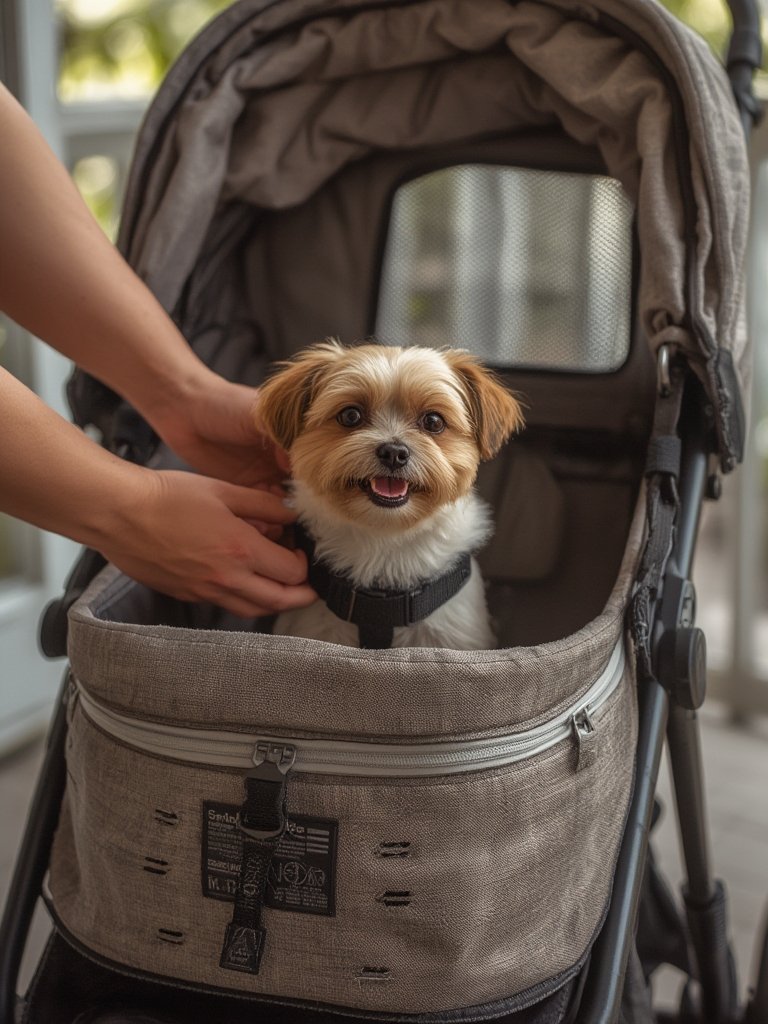
Top Complaints from Real Users — What to avoid
Most frequent complaints with any dog stroller:
- Too heavy or bulky to lift or store (hard to get in/out of cars or closets)
- Poor maneuverability—wheels get stuck or do not track straight on pavement or gravel
- Not enough mesh or shade—overheating risk for dogs, especially on sunny days
- Unsteady or awkward folding system—can pinch fingers, collapse suddenly, or jam
- Durability issues—flimsy frames, wobbly wheels, zippers that break after 1-2 seasons
- Dogs resist being placed in the stroller (stress, lack of training)
These realities make it critical to check build quality, folding mechanics, wheel types, and user reviews.
| Model Archetype | Capacity (lbs) | Weight (lbs) | Wheels | Folded Size | Key Strength | Typical Price |
|---|---|---|---|---|---|---|
| Compact Urban | 25–30 | 11–15 | 4 rubber | Small (fits trunk) | Lightweight, city use | $110–$190 |
| All-Terrain | 25–50 | 16–23 | 4 pneumatic (air) | Medium | Great on gravel/grass | $220–$330 |
| Heavy-Duty Small-Dog | 30–50 | 20–30 | 4 rubber or air, full suspension | Bulky | Extremely stable/secure | $280–$400 |
Quick Fixes for Wobbly Wheels
- Tighten all wheel bolts before first use—many arrive partially loose.
- Check for bent axles (common on lower-priced units)—replace if needed.
- Add lock washers to axle nuts or use blue threadlocker for stubborn bolts.
Want a deep dive on related dog care essentials? See our guide on dog calming supplements and compare options for keeping pets happy in new routines.
Essential Features & Technical Specs — The buy/no-buy checklist
If you need a pet stroller for small dogs, do not skip these specs before buying:
- Capacity: At least 25–30 lb (many strollers are 25 lb, but get extra margin for blankets/accessories).
- Frame: Metal or reinforced plastic—avoid hollow, thin tubes or cheap snap connectors.
- Wheels: Four wheels for stability, with pneumatic (air-filled) or solid rubber. Plastic wheels = more problems.
- Brakes: Lockable rear brakes or hand lever. Strollers without brakes can roll on sloped sidewalks.
- Mesh/ventilation: Wide mesh panels and removable sun canopy for airflow and cooling.
- Harness point: Inside attachment to secure your dog during bumps and stops.
- Foldability: Check that it collapses down small enough to fit your trunk—measure before buying.
- Washable fabrics: Removable cover and pad are a must for senior dogs with accidents.
Veterinarians and product analysts recommend strollers for pets recovering from surgery, senior pets, or pets needing protection from harsh conditions (barkandwhiskers.com).
For other pet upgrades, consider adding a pet water fountain or orthopedic dog bed for at-home comfort.
Wheel & Suspension Guide — Match terrain to wheel type
Choosing the right wheels makes a huge difference:
- 3-wheel strollers: More agile but tippier, best for smooth sidewalks.
- 4-wheel strollers: Superior stability—preferred for mixed or uneven terrain.
- Pneumatic (air-filled) wheels: Best for gravel, grass, and parks—cushions bumps.
- Solid rubber wheels: Low maintenance, perfect for pavement and indoor use, but may struggle on rough surfaces.
- Suspension systems: Needed for frequent park/gravel paths; helps reduce jolts for senior dogs.
Match your most common walking route to your wheel type. Most complaints involve stuck wheels, so prioritize quality over flashy design.
Durability & Maintenance — How leading brands compare over time
Long-term user feedback and Consumer Reports highlight issues like:
- Flimsy frames that warp after a few months
- Wobbly wheels—common in strollers with lightweight plastic axles
- Zippers breaking or tearing loose from fabric
- Fabrics that fade or get musty if not fully removable/washable
Best practice: Choose brands with at least a one-year warranty and easy-to-find replacement wheels/parts. Always check for real-world long-term owner reviews before purchasing.
Keep a basic cleaning kit (gentle soap, brush, and a can of spray lubricant) for monthly maintenance. For other pet gear, see how pet dental chews can maintain oral health without hassle.
Price & Feature Breakdown — How much you’ll pay and what adds cost
Dog strollers range roughly as follows:
- Budget models: $80–130—basic features, typically lighter frame, may lack robust brakes or suspension.
- Mid-tier: $140–250—better wheels, improved frame/stability, one-hand fold, bigger canopies.
- Premium: $300–400—pneumatic wheels, full suspension, larger/better materials, extended warranty.
What adds cost?
- Higher capacity (<25 lb vs. 30 or 50 lb ratings)
- Pneumatic wheels and true suspension
- Removable, washable, or “all-weather” fabrics
- One-hand folding and more compact folded size
- Parts/warranty support
Expect heavier strollers to cost more, and double-check trunk fit for large models.
Safety, Recalls & Certifications — What to check before you buy
Always check for current product recalls on the brand’s website or the seller’s product page. Make sure critical safety features include:
- Secure, reinforced harness point inside compartment
- Stable, easy-lock brakes (test before first walk)
- No-pinch folding/locking system—avoid models with exposed hinges
- Mesh panels that cannot be clawed/ripped open
The most reputable brands offer certifications for load, impact, and sometimes fabric chemical safety. Never skip reading warranty details, and use support contacts for replacement parts.
Common User Problems — Quick fixes & training tips
Many new buyers run into two main problems:
- Dog refuses to get in the stroller: Use treats, familiar bedding, and take it slow. Don’t force it. Start with calm, happy moments in the stationary stroller before any travel.
- Bulk or clumsy handling: Practice opening/folding at home, and check all connection points. Most units loosen up with a few uses, but address any squeaks or wobbles early.
- Weight: Weigh your dog fully clothed (if using jackets/boots)
- Length: Nose to base of tail, with pet standing
- Height: Floor to top of shoulder (standing), and floor to top of head for roomy fit
- Add 2–3 inches to each dimension for blankets or comfort
Infographic Idea: Diagram showing how to position tape measure for weight, length, and height.
For tricky dog behavior, our guide on pet enrichment toys has behavioral training strategies that work for dogs as well as cats.
Long‑Term Ownership Checklist — Maintenance schedule and parts to stock
- Monthly: Inspect wheels, bolts, and frame for loosening. Clean any exposed fabric and mesh.
- Quarterly: Wash all removable covers, pads, and sunshades (air dry only).
- Annually: Replace worn wheels or axles; lubricate folding joints and zippers. Review warranty limits and order replacement parts if needed.
- Always: Store indoors, out of direct sun, to prevent fading and weakening of the fabric.
Product categories and materials (polyester/nylon, metal/plastic frames) directly affect how often you’ll need to maintain or replace parts. Choose a pet stroller for small dogs with easily available spare parts and straightforward warranty claims.
Missing Topics Competitors Rarely Cover — Opportunities to stand out
How to Measure and Fit a Stroller
Competitors often skip exact measurement steps. Take the time to measure your dog’s length, height (standing), and width before purchase—to ensure your pet can comfortably lie down, turn in place, and sit without bumping their head.
Step-by-Step Behavioral Training for Stroller Use
Place the stroller in a familiar spot and reward your dog for approaching it. Gradually encourage sitting, then lying down, using treats and calm voice. Only roll the stroller a few feet indoors once they are relaxed. Outdoor walks can begin after your dog is fully comfortable.
Warranty, Spare Parts, and Realistic Long-Term Cost
Investigate if your chosen stroller offers replacement wheels, extra pads, and a track record of fast, reliable customer service. Real-world cost of ownership is usually higher for low-end models that break quickly, so consider spending more upfront to save over the long run.
For more advice on choosing quality pet gear and understanding warranty/parts realities, compare with our pet insurance comparison for coverage options.
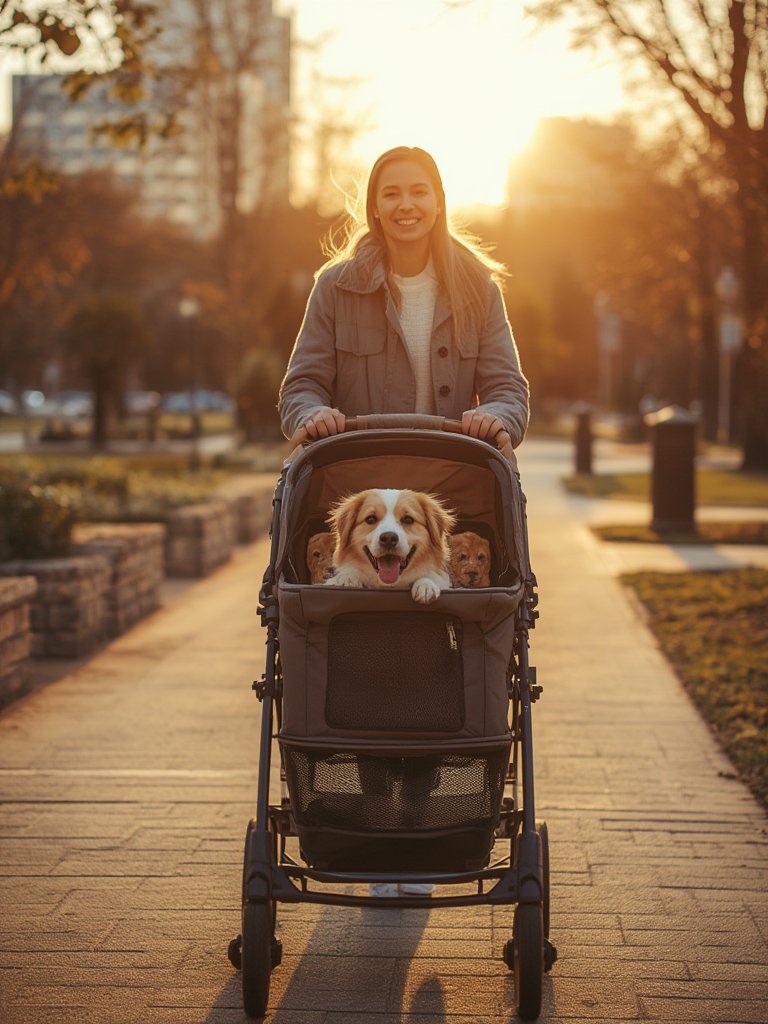
Short Buyer’s Checklist & Top Recommendations
8-Point Dog Stroller Checklist (Print or Save):
- Capacity: Rated for at least 25–30 lb
- Frame: Metal or reinforced plastic
- Wheels: 4 pneumatic or rubber; check suspension
- Brakes: Secure, easy to operate
- Ventilation: Wide mesh, adjustable canopy
- Foldability: Compact fit for your trunk
- Washable fabric: Fully removable/replaceable covers
- Warranty/Parts: At least 1 year, with spare wheels available
Top 3 Stroller Archetypes for Small/Senior Dogs:
1. Compact Urban: Lightweight, trunk-friendly, quick fold for errands and urban walks.
2. All-Terrain: Larger wheels and suspension, suited for park/gravel paths.
3. Heavy-Duty Small-Dog: Sturdy, stable, best for dogs that need the most protection or have severe mobility issues.
For other health and safety gear, see our freeze dried raw pet food and GPS pet tracker guides.
Call to Action — Try before you buy and what to ask in stores/online
Testing matters. Before final purchase, visit a store (or request a demo if buying online):
- Unfold and test-push the stroller. How does it handle with one hand?
- Confirm closed dimensions—will it fit your trunk?
- Ask about replacement parts and warranty process.
- Read several long-term owner reviews.
- Sign up for recall alerts from the manufacturer or at registration.
Dog stroller selection has never been better—but satisfaction depends on matching real specs to your lifestyle. Go beyond the marketing to ensure a safe, durable, and manageable pet stroller for small dogs that works for years—not just a season.
FAQ
Is a dog stroller suitable for my healthy young dog?
Typically no. Healthy young dogs need regular walking and exercise. A stroller is best for elderly, injured, or tiny dogs who cannot manage normal walks.
How do I measure my dog to make sure it fits in the stroller?
Weigh your dog with gear, measure their length from nose to tail base, and height from floor to top of head. Add 2–3 inches to each measurement for comfort. Always compare to the internal stroller dimensions before buying.
What’s the most common issue with a pet stroller for small dogs?
Excess weight and bulk, causing storage or lifting problems, and wheels that don’t roll smoothly on uneven surfaces. Choose wisely by reading multiple owner reviews first.
Are replacement wheels and fabrics generally available?
Better brands offer replaceable wheels and cushions. Always check spare part availability and warranty details before buying, especially if you plan long-term use.
How often should I clean and maintain my dog stroller?
Inspect wheels and the frame monthly, wash fabrics quarterly, and check all bolts and moving parts at least twice a year for a trouble-free experience.