

Key Takeaways
- Average installed cost for a whole-home battery system in 2024 is about $1,300 per kWh before incentives, or $16,000–$18,000 for a typical 5 kW (12.5 kWh) setup.
- Many homeowners experience usable capacity or backup duration that is 10–20% less than nameplate ratings due to system losses and miscommunication.
- The most reliable systems meet UL 9540 & UL 9540A, IEC 62619, and NEC 2020 standards, and provide clear warranty and performance guarantees—demand written proof in every quote.
- Quick bottom line — what a whole home battery backup system will cost you in 2024
- What do “5 kW / 10 kW / 20 kW” really mean—usable capacity, E/P ratio, and outage performance
- Regional cost drivers and hidden soft costs installers often omit
- Common homeowner complaints — what goes wrong and how to avoid it
- Safety certifications and warranties you must compare
- LFP vs traditional lithium-ion (NMC) and lead-acid — lifespan, cost, and safety tradeoffs
- How to model savings and ROI — time-of-use, net metering, and the role of the 30% tax credit
- State and federal incentives in 2024 — what to check before you buy
- Top 3 important sizing/whole-home coverage details most competitor articles miss
- Pre-purchase checklist & next steps (quotes, installers, tests to require)
- Example quote comparison — how to read a real installer estimate
- FAQ
Quick bottom line — what a whole home battery backup system will cost you in 2024
If you’re pricing a home battery backup system, start here: in 2024, the average total installed cost is about $1,300 per kWh before incentives. This includes battery pack, bidirectional inverter, labor, permitting, basic engineering, and overhead (NREL/ATB 2024). That means:
- 5 kW / 12.5 kWh battery backup: $16,000–$18,000
- 10 kW / 25 kWh whole-home backup: $32,000–$35,000
- 20 kW / 50 kWh large system: $65,000–$70,000
Expect regional swings of ±10%. Northeast quotes trend 10% higher; the West and South/Midwest are almost always 5–8% lower. These prices are for a basic install—not including extra Electrical panel upgrades or major rewiring. After the 30% federal tax credit (incentive lasts through 2025), your net cost drops closer to $1,000 per kWh installed. Actual quotes can—and often do—differ by thousands of dollars based on hidden factors below.

What do “5 kW / 10 kW / 20 kW” really mean—usable capacity, E/P ratio, and outage performance
Don’t get misled by nameplate ratings. When a quote promises “10 kW / 25 kWh,” only a chunk of that energy is usable. Here’s why:
- 5 kW, 10 kW, 20 kW = maximum power output the battery can deliver at any moment (key for running big appliances).
- kWh (kilowatt-hours) = total energy storage. But not all of this is available—system controls protect lifespan by reserving a buffer (often 10–20%). Usable capacity is usually 80–90% of headline spec.
- E/P ratio (Energy to Power) = total kWh divided by kW power. This number (typically 2–3 hours) tells you max runtime at full load.
In practice, a “10 kW / 25 kWh” system will run a 10 kW load for 2.5 hours, but few homes ever run that much at once. Most families see 8–20 hours of backup for essentials, with actual outage durations consistently reported as 10–20% less than promised on paper. Always ask for these three numbers in writing: nameplate capacity, usable kWh, and real discharge duration measured in hours—don’t accept vague estimates.
Regional cost drivers and hidden soft costs installers often omit
Even a “standard install” can rack up thousands in soft costs. Always request a full line-item quote. Watch for these:
- Electrical panel upgrades: Most old homes need a 200-amp+ panel. This can add $2,000–$5,000.
- Additional wiring, subpanels, or load management systems: Can add $1,500–$5,500 in complex homes.
- Permitting, engineering, utility interconnection fees: Local paperwork and inspections often total $1,000–$2,500.
- Labor and supply markups: Average labor is $34.70/hour, with supply-chain markups averaging 6.5% (NREL data).
Don’t be surprised if your $16,000 “basic” quote jumps by 20% after your installer’s first site visit—this scenario is extremely common. Strongly request that all soft and upgrade costs are explicitly detailed in your initial estimate.
Common homeowner complaints — what goes wrong and how to avoid it
Real-life issues are what separate a great investment from a frustrating one. Here are the most reported problems (and how to steer clear):
- Limited actual backup time: Even high-end batteries rarely cover everything for a full day. False “whole-house” guarantees abound.
- Soft costs and upgrades: Unplanned panel work or trenching leads to invoice shock. Get every upgrade in writing up front.
- Performance below spec: Batteries often discharge 10–20% less than their stated duration, especially during extreme cold or high loads.
- Inverter or monitoring glitches: Not all brands offer robust software—insist on a test before handover.
- Warranty disputes: Many homeowners are frustrated to learn the “10-year warranty” guarantees only 70–80% of original capacity, with strict usage/maintenance rules to stay eligible (VIP Energy Service).
Solution: Require all guarantees (usable capacity, outage duration, warranty process) as written contract items—not vague promises.
Safety certifications and warranties you must compare
With home batteries, safety and warranty terms make or break your ROI. Don’t accept anything less than:
- UL 9540 & UL 9540A certification: These are the gold standards for fire and explosion safety testing.
- IEC 62619: Global standard for Li-ion battery safety.
- NEC 2020 compliance: Ensures installer meets U.S. electric code for grid connection.
- Warranty: Most top brands offer a 10-year battery warranty, spelled out to keep at least 70–80% of initial capacity after a decade. Inverter and workmanship warranties are separate—expect 10 and 2–5 years respectively (industry pricing source).
Always demand proofs of certification and clear warranty language on your proposal. This directly impacts insurability, resale, and long-term system peace of mind.
LFP vs traditional lithium-ion (NMC) and lead-acid — lifespan, cost, and safety tradeoffs
There are three battery chemistries you’ll see:
- LFP (Lithium-Iron Phosphate):
- $960–$1,650/kWh for the battery unit (Motoma 2024 guide).
- Long lifespan (6,000+ cycles), nearly no fire risk, low maintenance.
- NMC (Nickel Manganese Cobalt Lithium-ion):
- Slightly better cold performance, smaller form factor but more expensive ($1,100–$2,100/kWh).
- Slight risk of thermal runaway if damaged.
- Lead-acid:
- Lowest upfront cost, but less than half the useful lifespan, bulky, and heavy.
- Higher lifetime replacement costs and poor ROI for modern homes.
For almost all buyers, LFP offers the most reliable and safest choice for backup. If your quote omits the battery chemistry and expected cycle life, ask for a line-by-line comparison.
How to model savings and ROI — time-of-use, net metering, and the role of the 30% tax credit
Battery storage payback hinges on bill savings, backup value, and incentives. The core numbers are:
- Time-of-Use (TOU) arbitrage: Charge off-peak, discharge during high-rate hours.
- Net metering: Credits for stored solar power sent to the grid (rules differ widely by state).
- Federal tax credit: 30% of total installed cost through end of 2025 (solar.com).
Simple example: If your system costs $18,000 before incentives, the federal tax credit immediately lowers this to $12,600. To estimate payback, subtract all incentives and divide the remaining net cost by your estimated annual bill savings plus any dollar value you assign for backup peace of mind.
If you want a full DIY calculator and more details on maximizing incentives, see our solar battery backup system home guide.
State and federal incentives in 2024 — what to check before you buy
The 30% federal investment tax credit (ITC) is the single biggest factor affecting your net installed cost. This incentive is guaranteed for systems that are installed and operational by December 31, 2025—after that, Congress has proposed major eligibility changes.
Beyond the ITC, stackable state rebates (like California’s SGIP), utility demand response programs, and even some local permitting credits can cut total cost by $1,000–$6,000 more depending on your location. Check databases like DSIRE and always confirm eligibility with your installer before locking in an order.
For a real-world example of how these incentives play out, check our whole home battery backup and solar panel roof installation cost guides.
Top 3 important sizing/whole-home coverage details most competitor articles miss
Most articles oversimplify. You must address these:
- Usable kWh vs nameplate (E/P ratio): Get your installer to specify the actual usable energy, E/P ratio, and max load supported for your essentials. Never accept “about 10 hours” as an answer.
- Allowance for panel upgrades and soft costs: Insist all line-item upgrades are pre-priced—not left as “TBDs.” Many buyers face surprise charges for panel, subpanel, or wiring needs.
- Certified capacity degradation and warranty enforcement: Make your contract spell out the process if the battery underperforms—will they test and replace if needed? Who pays for testing/labor?
For more overlooked tips, this proven guide has a practical checklist for realistic buyers.
Pre-purchase checklist & next steps (quotes, installers, tests to require)
- Component costs: Use national models for validation. Battery pack should be ≈ $283/kWh, inverter ≈ $183/kWh, labor and overhead = 15–25% total.
- Certifications: Get UL 9540 / 9540A, IEC 62619, NEC 2020 paperwork attached to your contract.
- System testing: Require a full load test during commissioning, and have installer demo app-based monitoring in-person.
- Warranty/maintenance plan: Make sure the warranty covers both parts and labor and spells out the support process for performance loss.
For even more negotiation ammo, visit our home EV charger installation and heat pump water heater rebate guides—many concepts are parallel.
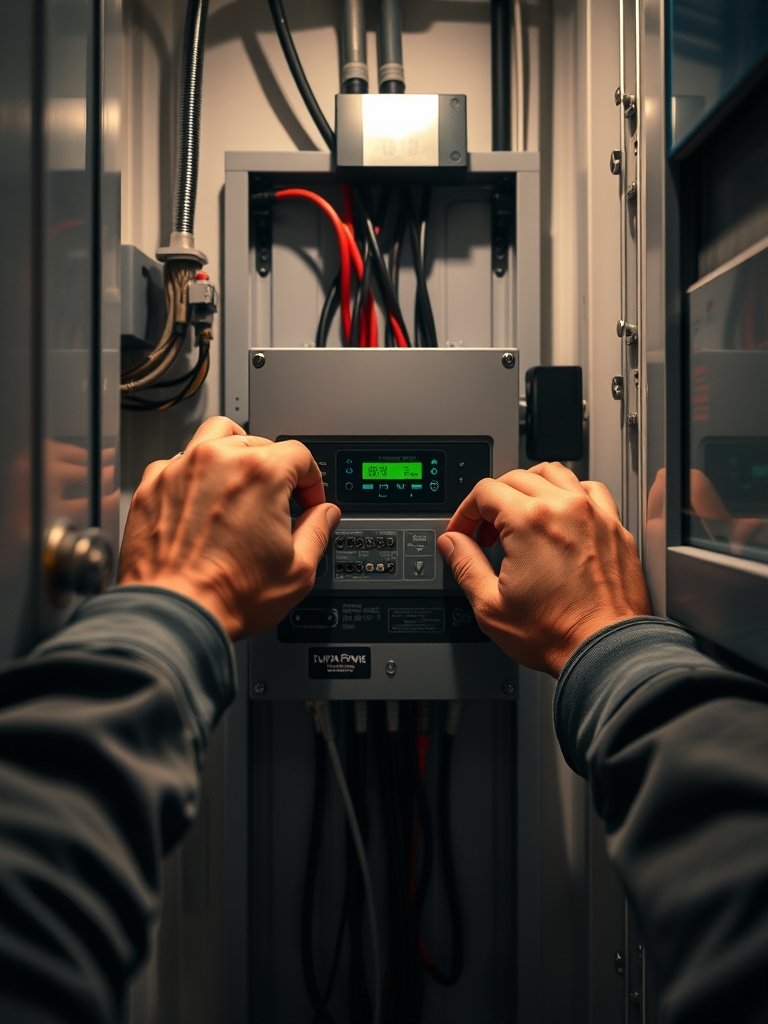
Example quote comparison — how to read a real installer estimate
| Line Item | Cost Estimate | Typical Details |
|---|---|---|
| Battery Storage Unit (LFP, 15 kWh) | $14,500 | 90% usable, LFP chemistry, UL 9540 |
| Bidirectional Inverter (10 kW) | $4,500 | 10-year warranty, app-based monitoring |
| Panel Upgrade (to 200A) | $2,800 | Required for most old homes |
| Wiring, Labor, Permitting | $3,600 | Includes trenching, city permits |
| Supply Chain Markup / Overhead | $2,000 | 6.5% markup, project admin |
| Gross Subtotal | $27,400 | Before incentives |
| Federal ITC (30%) | –$8,220 | Applies through 2025 |
| Final Customer Net | $19,180 | Out-of-pocket with incentives |
Compare this template to any installer quote—prices ±10% are within range, higher means ask why. Soft costs above $6k on average are a negotiation target.

FAQ
How do I know what size battery backup system I actually need?
Start by listing your critical loads—fridge, furnace, some lights, internet, medical devices. Add up the watts for simultaneous usage, then multiply by the number of hours you want backup. For most homes, a 12–20 kWh system covers essentials for 1–2 days, but always get a custom load calculation from your installer.
Is adding a battery worth it if I already have solar panels?
Yes—solar alone shuts off in blackouts. Pairing with a battery enables true backup. The ROI depends on your outage risk, bill rates, and ability to utilize time-of-use billing. Combine both for best results. More detail: solar battery backup system home.
Can a home battery system power my entire house during an outage?
Technically yes, but most homeowners limit use to essentials due to energy limits. Whole-house backup is achievable only for short outages or with large (25 kWh+) systems. Most buyers prioritize refrigerators, HVAC, and internet over everything else during blackouts.
Do I need to maintain or replace the battery every few years?
Modern LFP batteries require little maintenance—just periodic software updates and visual inspections. Most have 10-year warranties, but expect some gradual loss in usable capacity over time (up to 30%). Replacement isn’t usually needed for at least 10 years under normal use.
What brands and installers have the best track records?
Tesla Powerwall, Enphase, and Generac offer strong reliability and support. Always use installers who are certified for your local utility and have a long record of NEC-compliant work. Get at least three competing quotes.
For more actionable guides on home upgrades, don’t miss our deep dives into ADU garage conversion cost and home office soundproofing walls.
Ready to secure your energy future? Get three detailed quotes for your home battery backup system—and never accept a generic estimate. Insist on data-driven answers, transparent certifications, and strong warranties before signing anything.