

mudroom built-in ideas remain one of the most practical upgrades for busy homeowners who need real durability, better daily organization, and long-term resale value—especially when your entry is handling wet shoes, sports gear, pets, and everyday wear.
Key Takeaways
- Modern mudroom built-ins solve real pain points—moisture, odor, hardware wear—not just style.
- Quality materials (hardwood, powder-coated steel, washable textiles) and ergonomic sizing directly impact durability and ROI.
- Mid-budget projects typically return 24–35% of cost on resale (2024 data), making these one of the best functional home upgrades.
- Why mudroom built‑ins are a smart remodel right now
- Top complaints homeowners have about existing mudroom benches & cubbies (and how to avoid them)
- Materials & finishes that last in high‑traffic mudrooms
- Dimensions & ergonomics — sizing that actually works
- Cost expectations — DIY vs. professional and where the money goes
- Maintenance & longevity: design choices that make upkeep easy
- Innovative features and configurations trending in the last 12–18 months
- Three often‑missed topics top articles gloss over (and why they matter)
- Custom solutions designers recommend for pets, sports gear & seasonal items
- Actionable checklist & contractor brief template (what to print, measure, and ask)
Why mudroom built‑ins are a smart remodel right now
Mudroom built-in ideas are more than a design trend—they respond to a surge in demand for functional, everyday storage that adds measurable value. In 2024, home renovation spending stayed above $500 billion, with median budgets around $20,000 (source). Entry storage upgrades, especially those with built-in benches and cubbies, can return 24–35% of project cost at resale (NAR 2024). Buyers increasingly cite organized, practical mudrooms as must-haves.
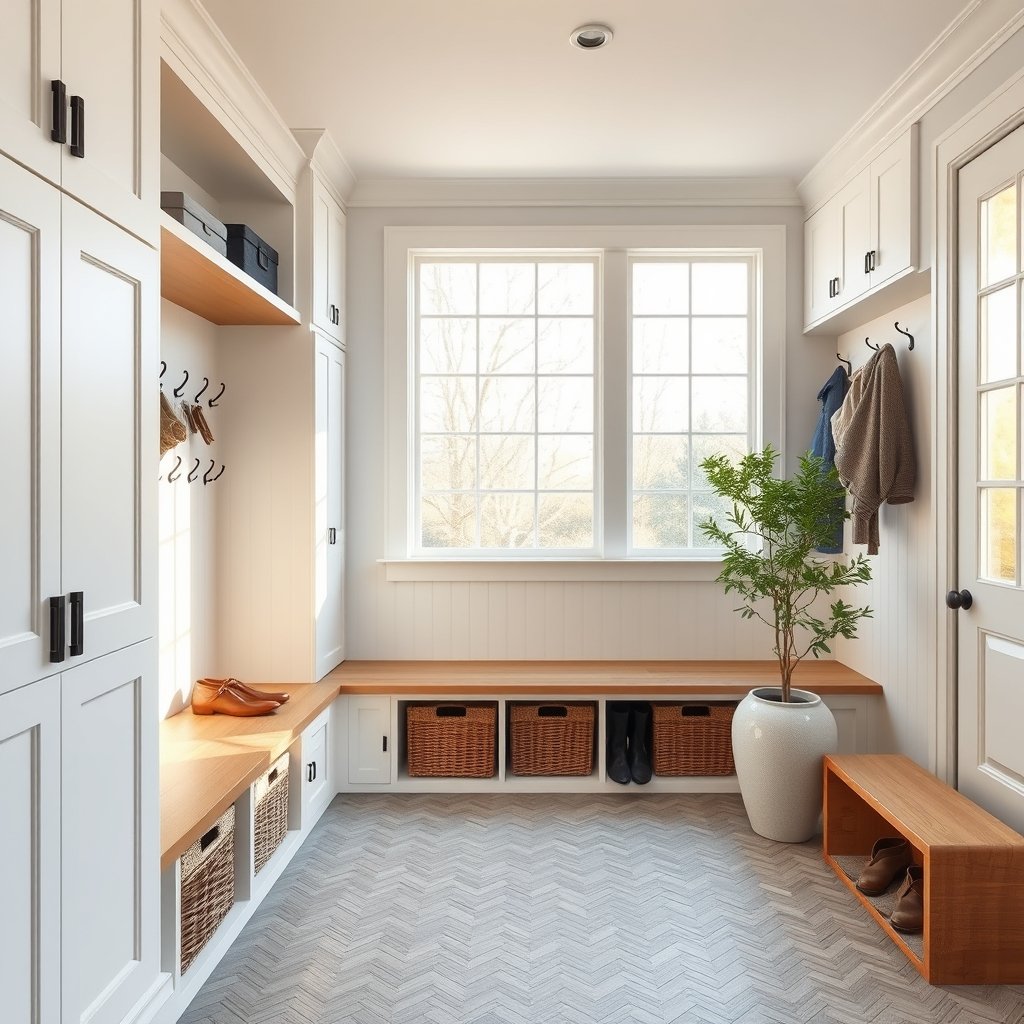
Unlike one-season trends, mudroom built-in ideas directly solve persistent homeowner frustrations—clutter, wet gear, shoe odor, and the challenge of getting kids and pets in and out without tracking dirt or creating organizational chaos. It’s a high-traffic, high-impact project—worth the spend if you get the details right.
For additional functional home upgrade ideas, see our guides on interior window shutter installation and AI smart home hub setup.
Top complaints homeowners have about existing mudroom benches & cubbies (and how to avoid them)
If you’ve ever owned a mudroom storage bench with cubbies, you know the pain points: swelling and water damage from wet boots, mold growth and funky shoe odor in closed cubbies, worn hardware from constant slamming, cushions you can’t clean, and glove or boot cubbies that are too shallow or small. Most benches fail on the basics of moisture control and ergonomics—typically with insufficient seat height (17–19 in.) and a cubby depth of only 12–15 in. (DTY Store).
The sure fixes? Specify open or vented cubbies (never fully enclosed), require removable and machine-washable cushions, and design for true day-to-day wear. Don’t let function be an afterthought—insist on durable hardware and easy-clean surfaces. Poor ergonomics and cleaning hurdles are the top reasons mudroom solutions fail after just one season.
Materials & finishes that last in high‑traffic mudrooms
Core material choices determine long-term performance and cleaning ease. For benches and cubbies, go with solid hardwoods (oak, maple, eucalyptus) or high-grade plywood with an actual hardwood veneer—these resist warping, can be refinished, and hold up under impact. For frames or supports, powder-coated steel has emerged as a top choice for moisture zones.
Finishes should always be moisture-resistant: catalyzed varnish or waterborne polyurethane are proven performers. For inside each mudroom storage bench with cubbies, add waterproof liners—plastic or stainless-steel trays are cost-effective for odor and mold protection (Wirecutter).
Prioritize easy-to-wash performance fabric or leather for cushions, and never use particle board or MDF in splash-prone areas. That small upgrade in material easily pays for itself by preventing costly repairs later. For high-wear zones in other rooms, check our composite deck material comparison tips.
Dimensions & ergonomics — sizing that actually works
Choosing the right dimensions is everything—undersized cubbies and benches frustrate daily use. For comfort, a bench height of 18–19 in. and seat depth of 15–18 in. is ideal for adults and kids alike. Each cubby in a mudroom storage bench with cubbies should be 12–15 in. deep, 10–12 in. wide, and 6–8 in. high. This sizing fits boots, shoes, and even most skate or soccer gear, while allowing airflow and easy reach (Borowske Builders).
Avoid making cubbies or benches too shallow—this is one of the most cited ergonomic failures. Test the sizing with your tallest boots before finalizing any build plan.
Cost expectations — DIY vs. professional and where the money goes
Expect to invest $1,500–$4,500 for pro-installed mudroom built-in ideas, with higher-end, fully customized systems hitting $6k+. DIYers can save on labor but rarely match fit and finish and still face material costs. Major costs: lumber/hardwoods, powder-coated steel, moisture-resistant finishes, robust hardware, custom cushion covers, ventilation or liner inserts, and pro labor (if applicable).
Professional grades and finishes cost more upfront but help ensure that critical ROI—returning 24–35% of project cost at resale (Four Seasons ROI Report). Always compare a pro estimate with the value impact in your region. Also see our garage floor epoxy cost breakdown for similar functional upgrades.
Plan for a median project budget of $20,000 if bundling this work with other entry or utility room improvements. The minor additional spend on ventilation, removable textiles, and liners adds minimal cost but prevents the most common service calls and repairs.
Maintenance & longevity: design choices that make upkeep easy
Daily cleaning gets easier with open or vented-front cubbies. Cushion covers should always be removable and machine-washable. Plan for a weekly wipe-down of exposed surfaces, and quarterly deep-cleaning for inside cubbies using mild disinfectant. Annually, check and re-coat moisture-exposed surfaces with polyurethane or your preferred finish.
The worst maintenance issues? Mold and long-term odor build up in enclosed cubbies. Solve this at the design phase with open, slatted, or vented cubby faces and by avoiding glued-down textiles or foam. Choose solid metal or hardwood hooks and pulls—their finish lasts 5–10 years with only periodic cleaning.
For more strategies on home upgrades built for easy maintenance, see whole-home generator installation tips.
Innovative features and configurations trending in the last 12–18 months
The biggest leap: vented or open-back cubbies that breathe, stopping musty odors before they start. Removable, washable performance-fabric covers are finally standard in better custom cushions. Waterproof cubby liners are no longer optional—they’re the frontline defense for all mudroom storage bench with cubbies. Mixed-material benches (powder-coated steel joins hardwood) and magnetic, hidden hardware for vertical gear storage are trending for both looks and long-term performance.
Custom modularity—adjustable cubby sizes, slide-out bins, and quick-retrofit hooks or charger stations—means today’s designs better adapt to growing families and evolving needs.
Three often‑missed topics top articles gloss over (and why they matter)
First, accessibility: Do seat and hook heights work for everyone? A bench at 18–19 in. height and multi-height hooks work for adults and kids with mobility issues. Second, tech: Integration with smart home systems—think notifications if a mudroom door is left open, or sensors for entry lights—should be drafted in at the planning stage.
Third, lifecycle and real maintenance cost: Ask contractors how each choice impacts annual cleaning, refinishing, and part replacement. These issues are often missed in popular mudroom built-in ideas roundups, but they directly impact usability and ROI.
For more tips on tech integration in home upgrades, check our guide on AI smart home hub setup.
Custom solutions designers recommend for pets, sports gear & seasonal items
Pet owners and sports families need more customization: include waterproof pull-out trays for bowls, ventilated boot cubbies, modular bins for seasonal gear, and a key/leash hook station. Always use the recommended cubby sizing (12–15 in. deep, 10–12 in. wide, 6–8 in. high) to fit athletic or pet-accessory storage. For daily odor and mess control, stick with waterproof liners under every spot that touches moisture—and never skip the labeled, washable bins so you can swap storage by season.
For more on protecting your storage zones from moisture and mold, see our actionable crawl space encapsulation cost guide.
Actionable checklist & contractor brief template (what to print, measure, and ask)
- Exact Bench/Cubby Measurements: Aim for bench height of 18–19 in.; seat depth 15–18 in.; cubbies 12–15 in. deep × 10–12 in. wide × 6–8 in. high.
- Material/Finish Spec: Solid hardwoods, high-grade plywood, powder-coated steel. Finish: catalyzed varnish/waterborne polyurethane.
- Ventilation: Insist on vented/open-front cubbies, not full enclosures.
- Textiles: Performance fabric cushions, always removable/washable.
- Hardware: Brushed nickel, stainless, or powder-coated metal only.
- Waterproofing: Plastic/stainless insert trays for all shoe/boot cubbies.
- Budget: Align features with median project budget (~$20,000) and target 24–35% resale ROI.
- Contractor interview questions:
- What’s your go-to method for waterproofing cubbies and bench bases?
- How do you ensure hardware and finish longevity (maintenance schedule)?
- Can you provide examples where you solved recurrent mold/odor issues?
Advanced analysis & common pitfalls: What trips up most mudroom built-ins?
Here’s where even good plans fail: ignoring real-world moisture loads, skimping on seat and cubby depth, and choosing hardware/finishes that look sleek but aren’t built for daily bangs. Based on 2024 remodeler surveys, the most frequent callbacks are for:
- Cubbies swelling or delaminating due to even minor water exposure (cheap MDF, particle board, or basic pine isn’t enough).
- Shoe odors and mold after one winter because cubby faces/backs have no vents and are overly sealed.
- Cushions that stain or break down (non-washable, glued foam is a nonstarter).
- Inadequate bench depth—looks good empty, but can’t actually sit on it with boots on.
- Finish or hardware corroding in under 24 months—usually in budget builds where powder-coating and moisture-sealing were skipped.
| Common Problem | What Causes It | How to Fix or Avoid |
|---|---|---|
| Cubby mold/odor | No airflow, shoes stacked wet, waterproof liner missing | Use vented/open faces, install liner tray, add airflow |
| Bench/cubby swelling | Low-grade MDF/particle board, weak finish, water absorption | Upgrade to hardwood or marine plywood, use catalyzed varnish/powder coating |
| Seat too low/shallow | Copycat builds ignore true ergonomic standards | Confirm 18–19 in. seat height, 15–18 in. depth at minimum |
| Cushion stains/odor | Non-removable covers, absorbs water/sweat/odors | Specify removable, machine-washable textiles/fillings |
| Finish/hardware rusts or chips | Paint-grade or generic hardware, no moisture protection | Use powder-coated or stainless hardware, schedule yearly touch-ups |
Real-World Example: A Washington, D.C. family had repeated shoe mildew and warped cubby bottoms every winter, requiring yearly repairs. Their fix was a retrofit of open-vented cubbies, plastic waterproof liners in all shoe spaces, and custom removable performance-fabric cushions. These small changes doubled the usable life of their mudroom storage bench with cubbies and eliminated major service calls—a model now recommended by their contractor for similar homes.
Conclusion
Mudroom built-in ideas are a high-ROI upgrade in 2024 that can transform your entry organization and resale value—but only if you prioritize durability, proper sizing, real ventilation, and easy-care finishes. The right materials and design choices mean your next mudroom storage bench with cubbies will survive years of daily use, resist mold/odor, and still look appealing to future buyers.
Start by assessing your own pain points, take the checklist to a few local contractors, and use the expert-backed dimensions and finish tips above—you’ll protect both your home’s daily function and future market appeal. Ready to upgrade? Print the checklist, shop for the right materials, and bring your mudroom built-in ideas to life the smart way.
Frequently Asked Questions
What materials are best for a mudroom storage bench with cubbies?
Choose solid hardwoods (like oak, maple, or eucalyptus), high-grade plywood with hardwood veneer, and powder-coated steel. Always use moisture-resistant finishes and waterproof plastic/metal liners for inside cubbies.
How do I stop mudroom cubbies from smelling or getting moldy?
Use open or vented-front cubbies for airflow, line each cubby with a waterproof tray, and specify removable, machine-washable cushion covers to prevent odor and mildew buildup.
What size should mudroom benches and cubbies actually be?
For real comfort and usability, select a bench height of 18–19 in., seat depth of 15–18 in., and cubby size of about 12–15 in. deep, 10–12 in. wide, and 6–8 in. high.
How much does a professional mudroom built-in cost compared to DIY?
Professionally installed mudroom built-ins typically cost $1,500–$4,500 for basic to mid-level builds, up to $6,000 or more for custom work. DIY saves on labor but rarely matches the finish and durability of pro installs.
Is a mudroom built-in a smart investment for resale value?
Yes—a well-designed mudroom storage system returns approximately 24–35% of its cost at resale and increases home appeal for buyers seeking practical storage.