

Rainwater harvesting system home projects are now among the smartest ways for homeowners to cut water bills, boost sustainability, and protect lawns and gardens from summer drought. But choosing between a rain barrel and a rainwater tank is not simple. Real differences in costs, sizing, and long-term results can mean big wins—or costly headaches. Let’s break down the facts, numbers, and steps that help you make a confident decision for your home.
Key Takeaways
- Rainwater harvesting at home can reduce municipal water use by 30–40% (around 200–400 gallons saved weekly) and pays back in three to ten years, depending on system size and local water rates.
- Choosing between a rain barrel vs rainwater tank depends on budget, garden size, and water demand; undersizing is the #1 reason systems fail to deliver ROI.
- Factor in actual installation costs, permits, and ongoing maintenance (usually $100–$250 per year) to avoid surprises and ensure your investment pays off.
- Why harvest rain at home? Quick benefits & national context
- Rain barrel vs rainwater tank — a head-to-head comparison
- How to size your system for lawn & garden (simple calculations)
- Typical costs & ROI — rain barrel vs rainwater tank (examples by system size)
- Installation options & what to buy (components checklist)
- Common failures, headaches and how to prevent them
- Maintenance schedule & expected ongoing costs
- Legal, permitting and local considerations (how rules can change your plan)
- Quantitative performance comparison
- Real homeowner results: case studies & expected ROI
- Quick decision flowchart & buying checklist (final call to action)
- Appendix / Sources & templates
Why harvest rain at home? Quick benefits & national context
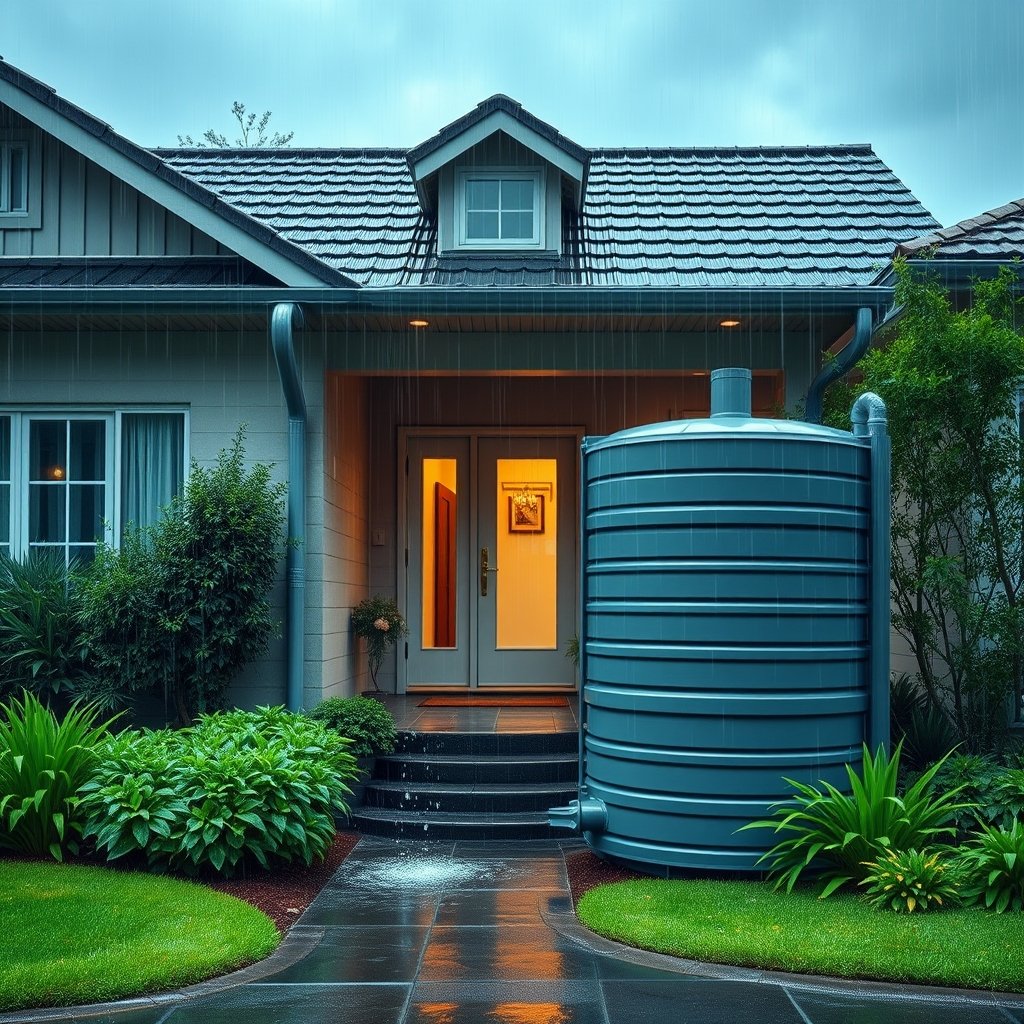
Rainwater harvesting system home adoption has surged, with about one in eight U.S. households (12–13%) now collecting roof runoff, mostly for landscape irrigation. Why? Typical homes with lawns and gardens can save 30–40% on city water supply—about 200–400 gallons weekly per property. That’s good for your wallet and strong environmental stewardship, reducing runoff and easing pressure on local water grids. Residential installations are over a third of all rainwater catching systems in North America, providing clear social proof and momentum for homeowners ready to invest in their yards.
Rain barrel vs rainwater tank — a head-to-head comparison
For most homeowners, the biggest decision is rain barrel vs rainwater tank. Here’s how they stack up:
- Capacity: Barrels hold 50–100 gallons. Cisterns (tanks) start around 300–500 gallons and can go well above 10,000 for large lots.
- Footprint: Barrels are compact for spot watering. Tanks require more space, sometimes underground or at the side yard.
- Water quality: Both need screened inlets and debris filters. Tanks, especially those with first-flush diverters, offer better protection for pumps/drip systems.
- Typical use: Barrels work best for flowerbeds and hand-watering. Tanks are essential for whole-yard irrigation, multi-day storage, and pressurized systems.
- Lifespan: Most quality barrels and tanks last 15–30 years (manufacturer warranties), but pumps only last 2–10 years.
- Maintenance: Barrels are mostly hands-on, tanks need professional input occasionally (e.g., pump replacement, filter service).
Above-ground barrels and tanks make up 70% of installs. If you only need to fill a watering can, a barrel is simple. If you want automation and substantial supply, a tank pays back long-term. Learn more about optimizing yard watering with a smart irrigation system.
How to size your system for lawn & garden (simple calculations)
Undersizing stops more rainwater harvesting system home projects than any other mistake. Here’s a three-step method to avoid it:
- Estimate roof catchment area. Measure the length x width of the roof connected to your gutters. Example: 1,000 square feet.
- Convert rainfall to gallons. Each 1 inch of rain yields approximately 622 gallons per 1,000 sq ft. Use local rainfall data for monthly/annual estimates.
- Match to garden demand & desired autonomy. How many gallons do you need per week in peak season? (A typical lawn plus garden uses 400–800 gallons.) Decide if you want one week or one month of storage without rain, then size barrel or tank accordingly.
Common error: Homeowners buy a single 50-gallon barrel for a 1,000 sq ft roof and find it overflows after every moderate rain, wasting hundreds of gallons. Know your demand before buying. Tools like the DOE Rainwater Harvesting Technology Guide can help you crunch the numbers.
Typical costs & ROI — rain barrel vs rainwater tank (examples by system size)
Rain barrel vs rainwater tank costs vary greatly. Here’s a breakdown:
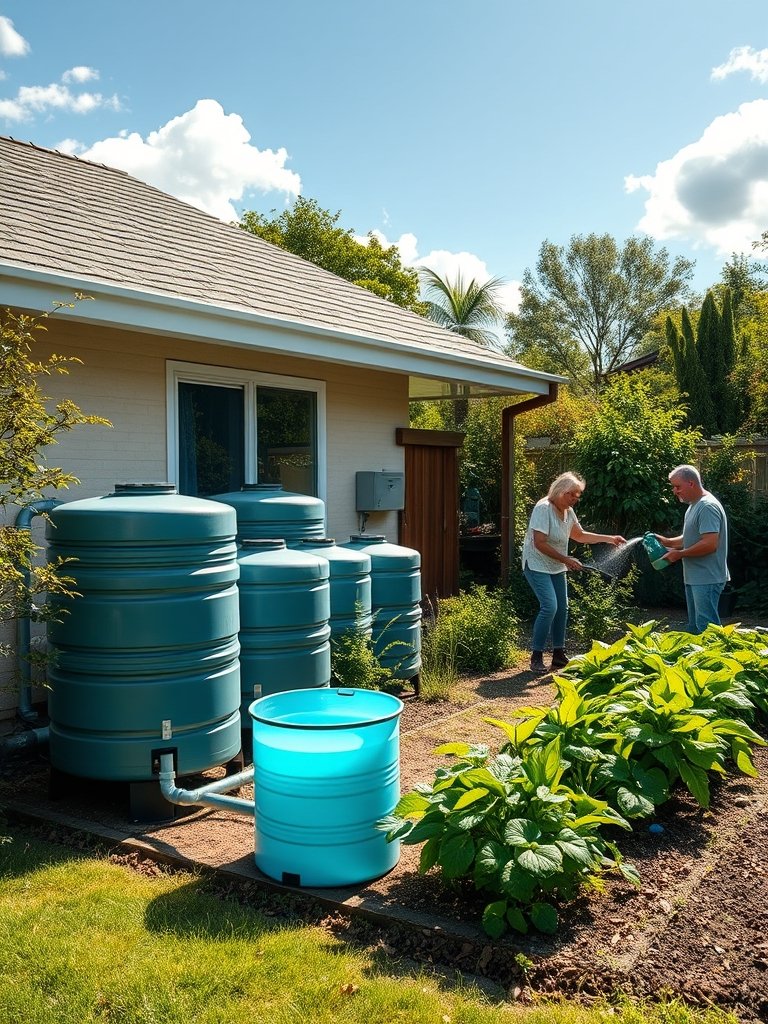
- Small (50–100 gal barrel): $70–$100 DIY installed. Life expectancy: 15–20 years. No pump, minimal equipment.
- Medium (2–4 barrels OR 300–500 gal cistern): $250–$1,500. Cisterns often require pro installation ($1,000–$1,500 extra), pumps ($200–$800), and modest filtration.
- Large (1,000+ gal system): $2,000–$10,000+. Includes site work, pro install, pump station, advanced filtration.
On average, medium systems save $300–$600/year on water bills. Payback: barrels 2–5 years, tanks 4–10 years—faster in high water rate cities or during drought restrictions. Ongoing maintenance (filter cleaning, inspections, pump replacement every 2–10 years) usually runs $100–$250/year. See detailed ROI breakdowns at ThriveLot.
Installation options & what to buy (components checklist)
Every rainwater harvesting system home install requires these basic items:
- Barrel or cistern (sized to demand)
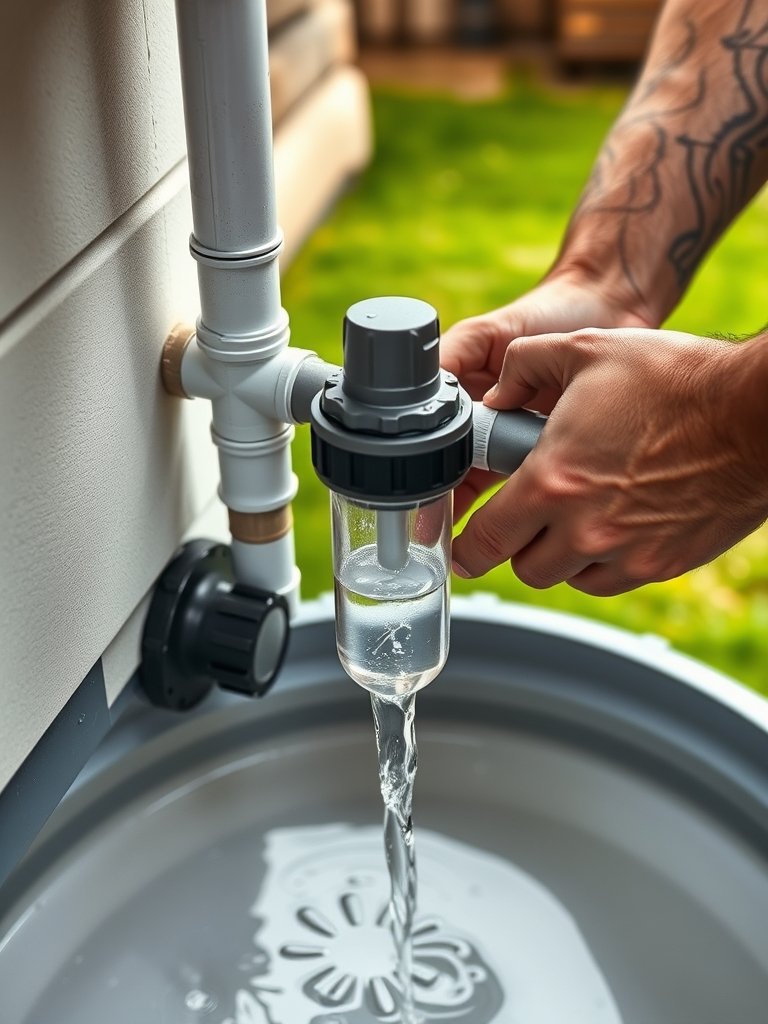
- First-flush diverter (protects storage from roof debris)
- leaf screens and gutter filters
- Overflow routing (to drain away from foundations)
- Pump & pressure tank (for pressurized irrigation)
- Basic filtration (screen/drip irrigation only or advanced if needed)
- Foundation protection (gravel pad, concrete, or non-settling base)
Hand watering systems are often DIY. If your setup includes pumps or connects to in-ground irrigation, get pro help with electrical and pressure plumbing. Pro installations for a 300–500 gallon tank run $1,000–$1,500 plus equipment. For related outdoor upgrades, see our guides on cordless electric lawn mowers and vertical gardening systems for efficient yard care.
Common failures, headaches and how to prevent them
Homeowners commonly report the following issues:
- Undersized tanks/barrels: System overflows quickly, wasting water and risking foundation damage.
- Clogged or undersized overflows: Backups cause flooding near your home’s slab or basement.
- Freezing and cracking: Non-winterized barrels split in cold climates—always drain or use frost-resistant designs.
- Mosquito breeding: Unscreened inlets or stagnant water create biting pest problems (always install tight mesh and close all openings).
- Filter clogging & sediment buildup: Leads to blockages and reduced water quality; flush and clean regularly.
- Pump/valve failure: Common after 5+ years (budget for replacement).
Read more about practical water-wise landscaping in our xeriscaping guide and learn why a rain garden can help handle overflow safely.
| Feature | Rain Barrel | Rainwater Tank / Cistern |
|---|---|---|
| Typical capacity | 50–100 gal | 300–10,000+ gal |
| Installed cost (2024) | $70–$100 DIY | $1,200–$3,000 (300–500 gal tank, pro installed) |
| Lifespan (warranty) | 15–30 years | 15–30 years (tank); 2–10 years (pump) |
| Water pressure | Gravity only (good for hand watering) | Gravity or pump pressurized (suitable for in-ground irrigation) |
| Water quality management | Leaf/mesh screen | First-flush + advanced filtration optional |
| Best for | Flowerbeds, spot watering, car washing | Lawn and garden irrigation, mulitple-day autonomy, blending non-potable indoor use |
| Common pitfalls | Overflows, mosquito risk, freezing/cracking | Pump wear, sediment buildup, installation complexity |
| Maintenance | DIY, mostly seasonal | DIY & professional, annual/biannual inspection |
Maintenance schedule & expected ongoing costs
Rainwater harvesting system home upkeep is modest but crucial for ROI:
- Clean filters and screens every 1–2 months during the season
- Check pump function and flush sediment every spring/fall
- Inspect barrels/tanks for leaks or cracks annually
- Winterize (drain) if exposed in freezing climates
- Budget $100–$250 per year for maintenance or pro inspections (most tanks/pipework warranty: 15–30 years; pumps 2–10 years per DOE guidance)
Be ready to replace low-cost gaskets, valves, or a pump in your system’s second decade for continued reliability.
Legal, permitting and local considerations (how rules can change your plan)
Before you buy, check state, city, and HOA rules. Some states require backflow prevention, limit total capacity, or regulate how harvested rainwater is used. Many now offer rebates or tax credits to encourage installation—ask your water provider. Always secure a permit when plumbing to indoor lines or connecting to irrigation systems. Local policies can change ROI dramatically by altering what’s legal, eligible for incentives, or allowed during drought.
Residential use is now about 37% of all rainwater harvesting system home installations, driven by both regulation and rising water costs. Start by contacting your local water utility and building department for specifics. For examples of utility and rebate programs, refer to this market analysis.
Quantitative performance comparison
The table below lays out typical values for the two main options. Consider the payoff window, how long each system lasts, and practical automation for everyday garden use.
| Rain Barrel | Rainwater Tank (Cistern) |
|---|---|
| 50–100 gal | 300–10,000+ gal |
| $70–$100+ (DIY kit) | $1,200–$3,000 (300–500 gal, pro installed) |
| 15–30 year lifespan | 15–30 year tank, 2–10 year pump |
| Low to no pressure (gravity-fed) | Pump/pressure tank for irrigation |
| Simple filtration (leaf/mesh screen) | First-flush diverter, advanced filtration available |
| Best for manual watering | Best for in-ground sprinklers, drip irrigation, multi-week supply |
Real homeowner results: case studies & expected ROI
Market research and published case studies show that most household rainwater harvesting system home setups reduce municipal water use by 30–40%, particularly during irrigation season. Typical barrels pay off in two to five years, tanks in four to ten. Homeowners report high satisfaction if they have properly sized their system, regularly cleaned screens, and understand maintenance expectations.
Most unforeseen drawbacks relate to poor sizing, skipping maintenance, or not budgeting for pro installation of pumps or tanks. By following a realistic sizing and ROI process, 90% of common frustrations can be avoided.
Quick decision flowchart & buying checklist (final call to action)
Use this simple decision process:
- If you want low-cost, low-maintenance spot watering: Choose a rain barrel (or two) with screened inlets and a hose bib.
- If you want to irrigate lawns or need storage for dry spells: Choose a 300–500 gallon cistern with a pump, diverter, and overflow—size it to your roof and garden needs.
Buying checklist:
- Measure roof area draining into your gutter (1,000 sq ft = ~622 gal/inch rain).
- Estimate average and peak garden water demand.
- Check local rules and rebates before buying.
- Get two or more installation quotes for anything requiring a pump or in-ground work.
Ready for your own rainwater harvesting system home? Start with real numbers—not just wishful thinking—and you’ll end up saving water, time, and hassle.
Appendix / Sources & templates
- DOE Rainwater Harvesting Systems Technology Review (maintenance, tank lifespans)
- ThriveLot Rainwater ROI Guide 2024 (detailed cost/savings examples)
- Market.US Home Rainwater Harvesting 2024 Analysis
- Common Rainwater Harvesting Pitfalls & Solutions
- Maintenance checklist template:
- Clear debris from gutters/screens (monthly, in season)
- Flush filters, first-flush diverters (every 6–12 weeks)
- Inspect tank/barrel seams/gaskets (annual)
- Flush tank bottom/pump after leaf drop (autumn)
- Winterize: Drain if exposed to freeze
- Set reminder to check for mosquito entry points
- Questions for installers:
- What’s the real delivered capacity given my roof and rainfall?
- What warranty covers tank, pump, valves, and installation work?
- What’s included for overflow management?
- How do I access and service filters?
- Who handles permitting and rebate paperwork?
FAQ
How much does a rainwater harvesting system home cost to install?
Simple rain barrel kits start about $70–$100 DIY. Professional rainwater tanks (cisterns) of 300–500 gallons cost $2,000–$3,000 plus $1,000–$1,500 install. Larger, automated systems can cost much more depending on size and complexity.
How many rain barrels or what tank size do I really need?
The rule of thumb is 1,000 square feet of roof provides 622 gallons per inch of rainfall. Always estimate your maximum weekly garden demand and multiply by the number of weeks you want backup. Multiple barrels can be linked, but large areas or extended dry spells require a tank or cistern for real autonomy.
What common problems should I expect and how do I prevent them?
The main issues are undersized tanks (cause overflows and lost water), clogged filters, foundation flooding from poor overflow design, freezing and cracking of exposed barrels, and mosquito breeding. Prevent by sizing right, maintaining screens, installing robust overflow pipes, and winterizing as needed.
Do I need a permit or inspection for my rainwater harvesting system home?
For simple rain barrels, most places do not require a permit. Larger cisterns, any system plumbed to irrigation lines, or installations in strict water rights areas may require a permit. Always check with your local water utility or building department before installing a rainwater harvesting system home.
How much maintenance does a rainwater harvesting system home require?
Expect minor tasks (cleaning screens, checking pumps, inspecting seals) every month or two, with a more thorough inspection annually. Budget $100–$250 per year for parts, pro inspections, or the occasional small repair.