

Rain garden installation is the simplest, most effective way for homeowners to stop yard flooding, absorb driveway or roof runoff, and boost water quality without turning your yard into a muddy mess or endless chore. In this guide, you’ll get a brutally honest look at what a rain garden can (and cannot) do, hard numbers on costs and sizing, and the site-planning steps almost everyone skips—but you shouldn’t if you want real results.
Key Takeaways
- Rain gardens can realistically capture the first ½–1 inch of stormwater, usually about 25–30% of your annual roof or driveway runoff.
- DIY costs run $2–$5 per square foot—build smart to keep maintenance under one hour per month after establishment.
- Skipping infiltration tests or placing a rain garden too close to your home leads to drainage failures and headaches—site prep matters.
- What is a rain garden — and what it realistically does
- How to build a rain garden: step-by-step guide
- Advanced analysis & common rain garden pitfalls
- Conclusion
- Rain garden FAQ
What is a rain garden — and what it realistically does
A rain garden is a shallow, landscaped depression designed to catch and filter stormwater runoff from hard surfaces like roofs, driveways, and patios. Unlike a pond or retention basin that holds water for long periods, a rain garden is dry most of the time. Its main job: capture that first ½–1 inch of rainfall—the “first flush” that’s most loaded with pollutants—so it soaks slowly into the ground instead of racing into storm drains or pooling in your yard. With proper sizing and build, a rain garden typically handles about 25–30% of the annual runoff sent its way (source).
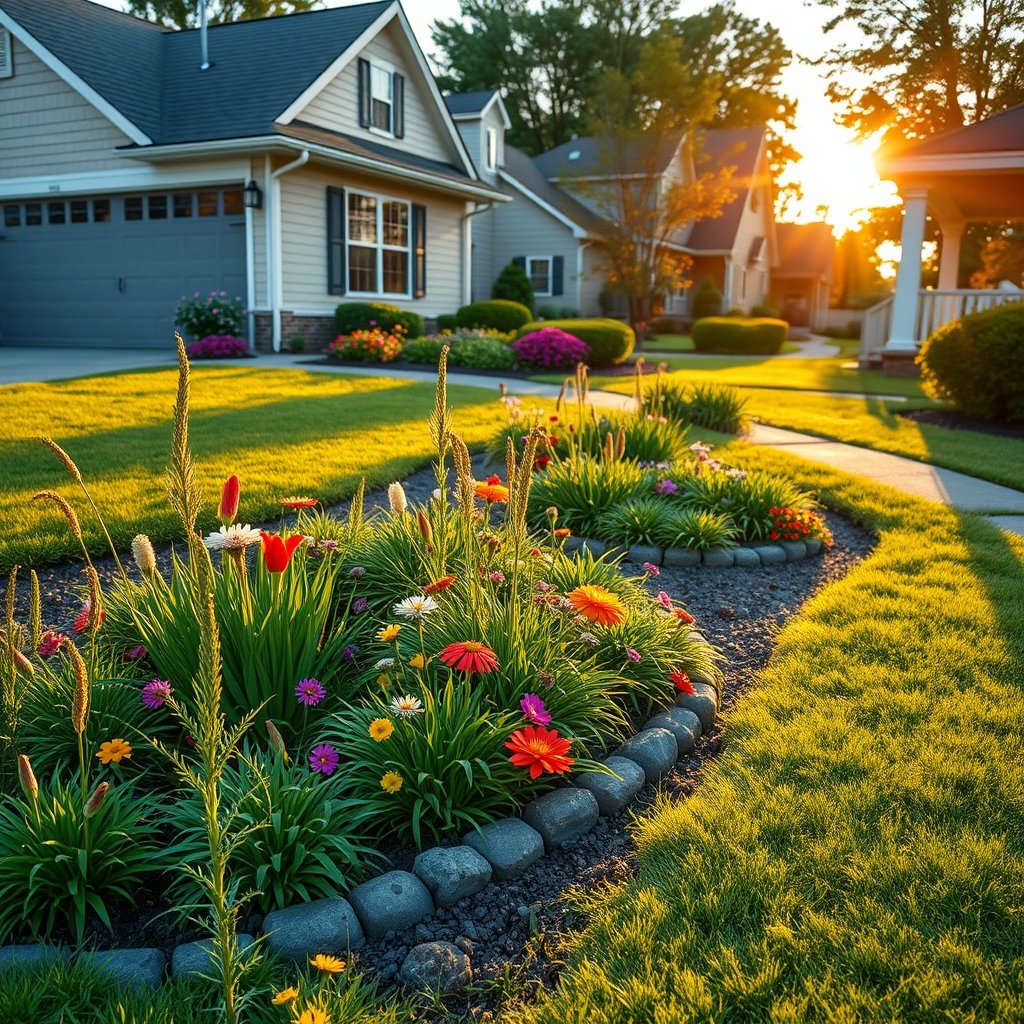
What does this mean in reality? A rain garden is not a fix-all for every flood event, nor will it soak up water like a sump pump in a downpour. Instead, it targets everyday, frequent rains and does it much better than a regular lawn—absorbing up to 30% more runoff (source). It’s also a giant filter: studies show rain gardens can remove up to 90% of chemicals and 80% of sediments from stormwater (source).
If you’re battling constant, heavy flooding, this strategy works best when combined with other drainage tools—like French drains, surface grading, or piping—but for regular runoff, a rain garden is hard to beat in cost and low maintenance after establishment.
How to build a rain garden: step-by-step guide
Ready to get your project off the ground the right way? Here are the essential steps, plus a few common blunders to dodge:
- 1. Map your contributing area. Add up all the hard surfaces (roof area above your downspouts, driveway, or patio) that will flow into your rain garden. For most yards, this means following your downspouts and drive slopes.
- 2. Calculate your sizing target. Plan for a rain garden that is 5–10% of the total contributing impervious area. For a 2,400 sq ft roof, a 120 to 240 sq ft garden is gold standard, but even a 60 sq ft plot will handle about 25% of the roof runoff (source).
- 3. Check your infiltration rate. Dig a hole (about 12 inches deep and 6 inches wide). Fill it with water, and time how long it takes to drain. Your rain garden site should absorb the water in 24–48 hours max.
- 4. Set setbacks—don’t build too close. Always leave at least 10 feet between your rain garden and any building foundation or basement. Stay clear of utilities—call before you dig.
- 5. Plan your overflow. No garden is floodproof; you need a safe route for water to exit if the rain garden is full. Gently slope the overflow to a safe spot in your yard, away from structures.
- 6. Dig and shape (benching optional). Excavate to 6–12 inches deep with flat bottoms and gently sloping sides. In clay soil, stay shallow (6 inches), as deeper holes won’t drain faster. Create a berm (earth mound) on the downslope to prevent water from escaping before it’s absorbed.
- 7. Amend your soil mix. The gold standard for rain garden soil: 50% coarse (sharp) sand, 25% compost or weed-free topsoil with less than 10% clay (source). Buy bulk or mix your own using wheelbarrows and a tarp.
- 8. Plant in bands by wet/dry tolerance. Wet-loving plants go in the lowest spots; drought-resilient species on the rim. Always choose natives—see regional lists below.
- 9. Mulch, water, and monitor. Use double shredded hardwood mulch for best results. Water plants to establish for the first season. Weed regularly in year one—after that, maintenance drops sharply.
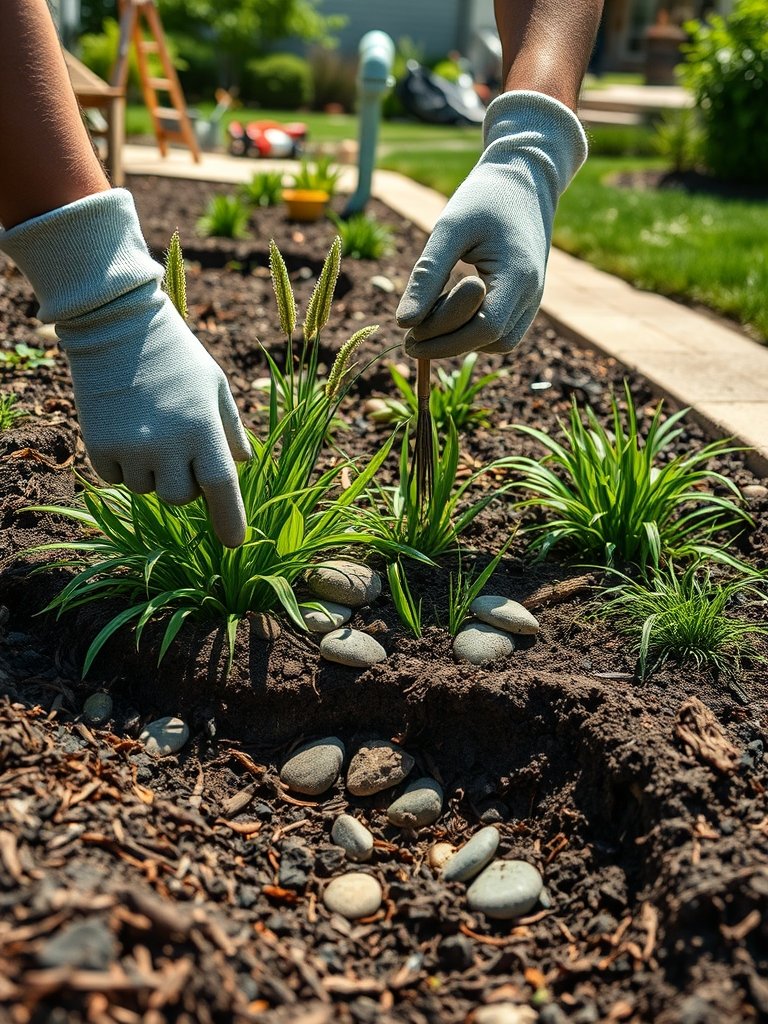
- 10. Costs and time. DIY prices run $2–$5 per square foot of garden (plants, mulch, soil mix, no labor). A 60 sq ft garden costs about $120–$300. Pro installs cost $10–$15 per square foot—so hiring out means $600–$900 for 60 sq ft, $2,000–$3,000 for 200 sq ft. See how this stacks up to other landscape jobs on our crawl space encapsulation cost guide or composite decking material comparison.
Ready to estimate your costs?
- Calculate your impervious area (roof, drive) in sq ft
- Multiply by 5–10% for garden size
- Multiply by $2–$5 for DIY or $10–$15 for pro labor
Example: 2,000 sq ft roof → 100 sq ft rain garden @ $2.50/sq ft DIY = $250.
Want a full breakdown by size, material options, and labor? Check our xeriscaping cost guide and see how rain gardens compare as an eco-friendly, affordable alternative to traditional lawn landscaping.
Regional Native Plant Quick-Lists
- Northeast/Midwest: Blue flag iris (Iris versicolor), Swamp milkweed (Asclepias incarnata), Joe Pye weed (Eutrochium purpureum), Switchgrass (Panicum virgatum)
- South: Black-eyed Susan (Rudbeckia fulgida), River oats (Chasmanthium latifolium), Cardinal flower (Lobelia cardinalis), Blue false indigo (Baptisia australis)
- West: California goldenrod (Solidago californica), Oregon iris (Iris tenax), Western columbine (Aquilegia formosa), Common rush (Juncus patens)
See your local extension service or EPA Soak Up the Rain for more region-specific recommendations.
Want a deeper dive on climate-adapted plant picks and why they matter? See our pollinator garden quick start for overlap with native habitat design.
Advanced analysis & common rain garden pitfalls
Even with a fantastic guide, most failed rain gardens share just a handful of root causes. Here’s how they stack up—and how to avoid becoming a cautionary tale:
| Problem | Root Cause | How to Prevent/Fix |
|---|---|---|
| Perpetual muddy spot/poor drainage | Skipped infiltration test or wrong soil mix | Test multiple locations; only use recommended soil blend (50% sand/25% topsoil/25% compost); never use building sand (clogs); if site fails, pick a different spot. |
| Persistent weeds/high maintenance | Poor mulching and lack of native competition | Use double shredded mulch at 2–3 inches; fill quickly with native perennials; weed heavily first year. |
| Plant die-off | Wrong species or poor establishment care | Choose only native plants proven for your zone and alternating wet/dry; water during drought first season. |
| Mosquito complaints | Ponding lasts over 48 hours | Check and re-grade for fast infiltration; rarely an issue if garden drains within two days. |
| Flooding/damage to structures | Garden placed too close to building | Always maintain 10 ft+ setback from any foundation; check local requirements. |
- Cost misconceptions: Most sticker shock comes from pro labor or overbuying plants. If you DIY and source plants locally, total costs stay below any other drainage solution on a per-square-foot basis.
- Poor sizing: Too small and it’s decorative only; too big and you add maintenance. Use our calculator above to hit the sweet spot.
- Maintenance reality: After year one, plan for an hour a month: weed, trim, top off mulch once per year, replace dead plants every couple seasons.
If you want to compare hands-on effort to a no till garden or a vertical gardening system for renters, most rain gardens are actually less labor long-term—once plants mature.
Conclusion
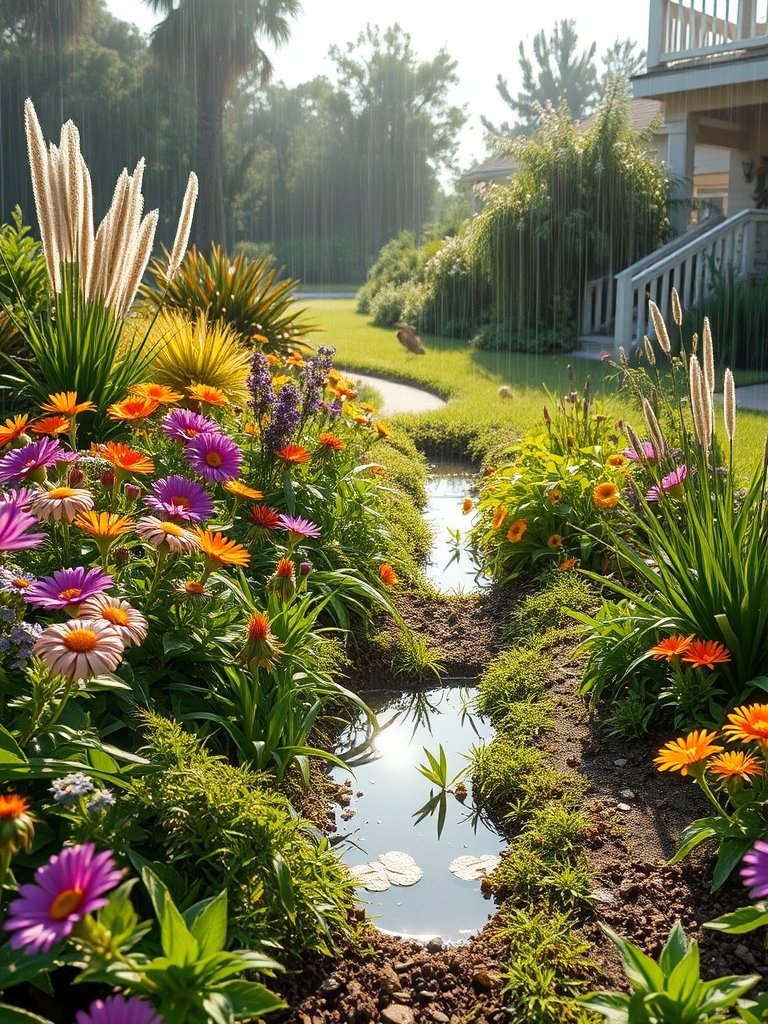
For most suburban homeowners, a rain garden offers the best balance of performance, upfront cost, and low maintenance if—and only if—you’ve sized it realistically, verified good drainage, built in the right spot, and picked resilient native plants. With DIY costs between $2 and $5 per square foot and the ability to capture 25–30% of your annual runoff, a rain garden is a practical, scalable solution for yard flooding and water quality. If you want to stop pooling water and make your landscape work for you, download our printable site assessment checklist and try the cost calculator above. Your rain garden is closer (and easier) than you think.
Ready to get started? Assess your site, crunch the numbers, dig smart—and enjoy a flood-free, thriving yard.
Rain garden FAQ
How much runoff will a rain garden really capture?
A properly sized rain garden will catch the first ½–1 inch of each storm, handling around 25–30% of the total annual runoff from hard surfaces like your roof and driveway. Don’t expect it to solve all flooding from extreme weather, but it will noticeably reduce everyday puddling and erosion.
How close can I build a rain garden to my house?
Never build a rain garden within 10 feet of your home’s foundation or basement. Water always finds the path of least resistance—keep all garden edges at least this distance away for long-term safety. Always check local ordinances for specific rules.
What does maintenance look like after year one?
After the first year (when you’ll weed and water more), maintenance drops to roughly one hour a month—occasional weeding, annual mulch refresh, and periodic plant replacement. Native perennials keep things low fuss.
Do rain gardens attract mosquitoes?
Not if built right. Gardens that drain within 48 hours rarely breed mosquitoes. If you see standing water longer than that, address infiltration or overflow issues immediately.
DIY or hire a contractor?
If you have time for a weekend or two of digging and planting, DIY is budget-friendly ($2–$5/sq ft). For those short on time or with difficult excavation sites, hiring a pro at $10–$15/sq ft ensures flawless grading and soil mix. The performance, when sized and built properly, is nearly identical.