

Fiber cement siding replacement is one of the most effective ways to protect your home and increase its value — but in 2024, costs, installation issues, and warranty realities have changed. If you’re a homeowner scoping out Hardie board, here’s what you need to know to avoid surprises, manage costs, and make the call between DIY and hiring a pro.
Key Takeaways
- Budget realistically: Average fiber cement siding replacement now runs $7–$18 per square foot ($14,000–$22,000 for a 1,500-sf home), with higher costs in certain regions and for complex designs.
- Hardie board siding has high recouped value but many warranty complaints stem from non-Hardie products or poor installation—proper spec and contractor vetting is crucial.
- Hidden costs—including removal, disposal, and climate-specific installation—are often omitted from quotes but can easily add $1–$3 per square foot to your total bill.
- Quick snapshot — what a fiber cement siding replacement costs in 2024
- Regional differences and how 2024 compares to prior years
- Hardie board siding cost — full line-item breakdown
- Key cost drivers — what most influences your final price
- Most common homeowner complaints and pain points after replacement
- Warranties, lifespan expectations, and 5–10 year homeowner experience
- Market context — fiber cement vs vinyl, wood, engineered wood
- Installation process: how fiber cement differs technically
- DIY feasibility and safety — when to hire a pro
- Three crucial sub-topics competitors often miss
- Practical next steps and decision checklist for homeowners
- FAQ
Quick snapshot — what a fiber cement siding replacement costs in 2024
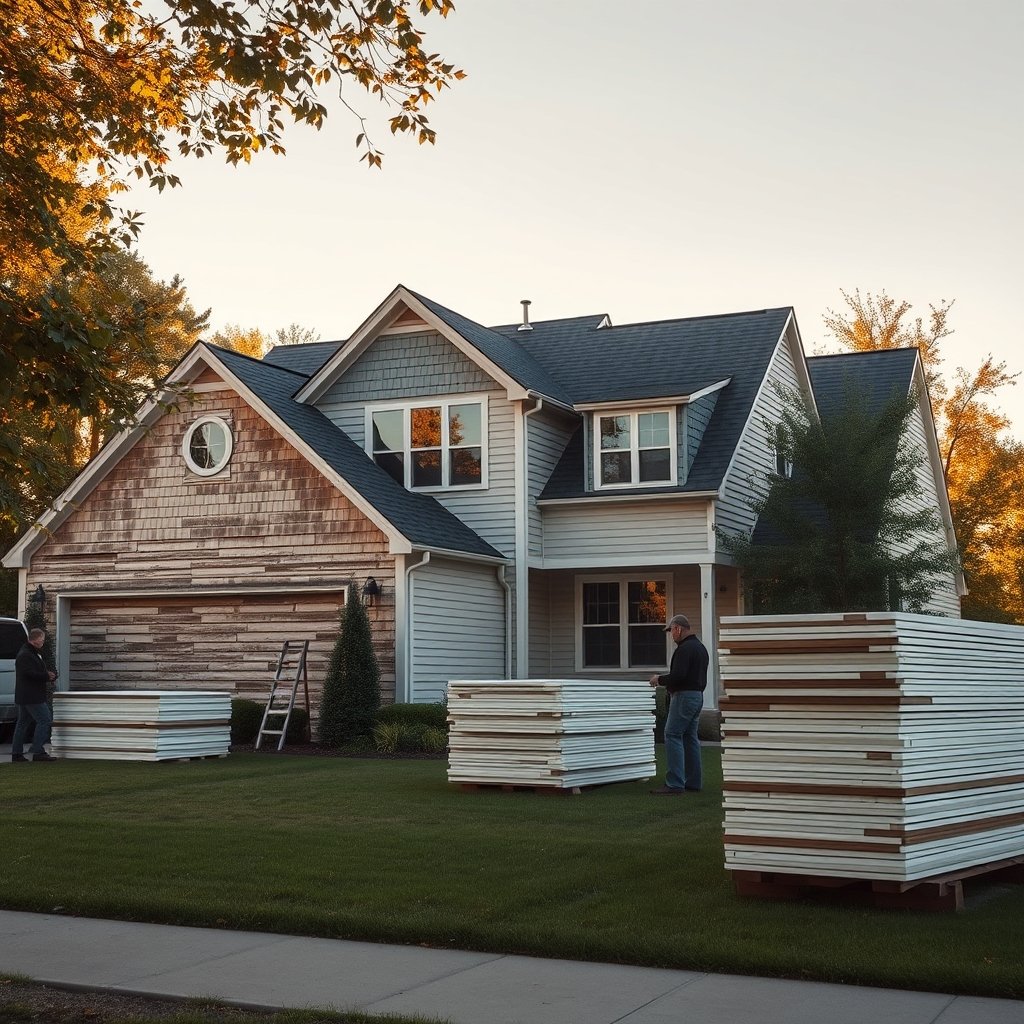
The average cost for a fiber cement siding replacement nationwide in 2024 is $7 to $18 per square foot installed. Most homeowners find their projects falling in the $10–$12 per square foot range. This means a 1,500-square-foot home typically ends up with a final bill between $14,000 and $22,000, depending on regional rates and home specifics. This investment delivers a dramatic update for curb appeal and offers a strong return in resale value.
Regional differences and how 2024 compares to prior years
Where you live can swing your costs by several thousand dollars. In the West South Central market, total project averages fall between $15,000 and $17,000. Both the Northeast and Pacific Northwest tend toward the higher end of the spectrum. Since 2020, costs have climbed by 10 to 15 percent—driven by rising material and labor prices. By early 2026, expect costs to climb further, with updated averages in the $8–$15 per square foot range and total jobs running $14,000 to $30,000 for the typical home. Supply challenges and climate-resilient requirements also drive some of these increases. [Source]
Hardie board siding cost — full line-item breakdown (materials, labor, removal, disposal, fees)
If you’re pricing Hardie board for a fiber cement siding replacement, here’s the typical breakdown you can use to estimate your own project:
- Boards (materials): $3–$5 per square foot
- Skilled labor and fasteners: $4–$8 per square foot
- Preparation (moisture barrier, flashing, repairs): $1–$2 per square foot
- Trim, flashing, permits: $0.50–$1 per square foot
This puts your total installed price at $5–$15 per square foot, depending strongly on local labor rates and finish level. Make sure your quote accounts for all these items—contractors sometimes leave out disposal or detailed prep costs in initial estimates, which leads to budget overruns. For a detailed primer on line-items that also applies to exterior stone or composite projects, check out our deck composite material comparison guide.
Key cost drivers — what most influences your final price
Several factors push your Hardie board siding cost higher or lower:
- House complexity: Multiple levels, irregular layouts, and custom trim details add labor hours and waste.
- Regional labor rates: Urban centers and high-demand markets mean stiffer labor competition.
- Removal of old siding: Add $1–$2 per square foot if existing siding needs to come off.
- Insulation or foam retrofit: Optional but increasingly popular for energy upgrades—adds cost, complexity, and coordination.
- Paint/finish: Some boards are pre-painted, others require on-site painting. The latter can run $1–$3 per square foot more.
- Brand and warranty specs: James Hardie is usually pricier but has better documentation and warranty performance than generic brands.
- Permitting and debris disposal: These often go unquoted but can add hundreds to over a thousand dollars per project.
Overall price swings from $5–$15 per square foot are typical. See also our actionable ADU garage conversion checklist to spot other hidden costs on large projects.
Most common homeowner complaints and pain points after replacement
The following issues consistently show up in real-world reviews after a fiber cement siding replacement:
- Clips pulling out and board joints failing—usually from improper fastening or cutting corners on labor skill
- Boards bowing, shrinking, or cracking—especially when not installed per Engineered-for-Climate standards
- Panels are heavy—skill and team labor are critical, since rushed or DIY installation often leads to mistakes (or injury risk)
- Maintenance: Fiber cement needs repainting every 8 to 15 years; caulked seams require periodic checking
- Retrofitting foam or extra insulation behind panels can be complex, adding both cost and scope creep
Real-world example: In one cited warranty experience, a homeowner whose siding bowed and shrank was denied warranty service—not because the job was DIY, but because the product used was a generic fiber cement board, not official Hardie. He had visible product failure but could not get coverage (source).
Want fewer future headaches? Always require the contractor to document that your siding is genuine Hardie, and get in writing that installation matches manufacturer specs.
Warranties, lifespan expectations, and 5–10 year homeowner experience
Hardie board and most major fiber cement products are marketed with strong warranties and lifetime value promises. In reality, warranties cover only qualified failures (e.g., manufacturer defects, not bad installation). Most warranty headaches occur with generic, non-Hardie products or when documentation is lacking. Industry data shows a new fiber cement siding replacement can add an average $24,420 to a home’s resale value, recouping up to 113–114% of project cost according to the 2025 Cost vs. Value Report (source). However, real claims may face pushback if proper installation or climate compliance can’t be proven.
By year 5: Most siding looks new, provided it was installed correctly. By year 10: You may be approaching your first repaint or having to re-caulk joints. Poor installs show bowed or cracked boards and difficulty in warranty submission.
See also our home EV charger installation guide for more case studies where proper documentation makes or breaks fileable warranty claims on home upgrades.
Market context — fiber cement vs vinyl, wood, engineered wood (market position and value)
Where does fiber cement siding sit in the industry? It’s a mid-to-high-range option, positioned above vinyl in durability and perceived value but below brick or real stone in price. Typical material costs are $3–$3.50 per square foot, about twice that of basic vinyl siding, but fiber cement enjoys a higher cost recoup average (77.6% vs vinyl’s 74.7%). Siding demand is rising, driven by both climate weathering concerns and the pursuit of longer-term, lower-maintenance finishes (Freedonia 2024 Siding Report). Engineered wood and composite rivals are closing the gap, so always compare long-term cost, performance, and recouped value.
If you’re considering projects like garage conversions or new insulation with siding, see our full guide to spray foam insulation cost for energy upgrade synergy opportunities.
Installation process: how fiber cement differs technically from vinyl or wood
Installation is where fiber cement siding replacement diverges from classic vinyl or traditional wood. Here’s the typical technical flow:
- Remove or inspect existing siding/sheathing
- Install new moisture barrier (house wrap) and necessary flashing
- Install optional insulation or furring as needed for flat nailing
- Handle and cut panels with care—fiber cement is heavy and dusty (requires dust mask and power shears/sawed with special blades)
- Precisely fasten with corrosion-resistant nails/screws, anchored into studs per manufacturer spacing (see Engineered-for-Climate requirements for your zone)
- Install trim, joints, and caulk all seams for weatherproofing
- Prime and paint, or install pre-finished boards. Final touchup and clean up
Labor is $4–$8 per square foot because the panels are both heavy and require precision—mistakes here are where most long-term failures start. DIYers can tackle prep, but rarely the main install. If insulation upgrades factor in, coordinate the sequence tightly with your siding crew.
DIY feasibility and safety — when to hire a pro
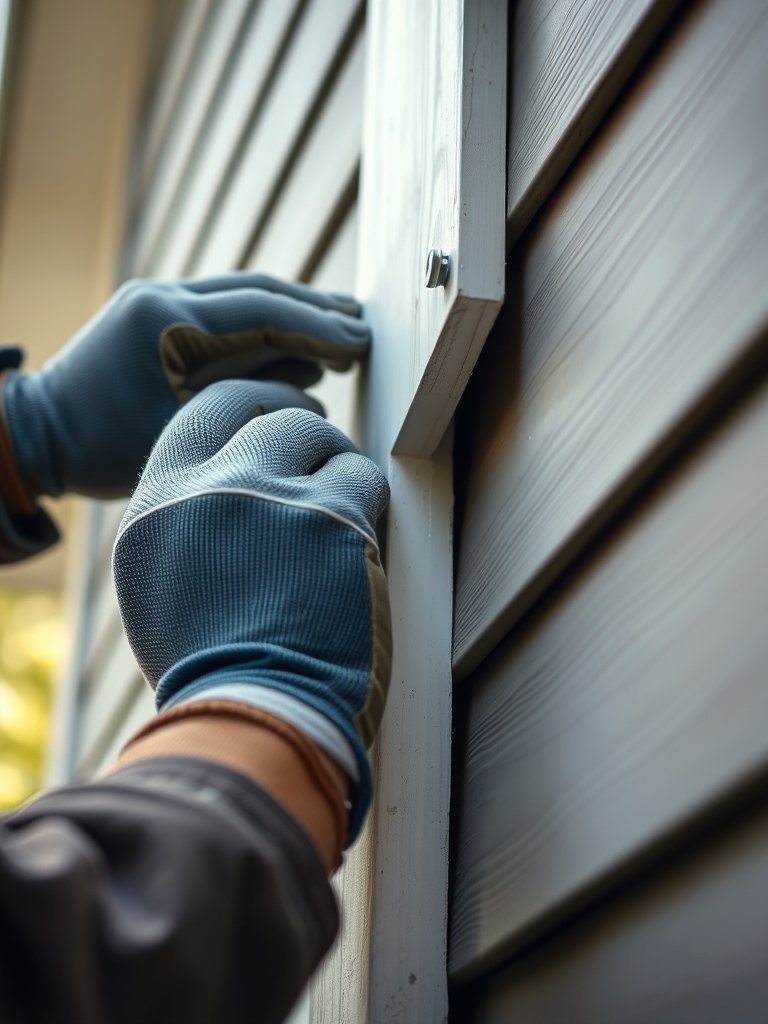
Many homeowners ask if they can save on fiber cement siding replacement through DIY. Realistically, the only suitable areas for DIY are prep (removing old siding, prepping sheathing, painting trim) and minor repairs. Full panel installation, accurate fastening, and waterproof flashing in corners/stops should always be left to skilled crews with specialized tools. At 60–90 pounds per panel, injury risk is real, and improper fastening often voids warranty and leads to bowing or failure within years.
In most markets, skilled labor is $4–$8 per square foot, so DIY won’t move the needle much after factoring in your time, risk, and likely need for rework. For complex tasks like panel handling and flashing in corners, always hire pros. Our whole-home generator installation guide offers parallel lessons on when pro help is warranted.
Three crucial sub-topics competitors often miss (and how you should address them)
- Warranty execution vs marketing: Most blog posts repeat the marketing—but real claims are denied when not a true Hardie board or documentation is lacking. Require serials, branded paperwork, and photograph install steps for future warranty needs.
Stat: “Homeowner warranty friction example: claimants found their product wasn’t Hardie and had trouble with coverage despite visible failure.” - Climate-specific installation requirements: Engineered-for-Climate specs affect both up-front cost and long-term performance. If these aren’t followed, expect bowing, shrinkage, and cracking within a few years. Add 5–10 percent to your budget to ensure your contractor provides this—and ask for the exact climate spec sheet with your paperwork.
Stat: “Failures (bowing/shrinking/cracking) occur when not installed to Engineered-for-Climate standards.” - Precise line-item removal/disposal and permit fees: Contractors commonly omit detailed removal, disposal, and permit cost breakouts in quotes. Demand it up front—these regularly total $1–$2 per square foot for removal/prep and $0.50–$1 per square foot for trim and permits.
Stat: “Prep/removal and additional fees commonly add $1–$2/sf + $0.50–$1/sf for trim/permits in the overall cost breakdown.”
Advanced Analysis & Common Pitfalls (with regional + line-item comparison)
Let’s put the numbers side by side for total clarity. The table below compares both regional averages and a standard line-item Hardie board breakdown.
| Region | Installed Cost Per Sq Ft | Total Project Cost (1,500 sf, typical) |
|---|---|---|
| National Average | $10–$12 | $14,000–$22,000 |
| West South Central | $10–$12 | $15,000–$17,000 |
| Pacific Northwest / Northeast | $12–$15 | $18,000–$24,000 |
| Line Item | Cost Per Sq Ft |
|---|---|
| Hardie Boards | $3–$5 |
| Labor & Fasteners | $4–$8 |
| Prep (Barrier, Flashing, Repairs) | $1–$2 |
| Trim, Permits, Disposal | $0.50–$1 |
Common pitfalls to avoid:
- Accepting initial lowball quotes that omit removal, insulation, finishing, or permit fees
- Not getting written confirmation of Engineered-for-Climate compliance—especially in freeze-thaw or high wind areas
- Assuming all fiber cement products are the same—warranty support and actual performance differ, especially for non-Hardie brands
- Hiring crews without experience handling fiber cement—results in bowing, clips popping loose, and needed repairs within years
- Cutting corners on paint or caulking, leading to premature rework
Practical next steps and decision checklist for homeowners
Ready to move forward? Follow this actionable checklist:
- Measure your home’s siding area in square feet—be specific to avoid cost or waste surprises.
- Request at least three quotes with identical scopes and line items (insist each includes demo, barrier, trim, and disposal fees).
- Require Engineered-for-Climate installation certification and photographic documentation.
- Confirm in writing that warranty is transferable and get the claims process explained up front.
- Build in a 10–15% contingency buffer, as total bills for fiber cement siding replacement can swing from $7–$18 per square foot with unexpected add-ons.
Want more tips? Visit our practical guides on crawl space encapsulation and window shutter installation for checklists applying to similar-sized home upgrades.
FAQ
How often does fiber cement siding need repainting?
Most fiber cement siding needs repainting every 8 to 15 years, depending on local climate and exposure. Pre-finished boards may extend repaint cycles, but still require periodic caulking and inspection.
Is Hardie board siding worth the price premium versus generic fiber cement?
In most cases, yes—Hardie board has stricter manufacturing controls, better warranty support, and proven long-term resale value. Generic products have a higher risk of installation or warranty problems down the line.
Can I install fiber cement siding myself?
DIY is feasible for prep and trim tasks. Full siding installation is risky for most DIYers due to panel weight, dust hazards, and intricate fastening—incorrect work voids warranty and quickly leads to failures.
Does fiber cement siding help with insulation?
Fiber cement itself is not an insulator, but pairing it with exterior foam or advanced wraps during replacement can boost your home’s thermal performance. Factor in extra cost and coordination with your siding crew.
What should I demand in my contractor’s quote?
Get detailed line items for demolition, barrier installation, siding, labor, trim, painting (if needed), disposal, and permit fees. Require documentation of Engineered-for-Climate spec and clarify the warranty and claims process up front.