

Portable home battery backup is rapidly moving from high-tech luxury to a practical necessity for homeowners in outage-prone regions. Instead of focusing solely on technical specs, it’s critical to consider real-world runtimes, cost-of-ownership, and how you’ll recharge your system when the grid stays down for days—not just for an hour here or there. This guide shows you exactly how to make the right decision for your household, emphasizing realistic use, actionable sizing, and strategies that actually work in multi-day emergencies.
Key Takeaways
- Don’t buy just on specs—match your portable home battery backup to actual appliance loads, target runtime, and recharging realities.
- LiFePO4 batteries are now dominant in the U.S. for safety and longevity, but bulk and up-front costs deserve hard scrutiny.
- Plan for long outages with hybrid charging (solar, grid, vehicle) and beware of overstated runtimes—see real appliance tables below.
- Market Snapshot — Adoption, Scale, and Near-Term Growth
- Step-by-Step Guide: How to Choose and Deploy the Right System
- Advanced Analysis & Common Pitfalls: What Homeowners Actually Face
- Conclusion
- FAQ: Portable Home Battery Backup Realities
Market Snapshot — Adoption, Scale, and Near-Term Growth
The demand for portable home battery backup has surged in the past two years. Global residential storage capacity reached approximately 20 GWh in 2023. In the U.S. alone, over 200,000 new home-battery installations happened in 2023, making up about 94 percent of North America’s share. The U.S. portable power-station segment was valued at nearly USD 1.5 billion in 2024 and is projected to exceed USD 13 billion by 2034 (source).
Battery-based backup systems now command about 52 percent of the whole-home backup market, growing at a double-digit annual rate, especially in California, Texas, and the Southeast where grid reliability issues and weather disruptions are frequent (source). This explosive growth means more options, lower per-kWh pricing, rapidly improving chemistry (LiFePO4), and an ecosystem increasingly focused on real-use scenarios over generic “spec sheet” marketing.
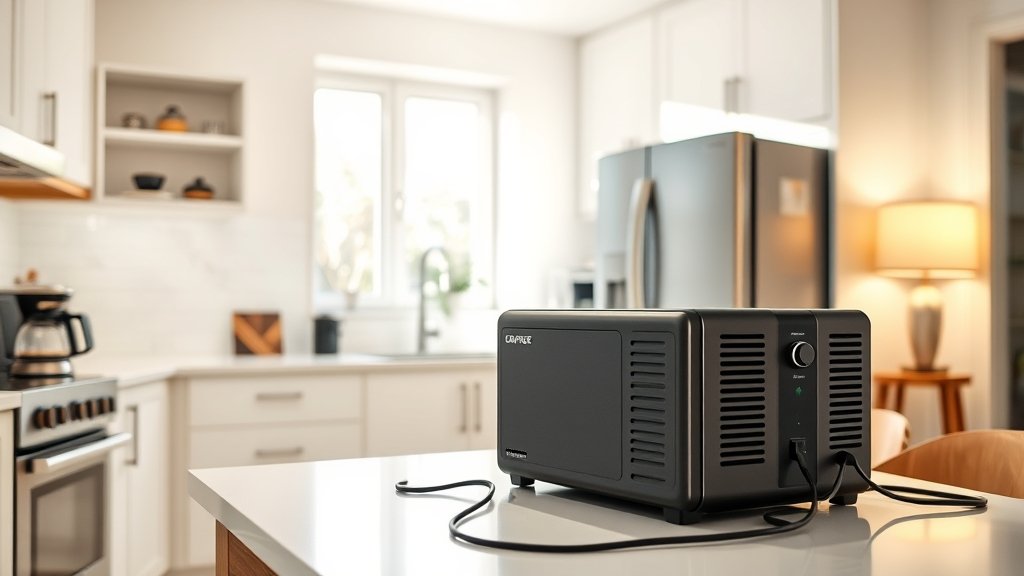
At the same time, consumer expectations are rising. Most owners are no longer just “preppers”—they’re practical homeowners who want resilience with minimal disruption, whether protecting food, running medical devices, or keeping communications online during blackouts. Manufacturers such as EcoFlow, Jackery, Bluetti, and Goal Zero are launching comprehensive solutions designed for multi-day use and flexible charging—though complexity and cost remain major decision points.
Step-by-Step Guide: How to Choose and Deploy the Right System
Choosing the right portable home battery backup takes more than picking a brand. Use this step-by-step approach to ensure you’re covered for actual outages—not just optimal lab conditions.
- List Essential Loads: Write down all devices/appliances you must power (fridge, CPAP, sump, router, lighting)—skip luxuries.
- Measure or Estimate Wattage and Duty Cycles: Note running watts and typical on/off time (e.g., fridge 150W, 30% duty cycle).
- Decide Outage Target Runtime: How many hours/days do you need minimum backup for? Most multi-day outages require at least 72 hours if storms, freezing temps, or wildfire shut-offs are likely.
- Calculate Total kWh: Multiply wattage × hours × duty cycle for each essential load. Add 10–20% buffer for inverter inefficiency (most inverters are 85–95% efficient).
- Choose Chemistry and Expandability: LiFePO4 is safer and lasts longer (3,000–6,000 cycles). For aggressive expansion or modular setups, prioritize systems with battery chaining and high input limits.
- Plan Charging Sources: Identify realistic recharge options—wall outlet (if grid returns), solar panels, vehicle (12–24V adapter), or a generator. Solar alone is often too slow for quick top-offs without at least 400–1,000W of panels and ideal sun.
- Check for Permitting, Insurance, and Proper Placement: Larger systems and grid-connection may require local permits and insurer notification. Always locate battery packs in a dry, well-ventilated, and kid-safe area.
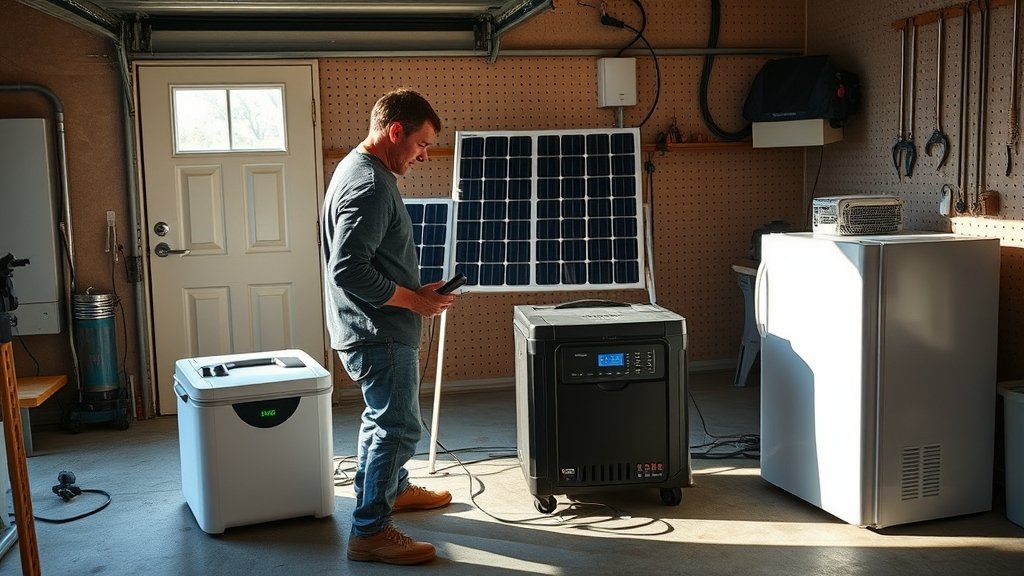
Quick Decision Box: Which Size Fits?
- Minimal Essentials (WiFi, lights, CPAP, phone): 1–2 kWh (LiFePO4); recharge by wall/vehicle. Solar panels optional but slow in bad weather.
- Moderate Resilience (fridge, CPAP, lights, sump, router): 4–6 kWh+ (LiFePO4, modular preferred); 400–800W solar input or generator assist needed for outages over 24h.
- Whole-Home Multi-Day (all essentials, partial HVAC, cooking): 10–15 kWh (LiFePO4 required); plan dual input (solar + grid/generator/EV). Expect $15,000–18,000 installed.
Appliance Runtime Table (Real World Expectation, 85% inverter efficiency, 72°F, new battery)
| Appliance | Avg Wattage | Duty Cycle | Runtime on 1 kWh | Runtime on 5 kWh | Runtime on 12 kWh |
|---|---|---|---|---|---|
| Refrigerator (modern, EnergyStar) | 150W | 30% | 22 hrs | 5 days+ | 12 days+ |
| CPAP Machine (with humidifier) | 40W | 100% | 21 hrs | 105 hrs | 250 hrs |
| Sump Pump (1/3 HP, intermittent) | 600W | 10% | 1.5 days | 7.5 days | 18+ days |
| WiFi Router + Modem | 20W | 100% | 42 hrs | 210 hrs | 500 hrs |
| LED Lighting (4 bulbs) | 36W | 100% | 23 hrs | 115 hrs | 275 hrs |
Assumptions: Actual runtime depends on many factors, including inverter efficiency, battery age/temperature, and true load cycling. Many systems in the “1,000 Wh to 2,000 Wh” segment (source) cannot sustain large loads for more than 24–48 hours without recharge.
For more details, see our whole home battery backup guide.
Advanced Analysis & Common Pitfalls: What Homeowners Actually Face
Portable home battery backup is an excellent resilience investment, but there are critical pitfalls—ignore them and you may face dark nights or fried electronics.
Common Real-World Complaints and Failure Points
- Limited Energy: Almost every real user report during extended blackouts highlights that the stored energy isn’t enough to handle high-draw appliances (like older fridges, deep freezers, or microwaves) for more than 24–72 hours without aggressive load management or recharging.
- Slow Recharge Under Solar: The most frequent letdown is solar charging speed. Even 400W of panels on a typical portable solar generator for power outage will only add 1–2 kWh per sunny day. Cloudy conditions or less-than-ideal orientation cut that in half.
- Heavy/Bulky Gear: True portable home battery backup with 2+ kWh usually weighs 30–80 pounds and takes up trunk space—hard to move, and rarely “truly portable” once installed.
- System Glitches: Unexpected inverter or BMS shutdowns and overheating warnings can render even high-end units dead weight for hours.
- Poor ROI Perception: With most systems costing $1,200–1,400 per kWh installed and battery replacement needed every 10–15 years ($5,000–8,000 for a full set), many owners struggle to justify costs without stacking energy arbitrage or utility credits from solar (see source), a feature not always available with portable systems.
Portable Battery vs. Fuel Generator vs. Solar Generator: Ownership Cost Breakdown (10 Years, Typical 12 kWh System)
| System Type | Upfront Cost | Fuel/Solar Add-Ons | Maintenance (10 yr) | Mid-Life Replacement | Total 10-Year Cost |
|---|---|---|---|---|---|
| Portable Home Battery Backup (LiFePO4, 12 kWh) | $15,000–18,000 | $1,000–3,000 (solar panels, cabling) | $1,500 | $6,000–8,000 | $23,500–30,500 |
| Gas/Propane Generator (10–12 kW, whole home) | $4,500–6,500 | $4,000+ (fuel/transfer install) | $2,000–3,000 | $1,500–2,000 (rebuild/replace) | $12,000–15,500 (plus recurring fuel) |
| Solar Generator (hybrid, 6–8 kWh + 1kW panels) | $7,500–11,000 | $2,500–4,500 | $1,000–1,500 | $3,000–4,000 | $14,000–20,500 |
Refer to our practical whole-home generator installation guide for more breakdowns. For portable systems, actual cost-to-benefit hinges on outage frequency and ability to recharge. Fuel price volatility and generator cycle maintenance often outweigh the “lower upfront” generator sticker.
Battery Chemistry: Why LiFePO4 Dominates But Isn’t Perfect
- Cycle Life: LiFePO4 batteries are now the largest and fastest-growing segment (source), offering 3–6 times the cycles of older lithium or lead-acid designs (and less fire risk).
- Portability Risk: LiFePO4 is heavier per kWh, so large-capacity units are less “portable” than ads claim.
- Service Life: Expect 10–15 years at moderate use—then plan for non-trivial replacement cost or modular upgrades.
Charging Strategies for Multi-Day Outages
- Grid recharge is fastest (when up), but you must have a safe transfer switch for hardwired units. See our home battery backup system cost breakdown for details.
- Solar charging is slow: A typical 400W panel array needs 12–16 hours of sunlight to refill a 5 kWh battery—double that if conditions are suboptimal. Most users dramatically underestimate how much panel area is needed for true “off-grid” performance.
- Vehicle (12V or EV) charging is possible but inefficient for anything beyond minimal essentials. Consider using your EV as a backup battery, but only if your inverter and vehicle support bidirectional charging (safe for a few hours, not days).
- Hybrid approaches—combining solar, vehicle, and occasional generator charging—stretch out usability but require more wiring, adapters, or circuit management. Modular products like the EcoFlow DELTA Pro Ultra and Jackery Mars Bot offer expandable “mix and match” charging, letting you adapt as needed (source).

Conclusion
Choosing the right portable home battery backup is about defending your household’s essentials, not just chasing specs or brands. Real runtime is limited by battery chemistry, charge input, and what you plug in—be honest about your needs and plan your backup with a safety margin. Expect meaningful cost, but also expect silent operation, resilience, and potential for expanded use if you size and plan properly.
Ready to upgrade your home’s resilience? Start your battery sizing by making a complete list of must-have loads, or get a professional assessment for larger systems—and don’t forget to stack incentives while the U.S. tax credit remains at 30 percent. For more tactical backup, see our step-by-step home battery backup system guide.
A realistic, right-sized portable home battery backup can be the difference between minor inconvenience and real danger in your next outage—take action now and review your options as this market advances.
FAQ: Portable Home Battery Backup Realities
How long will a typical portable battery backup run my refrigerator in a blackout?
A modern EnergyStar fridge (using 140–180 watts, 30% on-time) runs about 20–24 hours per 1 kWh stored. With a 5 kWh battery, expect 5 days; larger old fridges or chest freezers may need double the capacity. Always check actual draw with a watt meter.
Is LiFePO4 always better than other battery chemistries?
LiFePO4 (Lithium Iron Phosphate) offers much longer cycle life and superior fire safety compared to older lithium cobalt or lead-acid batteries. However, it’s heavier—so large units are less “grab and go” and sometimes more expensive.
What’s the best solar generator for power outage—should I always add solar panels?
Solar panels help if you expect multi-day grid loss, but panel size and sunlight hours are critical—most users underestimate the panel array needed for meaningful recharge. A hybrid solar generator with high input limit and modular expandability works best, especially if you plan for over 800W total panel input.
Can my electric vehicle (EV) charge my home battery backup in an emergency?
Indirectly, yes, if your inverter and EV both support bidirectional power (e.g., V2L on many new EVs). However, power transfer can be slow and may not be safe for long outages unless properly installed. Vehicles with 12/24V DC outlets can top up small battery systems in a pinch, but expect limited recharge rate.
Do I need a permit or notify my home insurance before using a large battery backup?
For plug-and-play portable units (under 3 kWh), permits usually aren’t required. If you’re hardwiring to your panel or installing over 10 kWh, most jurisdictions require permits and insurer notification. Improperly installed battery systems can impact claims, so always document and consider professional installation for larger setups.