

Rounded wall shelf designs are redefining how style-focused homeowners and renters create functional storage that actually fits their space — but buyers are smart to be cautious about load strength, mounting reliability, and whether that gentle curve will really work in their room. Here’s the reality: most issues come from poor anchoring, missing hardware, or mismatches between shelf size and decor needs — not the shelf itself.
Key Takeaways
- The floating-shelves market (including rounded wall shelves) is growing fast, but strength and install mistakes cause most user complaints.
- Before you buy a curved floating shelf, confirm rated weight, bracket type, included hardware, and whether it’s safe for your specific wall type and load.
- Customization (radius, finish, bracket upgrades) drives up price but delivers the best aesthetic and reliability for both rental and owned spaces.
- Market snapshot — why rounded and curved floating shelves matter right now
- Top buyer concerns (and why they stop purchases)
- Most common user complaints and negative-review themes
- Technical specifications buyers need (practical checklist)
- Typical price ranges and cost factors (materials, size, custom)
- Installation best practices and common fixes (step-by-step)
- Strength testing and how to evaluate load capacity (what to ask sellers)
- Design & space-use comparison: rounded/curved vs straight-edged shelves
- Real-world examples and quick case studies (residential + commercial)
- Quick buying checklist & FAQs (close with action items)
Market snapshot — why rounded and curved floating shelves matter right now
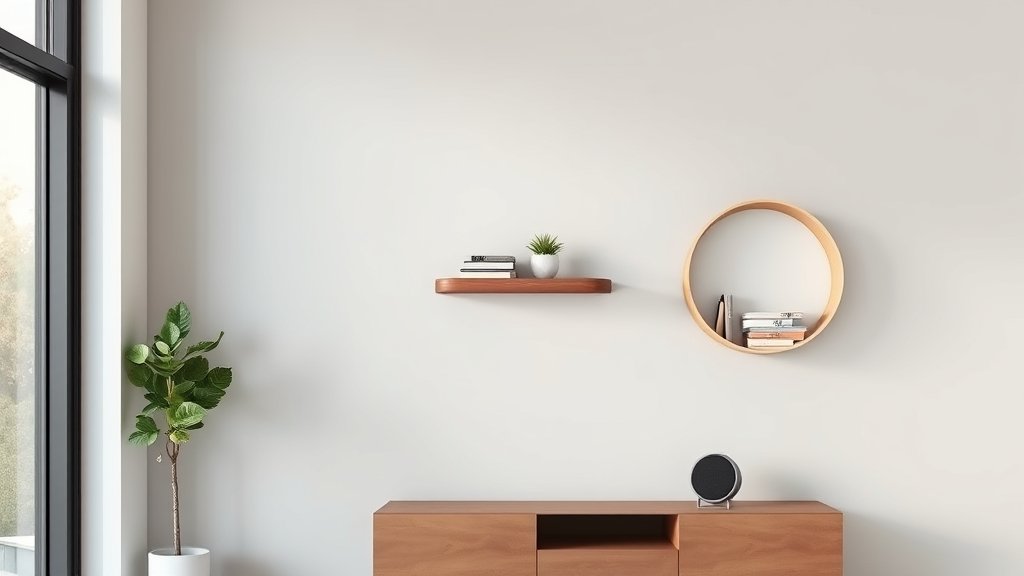
The floating-shelves category — and especially the rounded wall shelf — is seeing explosive growth as design trends shift toward minimalism, customization, and renter-friendly solutions. The global floating-shelf segment is projected to grow about 5% CAGR through 2031, now making up nearly 39% of all wall-shelf volume. The overall wall-shelves market was valued at $11.4B in 2025 and will reach $18.9B by 2034, according to recent research.
Drivers include the desire for smart storage, the popularity of curved and organic forms (see curved furniture trends), and the growing demand for visually distinctive shelving that softens contemporary interiors. Major M&A activity in 2024 shows that customizable floating shelving — especially designs with a curved or rounded front — is strategic for brands wanting to win design-conscious homeowners and commercial buyers.
Top buyer concerns (and why they stop purchases)
Despite the surge in interest, buyers still hesitate on a curved floating shelf for three main reasons:
- Strength/load confidence: Many assume floating shelves, especially rounded or curved models, can’t support real weight. This is stoked by negative forums and reviews — but in reality, when anchored into studs with backbar or rod brackets, even curved shelves can hold 100+ pounds per foot (source).
- Installation reliability: Many units ship with weak stamped brackets or poor drywall anchors, making proper install nearly impossible, especially for first-timers or renters who can’t drill into studs.
- Design fit, curvature, finish: The wrong size or radius can look awkward or make practical storage impossible. Buyers worry that a shelf’s curvature or depth won’t accommodate books, plants, or equipment — especially if dimensions aren’t clearly listed.
Research consistently finds that addressing these three blockers — with clear specs, hardware, and visual guides — is what tips browsers into real buyers.
Most common user complaints and negative-review themes
Negative reviews for rounded wall shelf products boil down to three key problems:
- Shelving sags or pulls away — usually traced back to cheap drywall anchors or brackets designed for straight, not curved, loads. Some shelves arrive missing required fasteners, others lack clear alignment marks, causing confusion.
- Installation headaches — including stud-finding errors, walls that aren’t perfectly square, no shims for adjustment, or anchor bolt holes that don’t match instructions.
- Size and depth disappointment — shelves that look deep in photos but barely fit a mug; radii that clash with the adjacent trim or window; finishes that show wear quickly, especially on MDF models with veneer.
Distrust of load ratings, frustration with unclear hardware, and disappointing shelf sizing are the main triggers for returns or 1-star reviews. Most issues come down to missing specs, not the floating shelf concept itself (report).
Technical specifications buyers need (practical checklist)
To build actual buyer confidence, sellers and shoppers should insist on the following specs for any curved floating shelf:
- Rated weight capacity (list pounds per linear foot, with wall type specified)
- Recommended wall types (stud/solid masonry vs. drywall with anchors) — not all shelves are safe on all walls
- Available sizes/depths (for books, plants, speakers — state actual usable surface depth/curve radius)
- Curvature radius (should fit room corner & workflow — typical 8–24″ radius for residential use)
- Bracket/backbar type (solid rod and backbar is strongest, stamped is weak, and some curved shelves include niche supports only suitable for light decor)
- Included hardware (stud screws, shims, wall-specific anchors, clear templates)
- Certifications or warranty (many quality shelves now offer 2–5 years, optional pro install)
A rod-and-bracket curved shelf in studs can hold hundreds of pounds (proof). Flimsiness is almost always a hardware choice, not a shape problem.
Typical price ranges and cost factors (materials, size, custom)
How much will a rounded wall shelf or curved floating shelf cost? Here’s what drives the price:
- Materials: Solid wood (oak, walnut): $100–$600+ per shelf. MDF with high-quality veneer: $40–$180. Metal/acrylic: $60–$250. Ultra-clear acrylic or custom hardwoods go higher.
- Size & Depth: Longer & deeper shelves, especially with complex curves/radii, cost more in labor and shipping.
- Bracket System: Integrated backbar or heavy-duty rod systems add $50–$150 per shelf compared to stamped or DIY brackets.
- Customization: Choose a specific curve radius, color/finish, or matching wall color — expect a 20–60% upcharge (market report).
With customizable options, shelves can exceed $1,000 in boutique/luxury applications, especially for seamless built-ins. For renters or budget DIY, you’ll find straight and gently curved shelves for $40–$120 (typically MDF, minimal hardware).
If you value unique design and pro-grade function, customization is the factor with the highest ROI.
Installation best practices and common fixes (step-by-step)
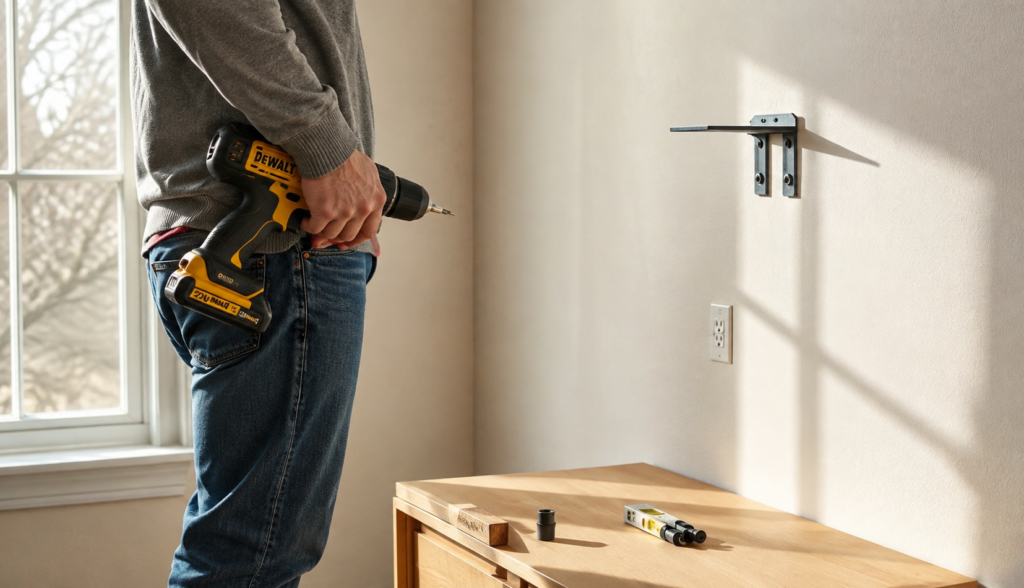
DIY install of a curved floating shelf can be easy—with the right process and hardware. Follow this checklist to avoid the most common headaches:
- Check included hardware: Are brackets, screws, anchors, and shims present and compatible with your wall?
- Locate wall studs (or solid masonry). Confirm stud/joist spacing, since curved shelves can span non-standard distances.
- Hold shelf or bracket up and mark precise locations; use a template if included.
- Drill pilot holes only where there’s solid backing (never use lightweight anchors alone except for purely decorative loads).
- For heavy/long shelves, use backbar or rod systems, not just surface brackets — this is critical for strength.
- Install the bracket or rod system level front-to-back and side-to-side (shim as needed for uneven walls).
- Test fit shelf, then secure. Confirm no rocking or visible gap at wall interface.
- Load test gently before adding heavy objects (use books or gallons of water incrementally).
For more step-by-step guides on smart home improvement, check out home office soundproofing and window shutter installation.
Strength testing and how to evaluate load capacity (what to ask sellers)
You can—and should—screen rounded wall shelf sellers with smart questions before you buy:
- What is the rated load per linear foot on studs? (Look for 50–100+ lbs/ft on rod/backbar systems.)
- What is the bracket/backbar made of? (Powder-coated steel is typical for top-end; beware of aluminum or stamped brackets on large shelves.)
- What wall types are safe for max load? (Some drywall-only methods should never hold heavy items.)
- Are all fasteners included and what’s the return/warranty? (Minimum 12 months warranty and hassle-free returns for mis-fits.)
- Ask for real-world load examples — e.g. “safe for 10+ hardcover books, medium plant, stereo speaker.”
If a seller can’t answer these, or load data is missing from the listing, reconsider the purchase. Reputable brands clearly present these specs.
Need confidence on other major home fixes? See our ev charger installation proven guide for similar troubleshooting and installation checklists.
Design & space-use comparison: rounded/curved vs straight-edged shelves
When should you choose a curved floating shelf instead of a straight one? Consider these points:
| Feature | Rounded/Curved Shelf | Straight Shelf |
|---|---|---|
| Space Use | Efficient around corners or non-linear walls; avoids “boxy” look | Maximizes linear storage; great for books, displays |
| Aesthetics | Softens sharp room lines; fits organic/minimalist interiors | Works with modern, traditional, or industrial styles |
| Functionality | Good for accent decor, displaying sculpture, tech, art | Best for dense storage of uniform-size objects |
| Room Size | Ideal for small/narrow spaces, entryways, and where curves echo other details | Great for large or feature walls; easily stacked or lined up |
Minimalist interiors (and the “quiet luxury” trend) are fueling demand for rounded, sculptural shelving forms. They help integrate with trim, alcoves, or existing furniture without clashing — a big benefit in open-concept layouts and smaller apartments. For more on design blends, see our quiet luxury home decor guide.
Real-world examples and quick case studies (residential + commercial)
- Rental apartment media nook: An MDF rounded wall shelf (18″ radius, 10″ depth) anchored with a steel rod/backbar kit into two studs. Hardware was upgraded to heavy-duty toggle bolts on one end (due to stud shortage). The result? Holds a WiFi speaker and small planters safely with zero sag after 2 years.
- Boutique hotel lobby display: Custom oak veneer curved floating shelf (36″ span, 12″ depth, 16″ radius) fixed with European masonry anchors over stone. Used integrated LED edge strip for indirect lighting. Guests notice the seamless contour echoing the entry archway; cleaning staff appreciate the durable finish.
- Café merchandising wall: Triple row of powder-coated aluminum rounded shelves (24″ wide, 8″ depth) using a visible pin bracket (for easy removal/re-merchandising). Four years in, shelves support rotating decor, mugs, and books without issues. Original install took under 1 hour per row.
Each use highlights the need for matching bracket, fastener, and finish to the purpose and setting. Commercial environments usually pair customization and pro install for durability, while renters and homeowners often DIY with a hybrid of included and upgraded hardware. This M&A-backed push shows the market’s hunger for unique, easy-to-install floating shelves.
Quick buying checklist & FAQs (close with action items)
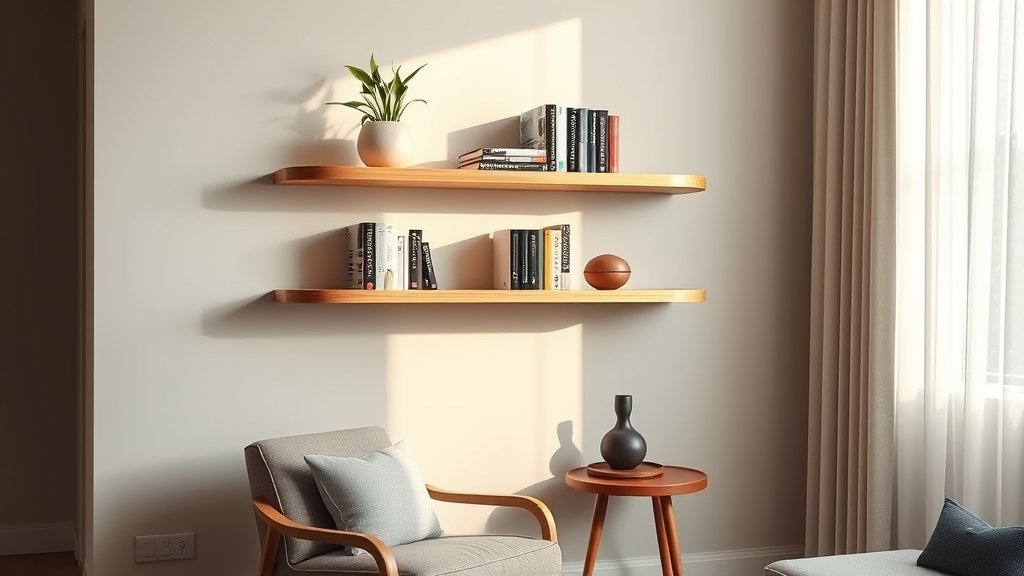
Before you buy a rounded wall shelf or curved floating shelf, run though this checklist:
- Intended load (books? plants? electronics?) — check the shelf’s actual rating
- Wall type (stud, masonry, drywall only?)
- Bracket/backbar type (rod system, stamped, or pin?)
- Curvature radius (does it match your room and fit items?)
- Depth (usable space for your needs)
- Included hardware (stud-specific? are shims/anchors included?)
- Warranty and return policy (especially for complex installs)
- Finish options (cleanable, durable, color-matched?)
- Your price range (account for any needed upgrades, brackets, or pro help)
- DIY or pro installation required (ask seller for difficulty rating & video guides)
For more actionable buying and upgrade tips, don’t miss our guides on AI room makeovers and aging-in-place remodels.
FAQ
Can a rounded wall shelf really hold heavy objects like books?
Yes — but only if it’s anchored into studs or solid masonry and uses a solid rod/backbar bracket. Avoid relying solely on drywall anchors for anything heavier than light decor.
Are curved floating shelves harder to install than straight ones?
They’re about the same, but locating multiple studs (since curves rarely land on standard stud spacing) can take more planning. Always follow the template and pre-fit the shelf before adding fasteners.
What’s the best material for durability?
Solid hardwoods or thick plywood with quality veneer beat MDF for high-traffic or moist areas. Powder-coated metal and properly sealed acrylic also offer great durability for modern spaces.
Can I install a rounded wall shelf in a rental?
Yes. Use minimal holes, removable adhesive pads, and toggle bolts (check the lease). You may need to patch small anchor holes when moving out.
What if included hardware doesn’t match my wall?
Upgrade immediately to the correct rated anchors or brackets for your wall type. Hardware stores or brands like Shelfology have a range of compatible kits.