
Full spectrum grow lights have rapidly become the go-to solution for indoor gardeners who want healthier plants, faster yields, and lower utility bills. If you’re growing herbs, greens, or compact fruiting crops inside a small tent, understanding recent science — and how to avoid costly mistakes when buying LEDs — will put you ahead of the curve.
Key Takeaways
- Modern full spectrum grow lights boost yields by 20–35% and cut electricity use 30–45% compared to HPS and fluorescent fixtures, according to 2022–2024 research.
- The best LED grow lights for indoor plants deliver precise blue and red light that matches plant photosynthetic peaks, improving growth and fruit set in small-space gardens.
- Avoid the most common pitfalls (excess heat, poor penetration, misleading specs) by scrutinizing efficacy, spectrum, canopy coverage, and build quality before purchasing.
- Why Full Spectrum LEDs Beat HPS and Fluorescent (Summary of the Science)
- What “Full Spectrum” Actually Means for Plants
- Evidence-Backed Crop Outcomes — What to Expect by Plant Type
- The Common User Complaints and How to Avoid Them
- The Buyer’s Checklist — Specs That Matter (And How to Read Them)
- Three Crucial Features Most Competitor Articles Miss
- Top Safety, Warranty, and Longevity Considerations
- Realistic Energy and Operating Cost for a 4×4 Grow Tent
- Quick Comparison Frame for Evaluating Top Sellers
- Setup Checklist and Zoning Tips for Optimal Light Penetration and Canopy Management
- FAQ & Buying Scenarios
- Sources & Further Reading
Why Full Spectrum LEDs Beat HPS and Fluorescent (Summary of the Science)
Multiple published studies from 2022 to 2024 confirm that full spectrum grow lights outperform traditional high pressure sodium (HPS) and fluorescent fixtures for indoor plants — not just for greens, but also for fruiting crops in home-scale setups. Modern LEDs deliver 20–35% higher fresh-weight yields for lettuce, basil, oregano, and similar herbs, and up to 30% more fruit set in tomato tests. Peppers and strawberry seedlings grow faster with fewer leggy or spindly stems. A major reason: LEDs use 30–45% less electricity versus HPS, so you can run more light hours without watching your utility bill spike. These LEDs target blue (400–500 nm) and red (600–700 nm) wavelengths, matching the photosynthetic peaks that plants crave — while keeping leaf temperatures stable and requiring almost no extra cooling.
For a clear, research-driven overview, see this summary from Oregon State University Extension and the Gorilla Grow Tent test data.
What “Full Spectrum” Actually Means for Plants (Spectrum Ratios and PAR Explained)
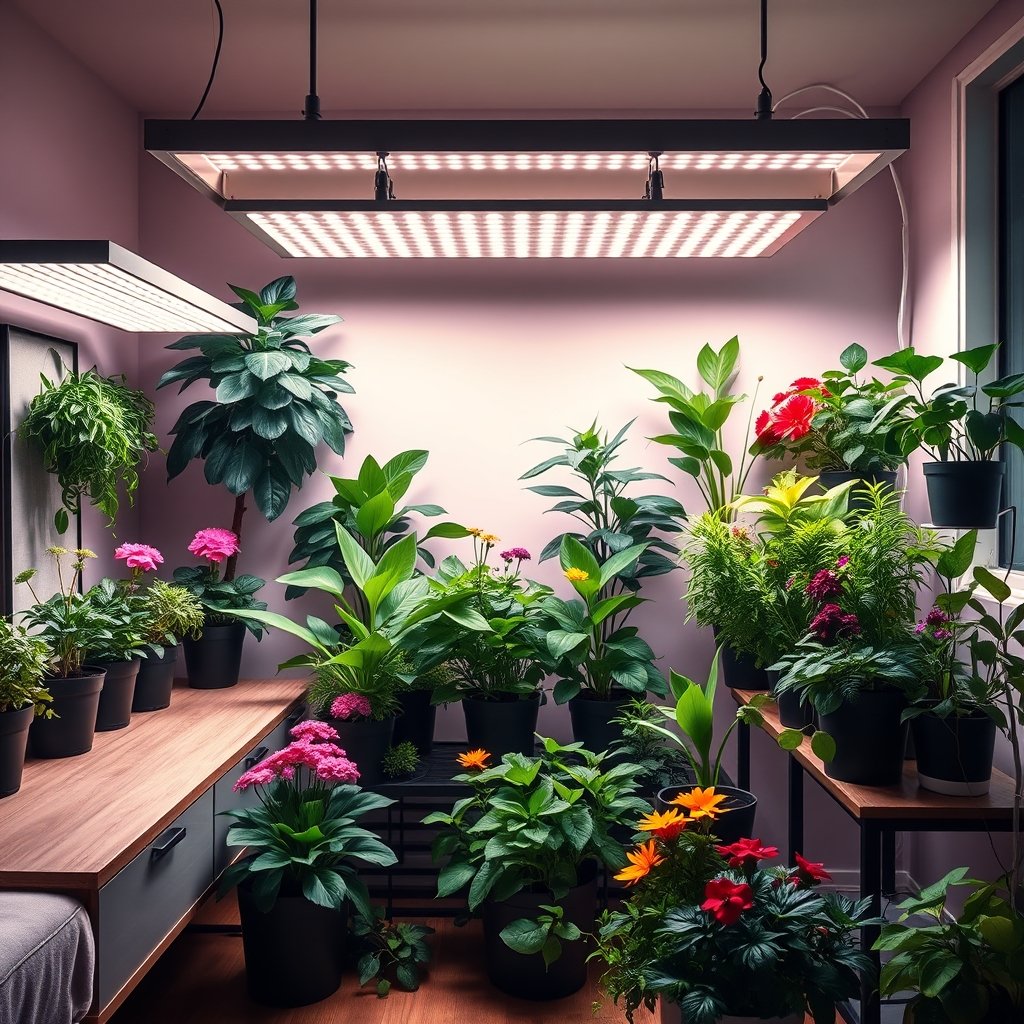
Not all “full spectrum grow lights” are created equal. True full spectrum means your fixture emits strong levels of both blue (400–500 nm) and red (600–700 nm) wavelengths — the exact ranges where plants do most of their photosynthesis. Cheap, older-style “blurple” LEDs skip parts of this range, stunting growth or causing unnatural plant shapes.
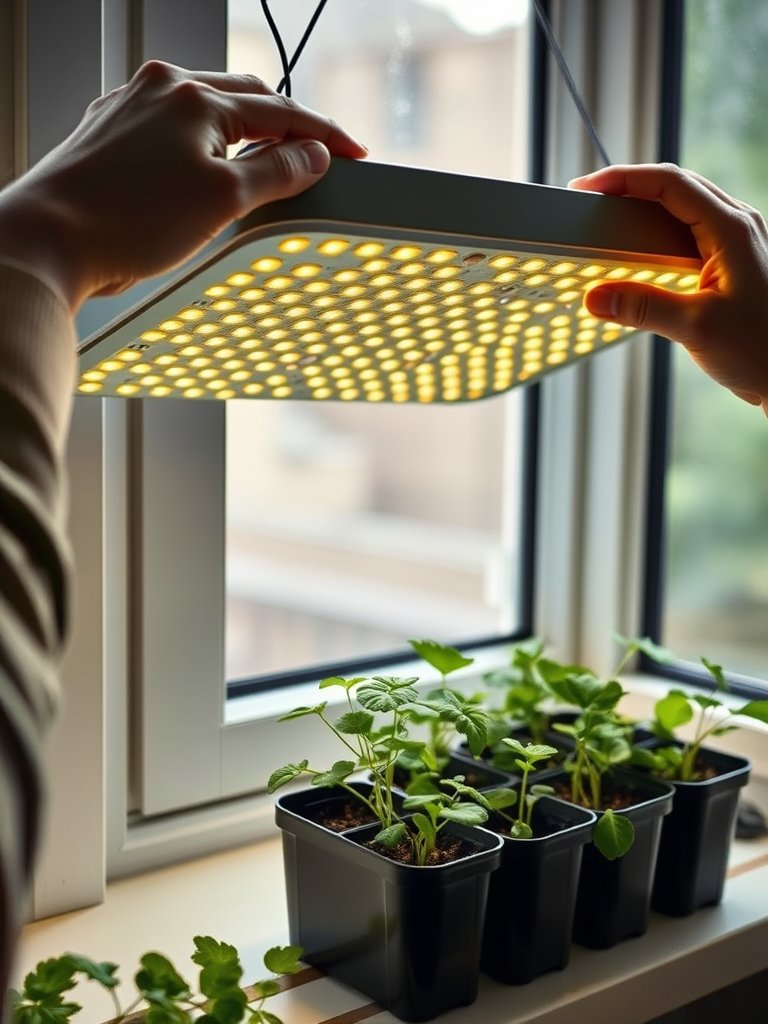
Look for manufacturers that list photosynthetically active radiation (PAR) and photosynthetic photon flux density (PPFD). These metrics tell you how much usable light actually hits your plant canopy. A fixture with even, high PPFD map at the recommended hang height will drive bigger yields and richer flavors, while the right blue:red mix keeps stems short and flowers dense. If specs are vague about spectrum — or only mention total watts — that’s a red flag. You want data on how much light reaches the 400–700 nm sweet spot.
Want more context on spectrum and PPFD? Check out this detailed comparison guide from LED Light Expert.
Evidence-Backed Crop Outcomes — What to Expect by Plant Type
Leafy greens and herbs: Studies report 20–35% fresher and heavier yields when switching to well-matched full spectrum grow lights. Faster vegetative growth, denser leaves, and brighter pigment are typical outcomes.
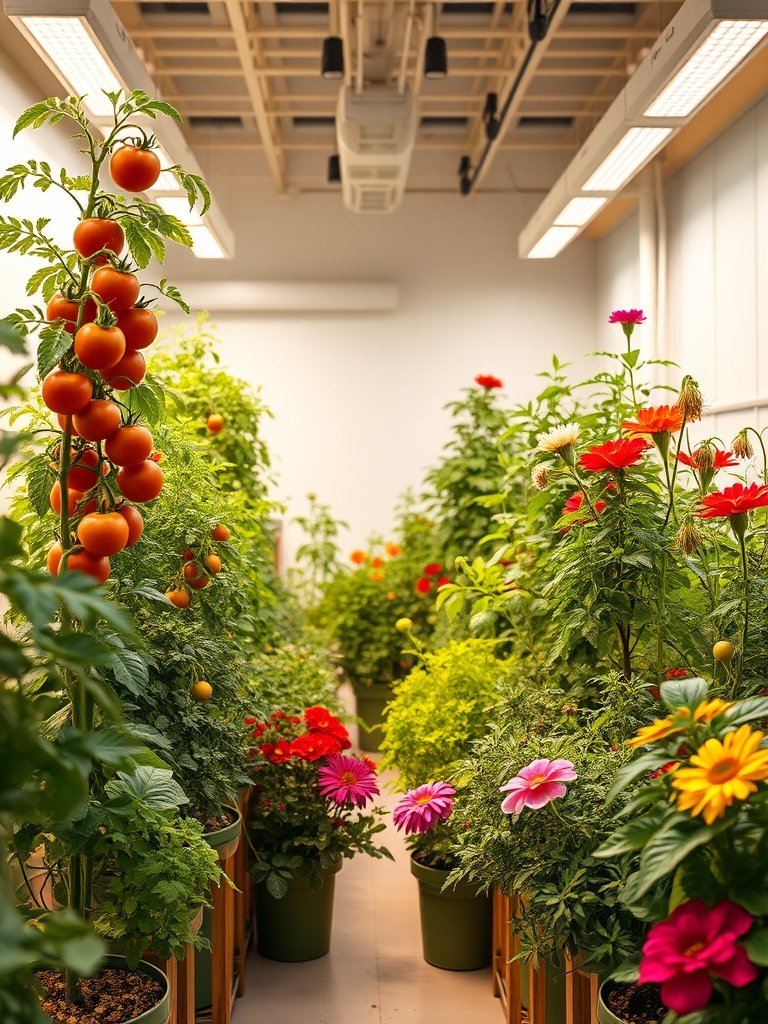
Tomatoes, peppers, strawberries: Up to 30% increase in fruit set, more compact plants, and better flavor have been documented with spectrum-tuned LEDs versus HPS or T5 fluorescent.
Seedlings/transplants: Noticeably shorter, sturdier starts with more roots — less transplant shock and a higher survival rate.
However, you only get these results if you avoid common mistakes:
- Running LEDs at max power inside a small tent raises heat; leaf tips or flowers may wilt if the fixture is too close.
- Using a single high-watt fixture in a dense canopy leads to poor lower-leaf penetration; use multiple bars or satellite units to spread PAR evenly.
- Buying a “full spectrum” light with cheap diodes means spectral gaps or flickering can still induce legginess.
- Ignoring daily cost: inefficient drivers or excessive light hours eat up expected savings.
| Crop Type | Yield Gain vs HPS/Fluorescent | Key Setup Considerations |
|---|---|---|
| Leafy Greens / Herbs | 20–35% higher fresh weight | Lower hang height, moderate PPFD (200–400), dim when canopy fully covers |
| Tomato / Fruiting | Up to 30% more fruit set | Higher PPFD (450–700), deeper penetration, possible supplementation |
| Seedlings | Faster vegetative growth | Strong early blue, gentle ramp up, avoid burning tips |
The Common User Complaints and How to Avoid Them
Even the best LED grow lights for indoor plants are not flawless. Here’s what real growers often struggle with — and how to fix it before problems erode your investment:
- Residual Heat: High power fixtures can still warm small tents. Hang lights 18–24” above canopy for most greens.
- Underwhelming energy savings: Cheaper LEDs or poor quality driver quality waste watts. Always check efficacy (umol/J) and look for well-rated drivers.
- Poor penetration in dense foliage: Use multiple, lower powered fixtures or light bars in a grid instead of a single unit.
- Spectral gaps or misleading “full spectrum” claims: Avoid unbranded diodes or lights without spectrum documentation.
- Upfront cost and reliability: Prioritize units with UL/ETL or CE certification, and a real multi-year warranty.
User reports (see Grow Indoors review) confirm that most pitfalls can be prevented by reading the fine print before purchase and optimizing your setup day one.
The Buyer’s Checklist — Specs That Matter (And How to Read Them)
To get maximum value and results from your full spectrum grow lights, always check these specs:
- Efficacy (umol/J): 2.5+ umol/J is good; 2.9+ is excellent. Higher means more plant-usable light per watt.
- Total PAR/PPFD at canopy: Confirm average PPFD in your tent size at the recommended hang height, not just max output.
- Spectrum reporting: Look for detailed graphs across 400–700 nm, not just “full spectrum” on the box.
- Coverage area: Must fit your 2×2, 3×3, or 4×4 tent at veg and bloom heights. Overhyped coverage claims lead to poor edge growth.
- Thermal management: Fanless, robust aluminum heat sinks prevent overheating and extend life.
- Driver quality: MeanWell, Inventronics, or similarly rated; should be dimmable and energy efficient.
- Durability & IP rating: Seek IP65+ for moisture protection, and real test certifications.
- Warranty: Minimum 3 years; 5 is now common in premium LEDs.
For an essential buying guide, also see our vertical gardening systems quickstart or our breakdown of deck material performance by spec — the comparison approach applies to indoor gardening gear, too.
Three Crucial Features Most Competitor Articles Miss (Actionable Buying Differentiators)
- Uniform canopy-level PPFD: Not just high peak intensity. Check for even light maps; poor diode layout means inconsistent plant growth.
- True real-world efficacy (umol/J): Some brands inflate lab stats; look for measured values at typical operating temperature and driver load.
- Dynamic spectrum options: Fixtures with adjustable light recipes (veg/bloom switches or app controls) enable year-round crop rotation and better control. Don’t settle for a single mode if your crops vary across seasons.
These features separate average from the best LED grow lights for indoor plants.
Top Safety, Warranty, and Longevity Considerations
Most trusted full spectrum grow lights now advertise 50,000+ hour diode lifespans — but cheap drivers or poor soldering can halve this in real life. Look for fixtures carrying UL, ETL, CE, or FCC labels for electrical safety. Reputable models carry warranties of 3 to 5 years on both fixture and driver.
The best LEDs rarely need bulb replacement and produce much less heat than legacy fluorescent (see UGA Extension resource). This protects your investment and keeps maintenance low for years — one reason the perceived upfront cost quickly pays for itself.
Realistic Energy and Operating Cost for a 4×4 Grow Tent (Simple Math + Setup Examples)
Here’s what you can expect for “real world” energy use in a typical 4×4 tent:
- High-end system (650W actual draw, high-efficacy): Uses about 10–12 kWh/day for 18 hours operation. At $0.14/kWh, that’s ~$45/month.
- Midrange system (400W actual draw, moderate efficacy): About 7 kWh/day, or ~$30/month.
- Budget array (2x150W fixtures, lower efficacy): About 5 kWh/day, or ~$21/month. Caveat: output or coverage may be weaker — and energy savings quickly drop if you crank up low-quality LEDs.
Modern LEDs save 30–45% more electricity over HPS. Maximize efficiency with timers, dialing dimmers based on canopy size, and correct fixture height.
Want to further cut operating costs? See our smart home retrofit tips for automating your lighting schedules, or explore reducing tent heating/cooling needs when switching to LEDs in our analysis of home energy upgrades.
Quick Comparison Frame for Evaluating Top Sellers
When comparing the best full spectrum grow lights, go beyond ratings. Build your own side-by-side with these fields:
| Model | Listed Wattage / Measured Draw | Efficacy (umol/J) | Avg PPFD (at Hang Height) | Spectrum | Coverage (Veg/Bloom) | Thermal Design | Certifications | Warranty | Price Range |
|---|---|---|---|---|---|---|---|---|---|
| Spider Farmer SF-4000 | 450W / ~430W | 2.9 | 900–1000 μmol/m²/s (18″) | Full (Samsung LM301B diodes) | 4×4 veg / 5×5 veg, 4×4 bloom | Passive, fanless | UL, ETL, CE | 5 years | $350–$490 |
| Mars Hydro FC-E4800 | 480W / ~450W | 2.8 | 1020 μmol/m²/s (12″) | Full (Bridgelux diodes) | 4×4 veg / 4×4 bloom | Passive, no fan | CE, RoHS, ETL | 5 years | $360–$420 |
| Horticulture Lighting Group 600 Rspec | 600W / ~570W | 2.7 | 1520 μmol/m²/s (18″) | Enhanced red, full spectrum | 5×5 veg, 4×4 bloom | Passive, robust sink | UL, CE | 3 years | $599–$699 |
| Viparspectra XS4000 | 480W / ~450W | 2.9 | 1092 μmol/m²/s (12″) | Full, dimmable | 4×4 veg / 4×4 bloom | Passive, thick sink | UL, CE | 3 years | $320–$370 |
| Phlizon FD6500 | 640W / ~615W | 2.9 | 1300 μmol/m²/s (10″) | Adjustable (bar light strips) | 6×6 veg, 5×5 bloom | Passive bars, no fan | CE, RoHS | 3 years | $570–$630 |
Check which specs are manufacturer-rated vs. third-party measured — this transparency is crucial for performance and safety.
Setup Checklist and Zoning Tips for Optimal Light Penetration and Canopy Management
- Set hang height (18–24″ for most LEDs in veg; 12–18″ for bloom, but verify per brand specs).
- Use two or more fixtures in a 4×4 tent for uniform coverage—one big fixture rarely lights edges well.
- Consider multi-tier or shelf systems for herbs and greens to multiply yield in the same square footage.
- Always line interior tent walls with reflective Mylar.
- Add an inexpensive clip fan or tent exhaust for heat and humidity control, even with cool-running LEDs.
- Train or prune plants to open dense canopies—this ensures lower leaves get PAR and prevents leggy stems.
- PPFD targets: 200–400 for greens; 450–700 for fruiting plants. Use a light meter to verify delivery.
Dense crops or larger tents? Read our no till gardening transition guide for more on maximizing indoor productivity.
FAQ & Buying Scenarios
Are full spectrum grow lights really worth the extra cost over basic LEDs or old-school HPS?
Yes. 2022–2024 studies show 20–35% higher yields and 30–45% energy savings in most home setups. The best LED grow lights for indoor plants pay for themselves with year-round use, minimal bulb changes, and no need for bulky cooling.
How many watts do I need for a 4×4 grow tent?
Most 4×4 tents thrive with a quality LED drawing 400–650W actual power (not just “rated” watts). For leafy greens only, you can go lower and use a dimmer — but fruiting plants need more PAR.
Can I replace my HPS with a single LED panel?
Usually, yes. A single high-efficacy LED (with at least 2.7 umol/J and 400–650W) can outperform a 600–1000W HPS in yield, with less heat and no repeated bulb swaps. For tall, dense plants (like tomatoes), supplementing with side or under-canopy lighting can boost results even more.
What’s the typical payback time for higher upfront LED cost?
Most hobbyists recoup LED premium within 1–2 years in electricity saved, assuming regular use. The science shows higher yields speed ROI even more if you cycle year-round.
How do I choose the right LED if my main goal is greens and herbs, not fruit?
Prioritize PPFD in the 200–400 range, broad spectrum with extra blue, and fixtures with good dimming range. You can get away with less PAR if your tent’s tightly packed with greens. For fruiting, pick models with higher average PPFD (450–700) and deeper red spectrum.
Sources & Further Reading
Credible university extension and horticulture studies back up the real-world advantages of modern full spectrum grow lights:
- Oregon State University Extension on LED grow lights — proves yield and electricity gains for hobbyists.
- Gorilla Grow Tent lab data vs. HPS — breakdown of greenhouse-grade results for home growers.
- UGA Extension comprehensive LED resource — covers pros, cons, science, and safety.
- LED Light Expert comparison article — practical coverage of spectrum and setup pitfalls.
For more actionable guides on home and tech upgrades, see our posts on vertical gardening systems, deck material performance, or tips on smart home retrofits and energy-saving projects.
Bottom line: If you want lower bills, higher yields, and healthier indoor crops year-round in any small home or apartment, invest in the right full spectrum grow lights and use the checklist above to steer clear of pitfalls. Start optimizing your setup today!