

Induction cooktop installation is a game-changer for homeowners thinking about switching from gas to induction, but the process often comes with budget surprises and technical hurdles. If you’re planning to convert your kitchen in the next year, here’s what really drives cost, how to avoid getting stuck mid-project, and the exact steps that keep your wallet and sanity intact.
Key Takeaways
- Total project cost for switching from gas to induction typically runs $4,500–$5,500, with electrical upgrades usually the biggest expense.
- Most complications (and delays) occur during electrical panel checks and upgrades—get multiple quotes and check breaker availability early.
- Testing cookware with a magnet and reviewing rebate options up front can save money and prevent post-installation regret.
- Quick verdict: what switching from gas to induction really costs and why
- Headline cost breakdown — appliance, labor, panel work, permits, and cookware
- Why electrical upgrades are the likely deal‑breaker (the single biggest surprise)
- Electrical requirements explained — breakers, voltage, circuits, and wiring checklist
- Common technical pain points during panel upgrades — what to watch for
- Choosing an induction cooktop: size, power, and features that matter for installations
- Common negative experiences after switching — real user complaints and how to mitigate them
- Timeline: realistic schedule for a full switch (quotes, permits, panel work, installation, inspection)
- Rebates, incentives, and cost-saving strategies most homeowners miss
- Top 3 important sub-topics competitors miss or underreport
- Practical checklist and script for your first electrician visit
- Recommended calls-to-action and resources to include in the article
Quick verdict: what switching from gas to induction really costs and why
For most homeowners, switching from gas to induction costs between $4,500 and $5,500 in 2024 and 2025. The appliance itself is no longer the biggest expense—most of your budget will go to upgrading your home’s electrical system. Many projects stall when outdated panels can’t handle a new 240-volt, 40-amp circuit. Expect to authorize quotes for both electrical and cabinetry work, file permits, and chase down rebates to keep costs in check.
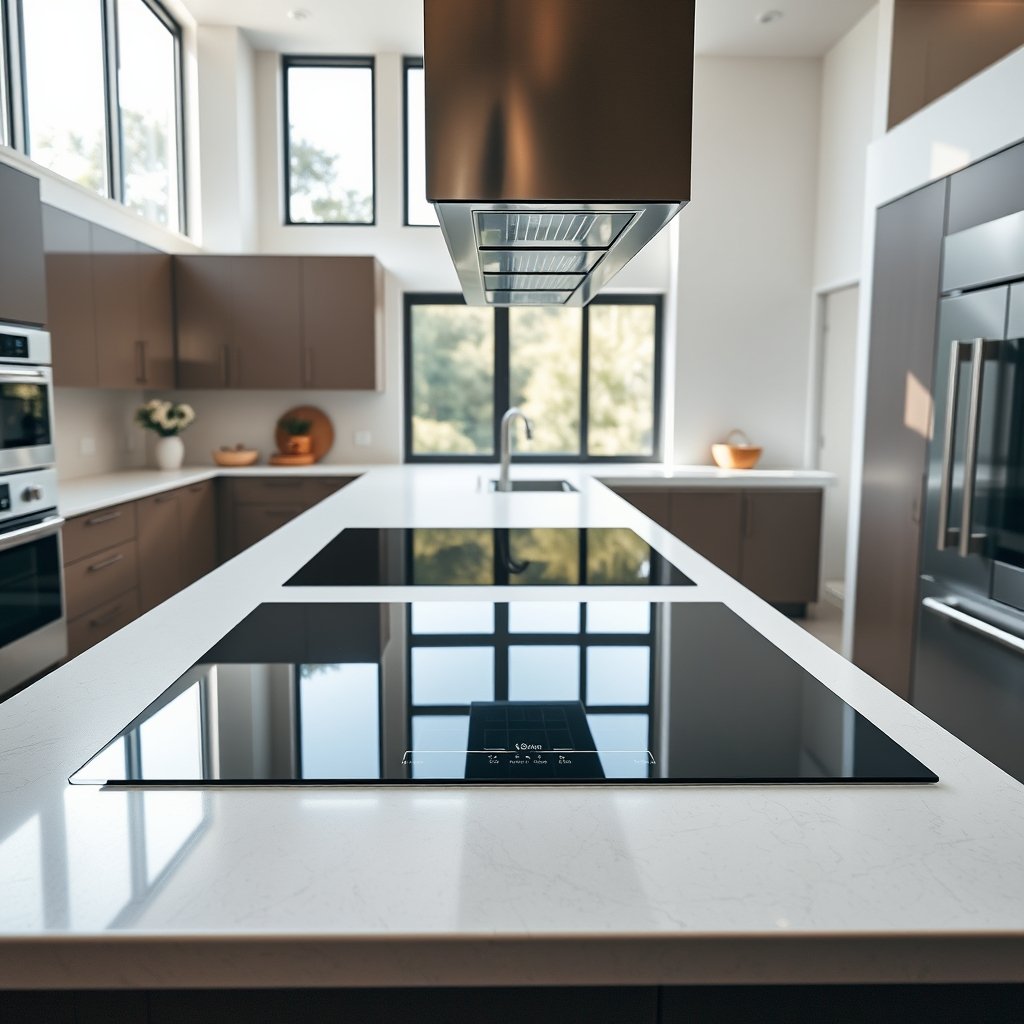
Headline cost breakdown — appliance, labor, panel work, permits, and cookware
Here’s the reality: while induction cooktop installation starts with the appliance purchase, most of your costs—and headaches—are elsewhere. Below is an itemized breakdown so you can build your own estimate and avoid surprises at each stage.
| Line Item | Low | Typical | High |
|---|---|---|---|
| Induction cooktop (30–36”) | $900 | $2,400 | $4,500 |
| Electrician (circuit install) | $350 | $650 | $1,200 |
| Electrical panel/subpanel upgrade (if needed) | $0 | $850 | $2,800 |
| Licensed gas-fitter (cap line) | $150 | $280 | $450 |
| Permit(s) | $45 | $120 | $300 |
| Cookware refresh (if non-magnetic) | $0 | $400 | $900 |
| Contractor drop-in labor | $80 | $200 | $400 |
| Wall patch / cabinet rework | $0 | $150 | $500 |
| TOTAL (Typical) | $5,050 |
Source: CooktopHunter
Why electrical upgrades are the likely deal‑breaker (the single biggest surprise)
The #1 hidden cost of induction cooktop installation? Undersized or outdated electrical panels. Most kitchens need a dedicated 40-amp (sometimes 50-amp) circuit with a 240-volt outlet. If your panel is fully loaded, you’ll either pay for a subpanel or a main panel/service upgrade (potentially involving your utility). These upgrades alone can cost thousands, add months to your timeline, and leave you caught between trades while permits and inspections catch up.
Per Canary Media, utility interaction can get involved if your home or neighborhood grid can’t handle the added load—so always check with your electrician and utility early.
Electrical requirements explained — breakers, voltage, circuits, and wiring checklist
An induction cooktop installation isn’t just plug-and-play. Here’s what a pro will check (and what you should ask about before you buy):
- Is there room in your panel for a new 40/50-amp, 240-volt breaker? (Larger units sometimes need a 50-amp)
- Do you have a 240-volt junction box or will one need to be installed?
- What is your panel’s total amperage (often 100 or 200 amps)? Do you need to upgrade?
- Do code/permit inspectors require an all-new circuit, conduit, or wiring upgrade to meet safety and energy standards?
- Will the electrician confirm all specs before you purchase an induction cooktop?
In most cases, a 240VAC dedicated breaker is required. Case studies show some high-output cooktops need up to a 50-amp breaker (CountBricks).
Common technical pain points during panel upgrades — what to watch for
Electrical upgrades sound simple in theory, but real projects routinely run into:
- Breaker slots maxed out—requiring a new subpanel or bigger main panel
- Inadequate amperage—forcing service/panel upgrades at $850–$4,000 or more
- Long electrician lead times and scheduling chaos
- Utility company delays if a larger service or transformer upgrade is needed
- Cabinet or countertop cutting—for proper fit or new outlets
- Permit delays or failed inspections, especially in older homes or those not up to current code
Tip: All of these pitfalls can potentially be identified and budgeted for during your first electrician’s site visit—don’t skip it.
Choosing an induction cooktop: size, power, and features that matter for installations
Not sure which cooktop will minimize hassle? Here’s what matters most for smooth, cost-controlled induction cooktop installation:
- Size matters: 30–36” cooktops are most standard and fit typical cutouts. Larger or odd sizes can require countertop and cabinet work.
- Power draw: Check amps required (typical: 40A for 30–36”, 50A for higher-end/large units). Your choice may dictate whether your panel needs upgrading.
- Features: Built-in vs. freestanding, safety locks, bridging burners—some impact electrical requirements, others are cooking perks.
- Price range: Models run from $900 (entry) to $2,400 (mid) to $4,500 (pro/high-end). Your electrician’s quote often rises with the cooktop’s power demands.
- Pro install vs. DIY: Some drop-in models are marketed as “DIY friendly,” but pro install is almost always required due to wiring and permit rules.
See more kitchen remodel shortcuts in our cabinet refacing vs replacing guide for smart ways to keep costs down if a countertop cut is required.
Common negative experiences after switching — real user complaints and how to mitigate them
Even after a technically perfect induction cooktop installation, homeowners run into a few recurring issues:
- Cookware compatibility: Induction only works with pots and pans that are magnetic (stainless steel, cast iron—aluminum/most copper won’t work). Test yours with a fridge magnet.
- Cooking style learning curve: Induction’s fast, precise response is a big change from gas (takes a couple weeks to adapt; some find it “too fast”).
- Sensitivity to power outages: If the power drops, so does your ability to cook. This is a concern in areas with unstable grids—and a reason some keep a portable backup burner on hand.
- Expectations vs. reality: Some dislike the “flat top” look, or miss gas flame control, even though most adjust quickly.
For a lighter transition, try a portable induction unit ($50–$100) before committing. And always test your cookware with a magnet first.
For more tips on preparing for home power needs, explore our whole home battery backup guide.
Timeline: realistic schedule for a full switch (quotes, permits, panel work, installation, inspection)
Switching from gas to induction is rarely a same-weekend affair. Here’s a realistic schedule—from decision to inspection—if you want to keep your project on track:
- Site assessment & quotes (1–2 weeks): Schedule at least two electricians; gather panel specs and kitchen fit measurements.
- Permit filing (1–3 weeks): Electrician (or you) files permits for wiring and cooktop swap. Some cities move fast—others don’t.
- Panel/subpanel upgrade (if needed) (1–4 weeks): May involve utility interaction if your main service is marginal. Scheduling drag often here.
- Cooktop & wiring install (less than 1 week): Actual install can be same-day—assuming all panel/circuit prerequisites are ready.
- Inspection & sign-off (1–2 weeks): Final hurdle. Only after inspection can you use the new cooktop legally.
Delays most often hit during electrician scheduling and if utility upgrades are required. See also our EV charger installation guide for parallels on permits and panel upgrades.
Rebates, incentives, and cost-saving strategies most homeowners miss
Too many homeowners leave money on the table. Be sure to:
- Search state energy office and utility websites for electrification rebates (panel upgrades, wiring, cooktop incentives—sometimes $2,500–$4,000 or more for income-qualified households).
- Stack incentives when possible (panel rebate + appliance rebate + local program).
- Consider phased upgrades: prioritize the panel first, then swap the cooktop when you have a rebate or sale.
- Negotiate electrician costs—multiple quotes can save you $300+
- Try a portable induction unit first to test fit, cooking style, and pan compatibility before committing.
Case example: CNBC reports up to $4,000 in rebates for panel upgrades and $2,500 for wiring. Not sure where to start? Most city energy offices and utilities now have online rebate finders. For maximizing larger incentives, see our heat pump water heater rebate guide.
Top 3 important sub-topics competitors miss or underreport
- Ventilation and hood compatibility: Induction cooking produces less airborne grease, but many installations find their old hood or vent inadequate—especially when swapping from a gas range. Replacement or upgrade (which can be $500–$1,500) may be necessary and is often overlooked. For broader kitchen improvement tips, see minimalist kitchen design ideas.
- Neighborhood/grid impact & utility involvement: Some panel upgrades can trigger the need for a larger main line or even a new neighborhood transformer. This can delay installation—and push costs much higher—if your utility is already stretched in your area (Canary Media).
- Long-term maintenance, repairs, & resale impact: Induction cooktops often require specialized service (not every appliance pro is familiar); some homeowners report higher out-of-warranty repair costs and uncertainty around parts availability. However, buyers are increasingly favoring all-electric kitchens in energy-efficient markets.
Practical checklist and script for your first electrician visit
Go into your first quote prepared. Here’s exactly what to bring up:
- “Can my current panel handle a new 40/50-amp, 240-volt circuit for an induction cooktop installation?”
- “How many breaker slots are available? Do I need a subpanel or main upgrade?”
- “What’s the expected cost if the panel or wiring needs to be upgraded?”
- “Will patching walls or modifying cabinets/counters be necessary?”
- “Can you check if a permit or utility notification is required?”
- “What brand/model cooktop spec sheet do you need to confirm compatibility?”
Necessary measurements to have on hand: cooktop cutout dimensions, panel amperage label, and distance from panel to kitchen. If in doubt, reference our full ADU conversion cost guide for more on contractor comparison and project management steps.
Recommended calls-to-action and resources to include in the article
Ready to proceed with your induction cooktop installation?
- Get 2–3 competing electrician quotes with the checklist above—costs vary wildly.
- Measure your current cooktop and available panel amperage—send this info for accurate quotes.
- Test every piece of cookware with a magnet (only pans that stick will work on induction).
- Check local rebates and permitting requirements before scheduling work.
- Try a portable induction unit to preview the change in cooking style and confirm pan compatibility before you buy.
The average homeowner spends $4,500–$5,500 on a successful project. Proper prep, multiple quotes, and rebate stacking are the fastest ways to keep your costs down and your switch from gas to induction smooth. For more step-by-step home upgrade guides see our resources on EV charging station installation, crawl space encapsulation, and whole-home generator installation.
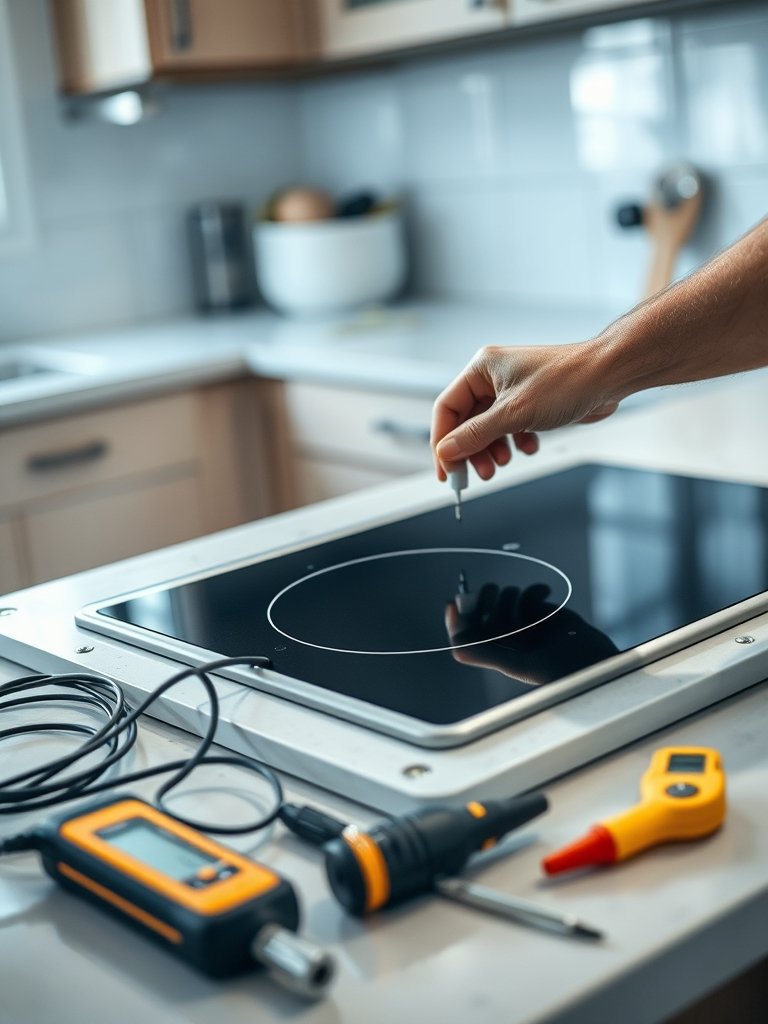
Advanced Analysis & Common Pitfalls
Here’s what the research and real homeowner stories reveal about the most frequent and expensive problems in induction cooktop installation—and how to sidestep them.
| Pitfall | Root Cause | Cost Estimate | How to Avoid |
|---|---|---|---|
| Panel too small / not enough breaker slots | Panel at max capacity | $850–$4,000+ | Inspect panel or send photo to electrician before purchase |
| Utility service insufficient | Main line transformer can’t handle extra load | $1,500–$8,000 (rare but severe) | Ask utility to check capacity before upgrades |
| Permitting or inspection delay | Poor paperwork, city backlog | N/A (adds time, not money) | File as early as possible; confirm needs with city/county |
| Cooktop doesn’t fit cabinetry | Non-standard cutout or countertop depth | $150–$600 extra for rework | Measure twice, compare with manufacturer’s template |
| Cookware needs replacing | Nonmagnetic pots/pans | $200–$900 for new sets | Test all current cookware with a magnet |

Conclusion
Switching from gas to induction can transform your kitchen’s performance, but the process is only as easy—and affordable—as your electrical panel allows. Expect induction cooktop installation to run about $5,050 on average, with most setbacks tied to electrical upgrades, permitting, or surprise cabinetry tweaks. Always get several quotes, check panel specs before shopping, and test your pans in advance. Want a smoother transition? Start with a portable unit or reach out to local pros now to get ahead of delays. Don’t wait—the sooner you plan, the less you’ll overpay and the faster you’ll actually enjoy your new induction cooktop installation.
Ready to make the switch? Start by booking a local electrician visit today or download your city’s rebate checklist to avoid missing the best incentives.
Frequently Asked Questions
Will my existing cookware work on an induction cooktop?
Only pots and pans that are magnetic (e.g., stainless steel, cast iron) will work. Test each one with a refrigerator magnet. Aluminum, copper, and most nonstick pans may need to be replaced.
How long does the whole induction cooktop installation usually take?
Expect 3–8 weeks from research to sign-off, depending on electrician availability, permitting workload, and whether a panel or service upgrade is required.
What electrical work is required for installing an induction cooktop?
At a minimum, a dedicated 40A (sometimes 50A) 240-volt circuit and breaker, a matching outlet, and potentially a panel or subpanel upgrade to support extra amperage.
Can I DIY an induction cooktop installation to save money?
It’s possible with electrical skills and if your panel already supports it, but most cities require a licensed electrician for code, permit, and insurance reasons. Professional installation is strongly recommended.
Are there rebates or incentives for induction cooktop installation?
Yes. Many states and utilities offer rebates for induction appliances and especially for electrical upgrades—sometimes covering $2,000–$6,000 for panel and wiring improvements. Always check local programs before starting your project.